Defining Diagnostic Excellence and Missed Diagnostic Opportunity in the Emergency Department: Key Consensus Recommendations for Practice and Research
Introduction and Context
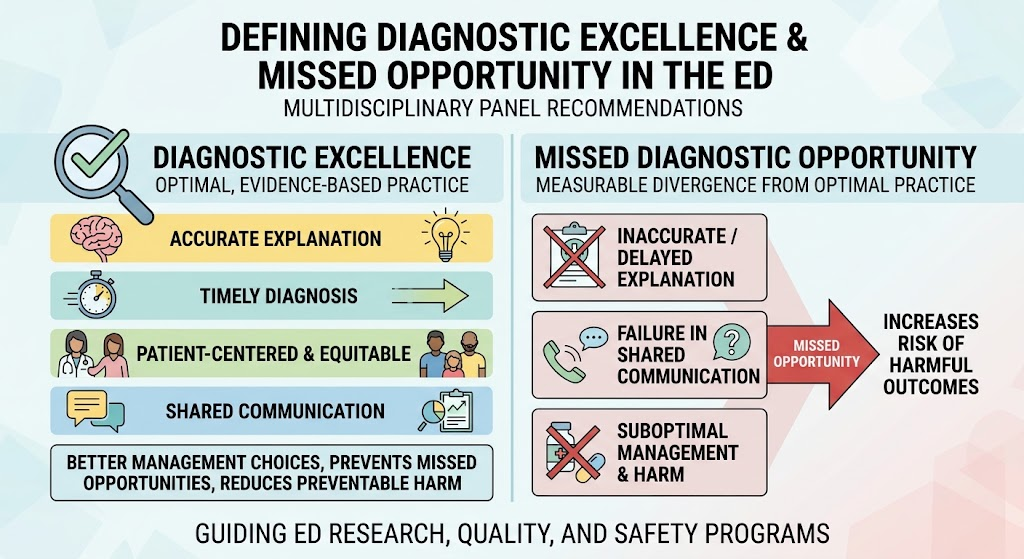
Diagnosis is the foundation of clinical decision-making in the emergency department (ED). Rapid, accurate, and well-communicated diagnostic reasoning directs appropriate treatment, disposition, and follow-up. Yet diagnostic breakdowns—delays, inaccuracies, and communication failures—remain a leading cause of preventable harm. Recognizing the need for operational, ED-specific terminology to support research and quality improvement, a multidisciplinary expert panel used a modified RAND/UCLA method to develop formal definitions of two central concepts: diagnostic excellence and missed diagnostic opportunity (MDO). Their work, published in Annals of Emergency Medicine (Berdahl et al., 2026), translates conceptual components into practical language designed to be used in research, measurement, and safety programs.
This article summarizes the consensus definitions, the methods and rationale behind them, core recommendations for how the definitions should be applied, and the implications for clinical practice and future research.
Sign in free to continue reading
Create or use your MedXY account to unlock the complete article.
This article was created using several editorial tools, including AI, as part of the process. Human editors reviewed this content before publication.