Autoantibody Screening in Sibling-Dominant Pediatric Relatives of Type 1 Diabetes Patients: Prevalence, Determinants, and Psychological Impact
Highlight
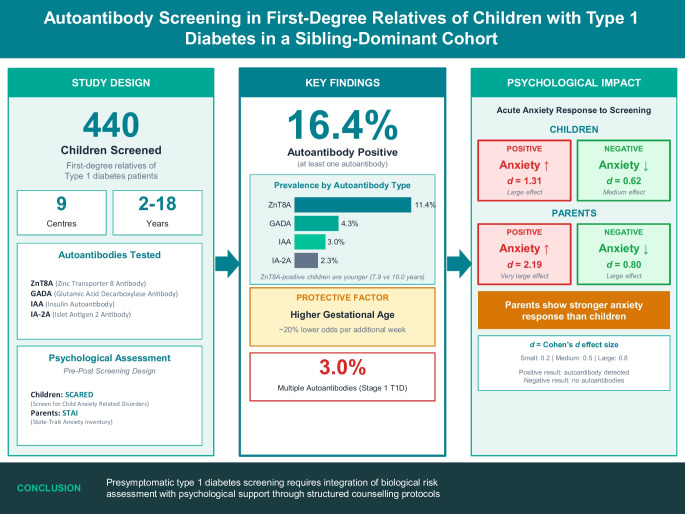
- In a sibling-dominant cohort of 440 Turkish children (2-18 years) first-degree relatives of type 1 diabetes patients, 16.4% tested positive for pancreatic islet autoantibodies, with ZnT8A being the most prevalent, especially in early childhood (ages 2-6).
- Gestational age showed a strong inverse association with autoantibody positivity, suggesting perinatal factors influence risk stratification.
- Disclosure of autoantibody screening results significantly increased child anxiety scores and parental state and trait anxiety in positive cases, while anxiety decreased in negative cases.
- The findings advocate for personalized presymptomatic risk assessment incorporating age and perinatal history, coupled with structured psychological support integrated into screening programs.
Study Background
MedXY registered readers
Sign in free to continue reading
Create or use your MedXY account to unlock the complete article.
This article was created using several editorial tools, including AI, as part of the process. Human editors reviewed this content before publication.