We use cookies

Our website uses essential cookies and, with your consent, additional cookies to measure performance and improve our services. Cookie Policy.

You can change your choice at any time.

MMedXYNews
HomeVideos
MedXY AI/MedXY News/Section: Cardiology

Anthracycline Cardiotoxicity Exacerbated by Metabolic Stress in Pressure-Overloaded Hearts: Mechanistic Insights and Clinical Implications
MedXY Editorial Team•Sep 21, 2026•Cardiology
anthracycline cardiotoxicityleft ventricular pressure overloadmetabolic vulnerabilityCardiac DysfunctionDoxorubicin

For image description, please refer to the figure legend and surrounding text.

Highlight

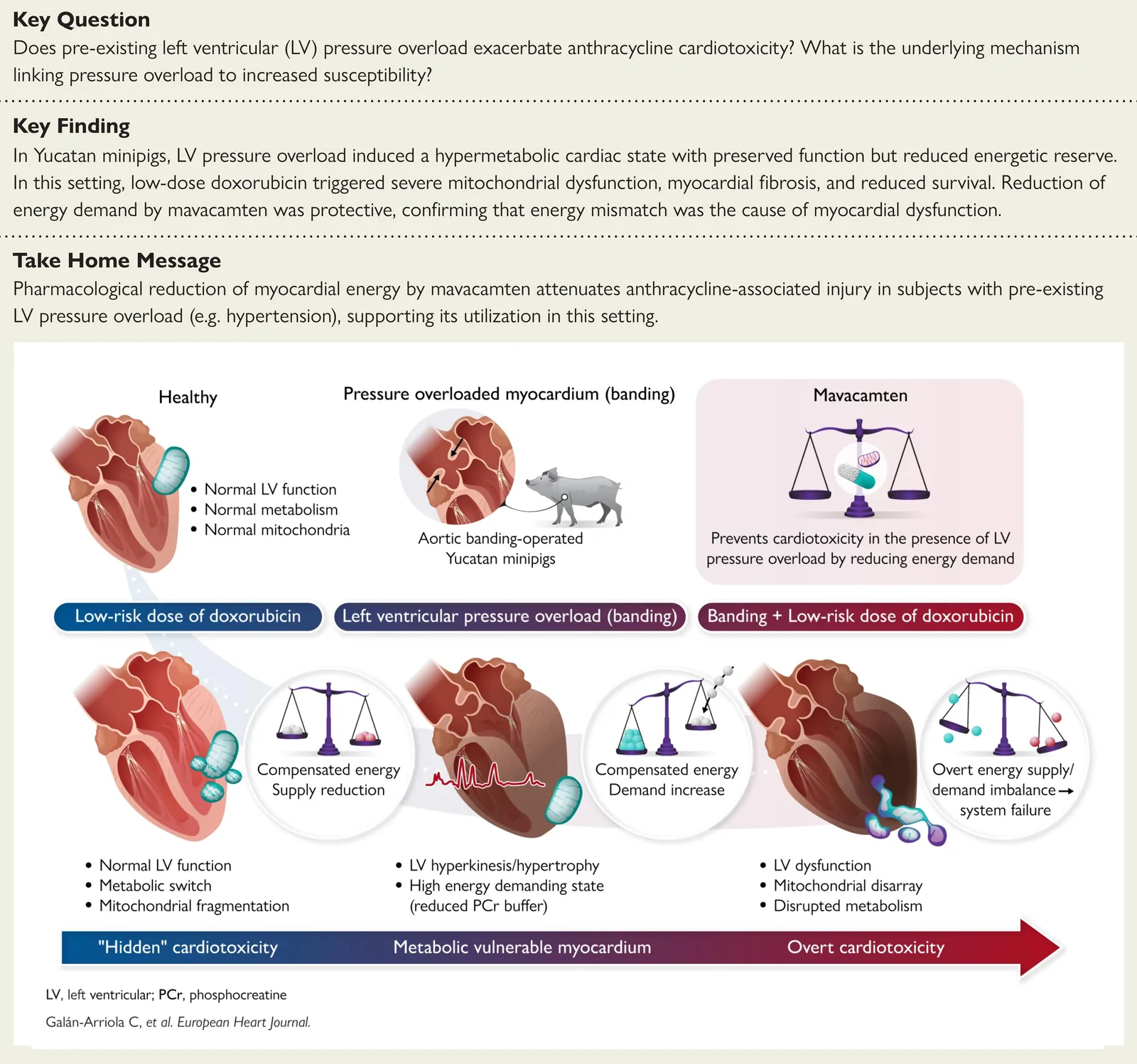
1. Pre-existing left ventricular (LV) pressure overload significantly increases susceptibility to anthracycline-induced cardiotoxicity, even at low cumulative doses.
2. Pressure overload creates a high-energy-demand metabolic state in the myocardium that disrupts compensatory mechanisms upon anthracycline exposure.
3. In a large animal model, doxorubicin combined with LV overload increased mortality, induced cardiac dysfunction, fibrosis, and impaired mitochondrial respiration.
4. Energy demand suppression by mavacamten rescued cardiomyocyte viability under combined doxorubicin and hypertrophic stress, highlighting a therapeutic avenue.

Study Background

MedXY registered readers

Sign in free to continue reading

Create or use your MedXY account to unlock the complete article.

This article was created using several editorial tools, including AI, as part of the process. Human editors reviewed this content before publication.

Related articles

Open language-specific specialty feeds and department pages.

Plasma Biomarkers CPVL and PIGR Predict Anthracycline-Induced Cardiotoxicity in Hematologic Cancer PatientsBaseline plasma levels of CPVL and PIGR correlate with anthracycline-induced systolic dysfunction, offering potential early biomarkers for cardiotoxicity in hematologic malignancy patients undergoing chemotherapy.Aug 29, 2026Atorvastatin Preserves Aortic Elasticity During Anthracycline Chemotherapy: Secondary Analysis of STOP‑CAIn a secondary analysis of the randomized STOP‑CA trial, atorvastatin 40 mg daily attenuated anthracycline‑associated increases in aortic stiffness measured by CMR pulse wave velocity, suggesting vascular protection and a potential strategyNov 25, 2025Sacubitril-Valsartan for Cardiac Protection During Breast Cancer Therapy: Insights from the PRADA II TrialThe PRADA II trial evaluated sacubitril-valsartan for preventing cardiac dysfunction during anthracycline-based breast cancer therapy. While it did not significantly preserve left ventricular ejection fraction, improvements in myocardial stOct 6, 2025
Loading comments...
MedXY briefing

Get the free newsletter

Evidence-led clinical news, trends, and analysis—delivered to your inbox.

Ask MedXY AI

Most popular

Intimate Health
Five Benefits for Women Continuing Sexual Activity After Menopause
Intimate Health
Why Some Women Have a Strong Sex Drive—And Why Men Shouldn't Worry About It
Nursing & care
How often should a couple have sex?
General Surgery
Optimizing Postoperative Opioid Prescriptions After Intra-Abdominal Cancer Surgery: Comparing the 5x-Multiplier and 3-Tier Models
Intimate Health
Classic Intimacy Recommendations: How to Help Women Reach Orgasm and Enjoy Mutual Pleasure
© 2026 MedXY
Contact usAbout usPrivacy PolicyMedXY story
Regorafenib as Maintenance Therapy in Advanced Non-Adipocytic Soft Tissue Sarcomas: Positive Impact on Progression-Free Survival in a Randomised Trial
The EREMISS trial demonstrates that regorafenib significantly prolongs progression-free survival as maintenance therapy after first-line doxorubicin chemotherapy in advanced non-adipocytic soft tissue sarcoma patients, with manageable safet
Oct 2, 2025