A mathematician at Anthropic has announced that he and Claude have found a proof of the Riemann Hypothesis—one of mathematics’ most famous unsolved problems since 1859—and extended the approach to the Generalized Riemann Hypothesis (GRH). Yet even as the claim draws intense attention, whether the proof is actually correct remains uncertain, highlighting the immense scale of verification required and pointing toward a broader “AI moment” across mathematics and the physical sciences.
Github link: https://github.com/CocoSgt/riemann-hypothesis-lean
A Massive Proof, With Verification Still an Open Question
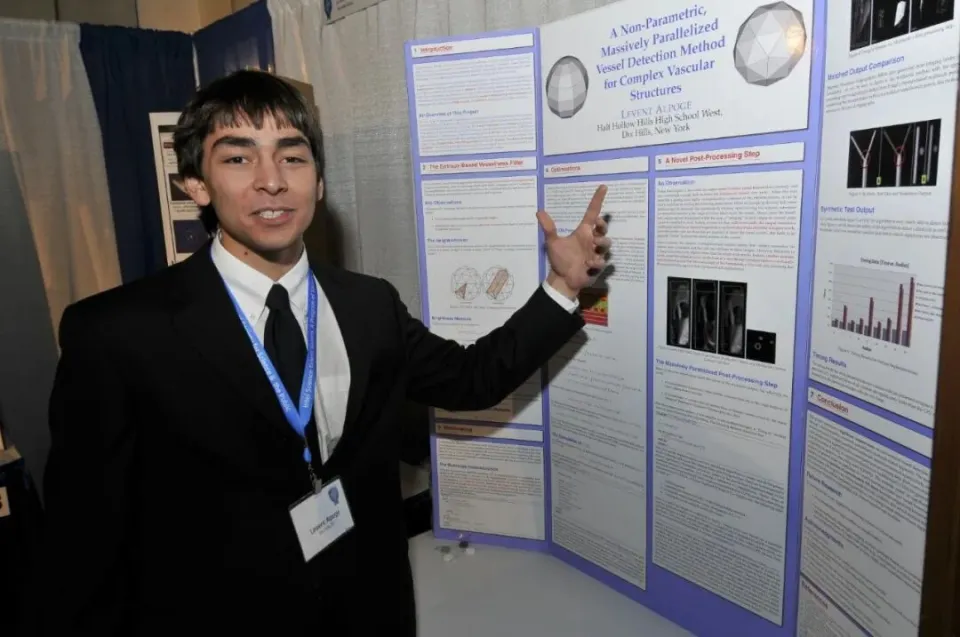
According to the announcement by Levent Alpöge, the entire argument has been formalized in Lean without extra assumptions, while a human-readable version has not yet been written because Claude’s detailed draft exceeds 250,000 pages. Rather than publishing an unreadable wall of generated text, Alpöge released the formal Lean code (split into 14 archive parts) while planning to digest and simplify the argument before writing a conventional paper.
Crucially, no one has publicly verified the Lean code yet, and Alpöge noted that parts of the timeline and explanation rely on Claude’s summaries—acknowledging his own retelling could even fail to make sense in places and that the Lean code itself must be the ultimate reference. Even with formalization tools like Lean, checking an argument of this scale and complexity is a massive undertaking, meaning the validity of the proof is far from settled.
How Human and AI Collaborated
Alpöge—a number theorist with a Ph.D. from Princeton under Fields Medalist Manjul Bhargava, a former Harvard Junior Fellow, and a Morgan Prize winner who shifted back toward computing after GPT-4—described a division of labor where Claude pushed far ahead near the finish line.
Core Strategy: Attempting to mirror the “multiplicity” idea used in Stepanov’s approach over function fields, the collaboration chained theta lifts together to mimic taking derivatives or multiplicities over the integers.
Key AI Leap: For a weighted sum of the von Mangoldt function of length , Claude proposed taking the chain length to be —a suggestion Alpöge said was striking enough to make peers fall out of their chairs.
Expected Simplification: Alpöge also intuited that the proof could soon be dramatically shortened, suggesting a much briefer argument might emerge rapidly.
Why This Points to an “AI Moment” Across Science
Even if this specific attempt requires further scrutiny or revision, the episode underscores a larger shift: cracking the Riemann Hypothesis with AI as a primary driver increasingly looks like a matter of time rather than possibility.
When generative and reasoning systems can propose structural leaps, navigate high-rank automorphic forms, and draft hundreds of thousands of pages of technical steps, the bottleneck shifts from merely generating ideas to verifying, compressing, and trusting them. That dynamic is unlikely to stay confined to pure number theory. Across mathematics, materials science, physics, and chemistry, foundational research is entering an AI moment—where AI moves from an occasional assistant to a central engine of discovery, reshaping how breakthroughs are found and validated across core scientific disciplines.
About Levent Alpöge https://en.wikipedia.org/wiki/Levent_Alp%C3%B6ge