MedXY Editorial Team | November 11, 2026 | Anthropic
Recently, during a video presentation for Anthropic's IPO roadshow, CEO Dario Amodei stated that he believes conditions like cancer, Alzheimer's disease, heart disease, and mental illnesses could become things of the past in less than 10 years. He suggested that if AI technology is deployed properly, humanity could usher in an "age of miracles" capable of resolving challenges that have plagued civilization for millennia.
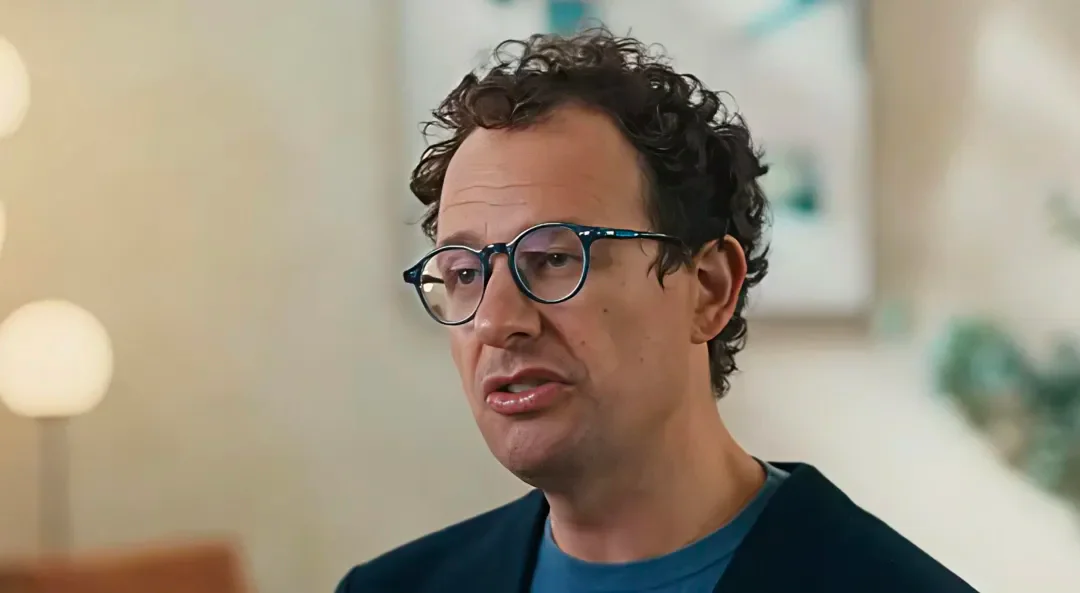
Previously, in an interview with CBS's 60 Minutes, Amodei noted that AI might eventually help discover treatments for most cancers, prevent Alzheimer's disease, and potentially double human life expectancy. He introduced the concept of the "compressed 21st century," suggesting that if AI collaborates with top scientists, the pace of medical progress could accelerate tenfold—compressing advancements that would otherwise take the entire 21st century into a span of 5 to 10 years.
This perspective carries personal significance: Amodei's father died from hepatitis C, yet just a few years after his passing, Sofosbuvir—a breakthrough drug with a cure rate exceeding 95%—was brought to market. Amodei noted that had AI accelerated such breakthroughs just a few years earlier, his father might still be alive today. It is an understandable starting point.
In response to his outlook, voices across medicine, pharmaceuticals, and AI have offered contrasting perspectives. Looking at these responses side by side offers far more nuance than simply labeling his prediction "right" or "wrong."
Medical and Pharmaceutical Sectors Remain Unconvinced
Dr. Eric Topol, an influential cardiologist in global digital medicine, offered a blunt assessment: "Severely disconnected from reality, simply impossible." He outlined the very brief list of non-infectious diseases that modern medicine can "completely cure" with drugs. Conditions such as hypertension, diabetes, and Alzheimer's disease can currently only be managed, not eradicated.
Computational biologist Keith Robison used even stronger language, calling such claims "peddling magical thinking, extraordinarily cruel to desperate patients." Meanwhile, Catharine Young, a researcher at the Harvard T.H. Chan School of Public Health, pointed to a fundamental biological reality: cancer is not a single disease, but an umbrella term for more than 200 distinct malignant conditions. A targeted therapy effective against lung cancer may prove entirely ineffective against pancreatic cancer.
Pharmaceutical industry pushback focused primarily on the realities of drug development. Industry observers noted that this debate touches on the valuation narrative surrounding AI drug discovery: while AI does improve research efficiency, algorithms cannot bypass high clinical failure rates or extensive regulatory pathways. A headline from The Wall Street Journal captured the mood: "Silicon Valley Promises AI Will Cure Disease. Drugmaker CEOs Aren’t Buying It, Because Biology Is the Barrier."
What AI Has—and Hasn't—Achieved in Oncology
Setting opinions aside, the empirical data tells a clear story.
On the front end of drug discovery, AI has delivered tangible acceleration. Literature reviews indicate that AI can shorten drug discovery timelines by 40% to 60%, while raising hit-to-lead success rates from 12% to between 25% and 35%. Furthermore, the proportion of AI-designed molecules entering Phase I clinical trials exceeds historical averages.
Downstream, however, significant obstacles persist. A 2026 analysis revealed that among AI-related drug discovery pipelines, the Phase I success rate stood at 77.8%, but plummeted to 19.5% in Phase II. Overall, the probability of an oncology drug progressing from first-in-human trials to market approval has long hovered around just 4%. AI accelerates the initial step of identifying candidate molecules, but it does not diminish the difficulty of proving efficacy and safety in human patients.
In cancer screening and diagnostics, AI exhibits a pattern of "strong in the lab, challenging in the real world." A 2026 review analyzing 4,667 primary cancer AI studies found that 88.2% were preclinical, with only 2.4% conducted as randomized controlled trials. Another review on multi-cancer early detection highlighted critical bottlenecks: sparse data, limited model generalizability, false positives and false negatives, and affordability. An AI system that performs accurately on retrospective datasets does not automatically translate to reliable performance across prospective real-world populations.
Two Definitions of "Cure," Two Distinct Timelines
This debate hinges on a semantic distinction that is often overlooked.
In oncology, "clinical cure" has a relatively defined benchmark: remaining free of disease recurrence or active lesions for five consecutive years following treatment. For early-stage breast, colorectal, thyroid, and cervical cancers, five-year survival rates following surgical intervention routinely surpass 90%—making clinical cure attainable today at early stages. However, a clinical cure does not guarantee complete cellular eradication, nor does it eliminate the lifetime risk of developing cancer again.
By contrast, for the general public, "becoming history" implies complete eradication—akin to smallpox, where a pathogen is definitively wiped out and ceases to occur altogether.
Bridging the gap between these two definitions requires far more than sheer computing power. The World Health Organization's framework categorizes cancer into three parts: one-third is preventable; one-third can achieve clinical cure through early diagnosis and prompt treatment; and the remaining third cannot be cured outright, but can be managed for long-term survival through integrated therapies. AI can contribute across all three dimensions—accelerating prophylactic vaccine design, improving screening sensitivity, and optimizing combination therapy regimens—yet it cannot alter the fundamental reality that cancer represents a biologically heterogenous group of diseases.
Demis Hassabis, head of Google DeepMind and Nobel laureate, has made similar projections suggesting AI could help cure all diseases within roughly a decade. This illustrates that Amodei's view is not isolated, but represents a technological optimism shared by those steering cutting-edge AI resources. Oncologists, however, operate on a very different timeline: a single failed Phase II trial can wipe out three to five years of work and hundreds of millions of dollars; a compound showing efficacy in animal models but failing in humans is the norm, not the exception.
Closing Thoughts
One of Amodei’s remarks stands out in particular: "If AI companies want to win back public trust, the only way is to cure cancer." That sentiment carries far more resonance than any standard PR messaging.
Yet "curing cancer" maps onto two vastly different timetables: one is the clinical cure already achieved in several early-stage cancers, which will continue to improve alongside AI-assisted screening and drug discovery; the other is the total eradication of cancer as an entire disease category—a goal bounded by the heterogeneity of over 200 distinct diseases, the evolution of drug resistance, the intricate complexities of the human immune system, and the incompressible time required for clinical validation.
Which timeline seems more grounded—ten years, or step by step? When a promise is both deeply inspiring and in need of rigorous scrutiny, what does it mean to the patients and families awaiting new therapies right now?
That question may well be more worth exploring than whether AI can technically achieve it.
References:
Silicon Valley Promises AI Will Cure Disease. Drugmaker CEOs Aren’t Buying It. The Wall Street Journal. 2026.
Artificial intelligence–enabled drug discovery: A growing but largely early-stage clinical pipeline. ScienceDirect. 2026.
AI Tools Show Early Promise Across Drug Discovery, Clinical Decision-Making in Lung Cancer. OncLive. 2026.
Big Data and Artificial Intelligence in Cancer Drug Discovery. JoVE. 2026.
AI in Drug Discovery: From Target Identification to Clinical Success in Cancer Therapeutics. Lighthope. 2026.
Machine learning and AI for cancer research and care: a review of applications, limitations, and future directions. PMC. 2026.
Artificial intelligence-driven multi-cancer screening: Achievements, challenges, and future prospects. ScienceDirect. 2026.
Demis Hassabis: AI could cure all diseases within 10 years. Times of India / 60 Minutes. 2025–2026.