In November 2026, a news report from Henan highlighted a frightening case: parents of a 20-day-old baby noticed lingering jaundice, constipation, and a thick tongue coating. Assuming the infant had “internal heat”, they gave 30 to 50 milliliters of plain water between feedings to cool the baby down. Instead, the infant developed water intoxication, swelling in the hands, feet, and scrotum, electrolyte imbalances, and kidney injury.
For adults, drinking extra water is usually harmless—our kidneys simply increase urine output to flush out excess fluid. For a newborn, however, plain water is not harmless. Babies are not miniature adults, and giving extra water to a young infant can trigger a dangerous chain reaction.
1. Milk Already Provides All the Water an Infant Needs
Many caregivers worry that a crying or constipated baby is thirsty. In reality, breast milk is roughly 87% to 88% water, and properly mixed infant formula contains a similar proportion of water. When a healthy infant feeds normally, milk already supplies all the hydration their body requires.
Major pediatric and nutritional guidelines—including the Dietary Guidelines for Chinese Residents (2022) and the National Health Commission’s Infant and Young Child Nutrition Feeding Assessment Service Guidelines (Trial, 2025)—recommend exclusive breastfeeding for the first six months without extra water or other foods. Formula-fed babies likewise do not need plain water between properly proportioned feedings, nor should formula ever be diluted with extra water to stretch supplies or “hydrate” the baby.
Adding plain water also takes up space in a tiny stomach without providing protein, fat, or essential micronutrients, which can interfere with milk intake and nutrition over time.
2. Immature Kidneys and the Risk of Cerebral Edema
Water intoxication in infants happens because a newborn’s kidneys are still maturing:
Lower glomerular filtration rate: Newborns filter blood plasma more slowly per unit of time than adults.
Developing tubular regulation: The renal tubules are still refining how they balance water and electrolytes.
When excess plain water enters the bloodstream faster than immature kidneys can excrete it, blood sodium levels—normally around 135 to 145 mmol/L—can drop sharply, causing dilutional hyponatremia. Because sodium helps maintain extracellular fluid osmotic pressure, a sudden drop in blood sodium lets water move across cell membranes into cells, causing them to swell.
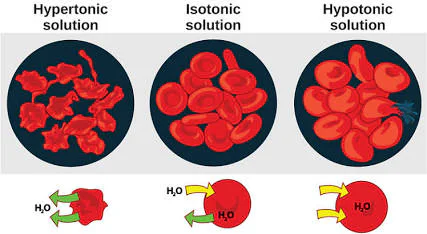
Fig. How hypotonic fluid shifts draw water into cells. Source: Biology, Animal Structure and Function, Osmotic Regulation and …
The diagram above illustrates the osmotic shift seen in hypotonic states: when fluid outside cells becomes diluted relative to the inside, water moves into cells (as shown on the right under Hypotonic solution). Inside the rigid skull, cerebral edema (brain cell swelling) has very little room to expand and can lead to vomiting, lethargy, seizures, impaired consciousness, or life-threatening complications.
3. Jaundice, Constipation, and “Internal Heat” Are Not the Same Thing
One of the biggest pitfalls in the Henan case was grouping unrelated signs—prolonged jaundice, constipation, and a coated tongue—under a single folk concept of “internal heat.”
Infant jaundice reflects bilirubin accumulation in the body as newborn red blood cells turn over and the liver’s processing capacity matures. Most physiological jaundice fades on its own, while persistent cases require medical evaluation rather than extra water. Under the Guideline for Diagnosis and Treatment of Common Neonatal Diseases in Primary Healthcare: Neonatal Jaundice (2025) by the Subspecialty Group of Neonatology, Chinese Pediatric Society, Chinese Medical Association, infants with jaundice lasting more than two weeks—or reappearing after fading—should have total and direct bilirubin checked before one month of age to rule out conditions such as cholestasis. Extra water does not speed up liver processing or biliary excretion of unconjugated bilirubin; phototherapy or other targeted care is used when clinically indicated.
Constipation and tongue coating have their own distinct causes. Stool frequency and consistency differ naturally between breastfed and formula-fed infants, so judging constipation requires looking at stool texture and difficulty passing stool rather than counting days between bowel movements alone.
Practical Takeaways for Feeding Infants
Age / Situation | Hydration & Feeding Guidance |
Under 6 months (healthy) | Feed breast milk on demand or properly mixed formula; no routine plain water and no diluted formula. |
6 months and older | Gradually introduce small sips of water from a cup alongside complementary foods, while keeping milk as a core source of nutrition and fluid. |
Illness or warning signs | Seek prompt medical care for diarrhea, vomiting, fever, or noticeably reduced urination; watch urgently for unusual drowsiness, swelling, seizures, or sluggishness after water intake. |