Unraveling Adherence Challenges to Bone Conduction Hearing Devices in Pediatric Microtia Patients
Highlight
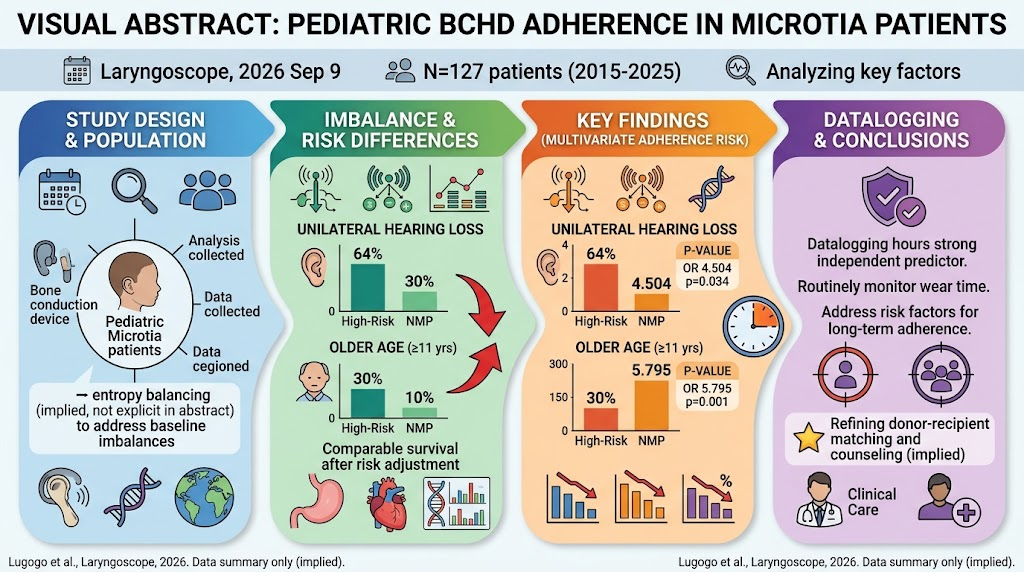
- Unilateral hearing loss significantly increases the risk of poor adherence to bone conduction hearing device (BCHD) use among pediatric microtia patients.
- Older children (≥7 years), particularly those aged 11 years and above, exhibit substantially lower follow-up adherence compared to younger patients.
- Children with public or no insurance have decreased adherence compared to those with private insurance, highlighting potential socioeconomic disparities.
- Reduced daily device wear, objectively measured by datalogging showing less than four hours per day, is a strong independent predictor of poor adherence and should be routinely monitored to guide interventions.
Study Background
MedXY registered readers
Sign in free to continue reading
Create or use your MedXY account to unlock the complete article.
This article was created using several editorial tools, including AI, as part of the process. Human editors reviewed this content before publication.