We use cookies

Our website uses essential cookies and, with your consent, additional cookies to measure performance and improve our services. Cookie Policy.

You can change your choice at any time.

MMedXYNews
HomeVideos
MedXY AI/MedXY News/Tag: bleeding risk
MedXY News
EnglishTag

bleeding risk

Ask MedXY AI
type 2 diabetesclinical trialheart failureimmunotherapyobesitycardiovascular riskatrial fibrillationbiomarkerscritical careclinical trialsHypertensionartificial intelligenceCardiologyoncologypublic healthtype 1 diabetesdiabetesMortalityAlzheimer's diseasecardiovascular diseasebreast cancerepidemiology

Latest news

Tag

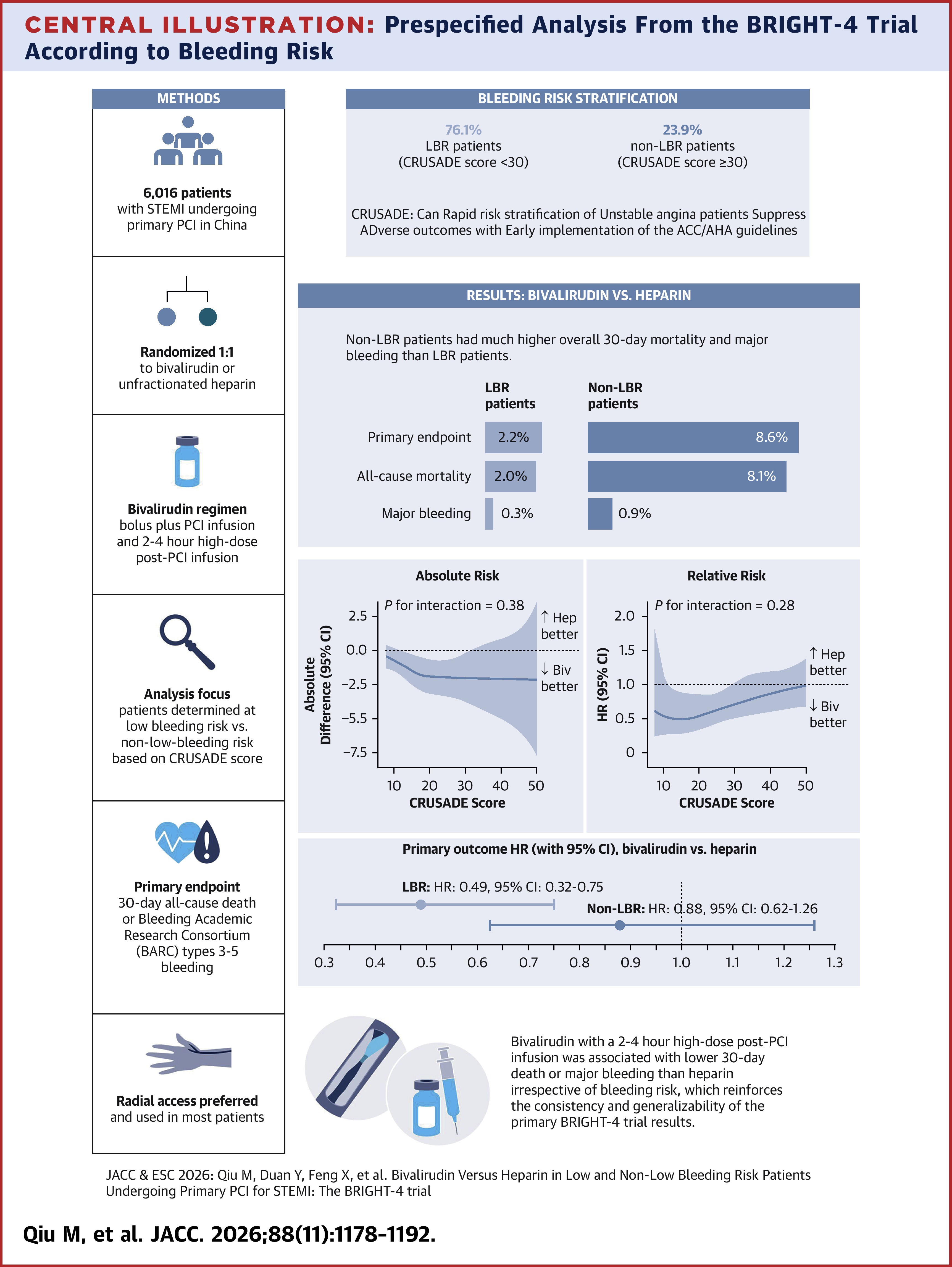
Bivalirudin Versus Heparin in Primary PCI for STEMI: Efficacy Across Low and High Bleeding Risk Patients – Insights from the BRIGHT-4 Trial
Cardiologybleeding riskSTEMI

Bivalirudin Versus Heparin in Primary PCI for STEMI: Efficacy Across Low and High Bleeding Risk Patients – Insights from the BRIGHT-4 Trial

By MedXY|Sep 17, 2026

The BRIGHT-4 trial demonstrates that bivalirudin with prolonged infusion reduces 30-day mortality and major bleeding compared to heparin in STEMI patients undergoing radial primary PCI, benefiting both low and higher bleeding risk groups.
Balancing Risks: Safety Profiles of Antiseizure Medications in Epilepsy Patients on Direct Oral Anticoagulants
Cardiologybleeding riskepilepsy

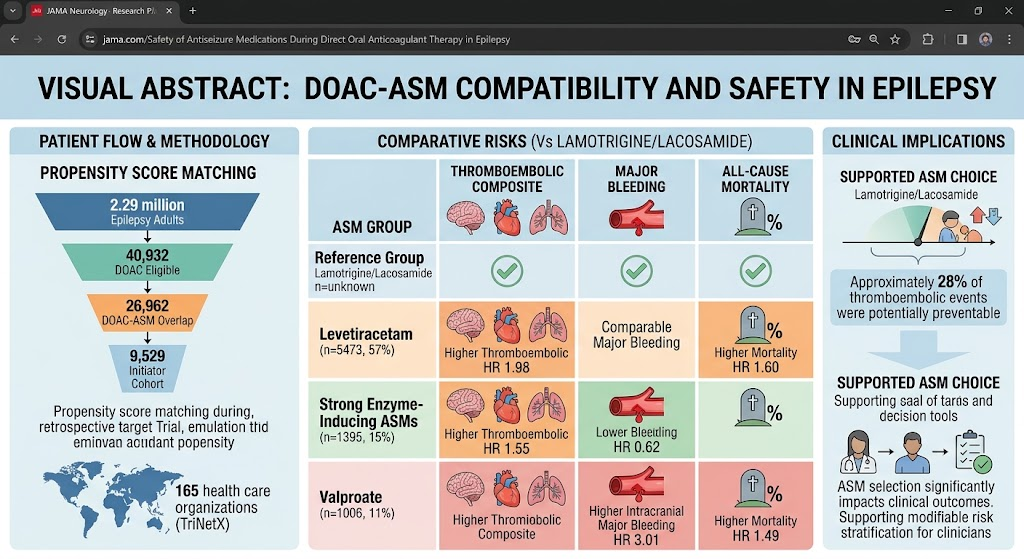
Balancing Risks: Safety Profiles of Antiseizure Medications in Epilepsy Patients on Direct Oral Anticoagulants

By MedXY|Aug 18, 2026

This study reveals distinct thromboembolic, bleeding, and mortality risks based on antiseizure medication selection in epilepsy patients receiving direct oral anticoagulants, highlighting the critical role of ASM choice on patient safety an

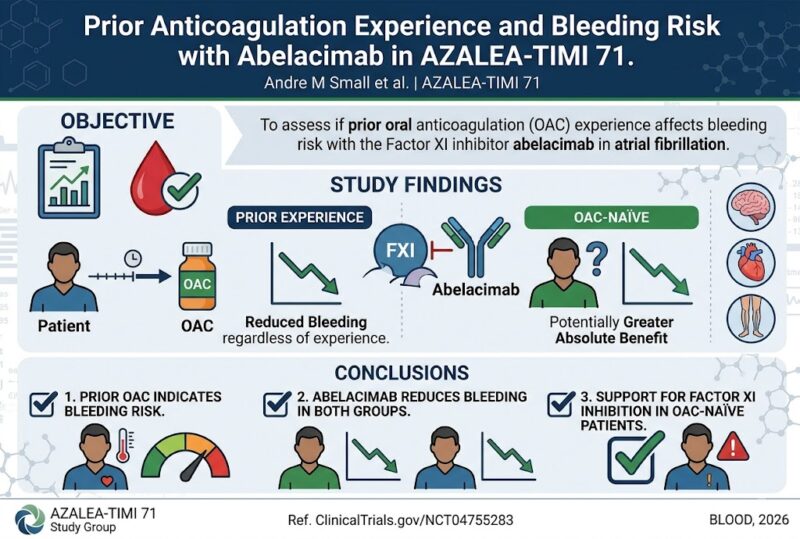
Abelacimab in Atrial Fibrillation: Impact of Prior Anticoagulation Experience on Bleeding Risk
Cardiologybleeding riskOral Anticoagulation

Abelacimab in Atrial Fibrillation: Impact of Prior Anticoagulation Experience on Bleeding Risk

By MedXY|Aug 11, 2026

The AZALEA-TIMI 71 study demonstrates that factor XI inhibition with abelacimab reduces bleeding risk in atrial fibrillation patients regardless of prior oral anticoagulation experience, with a potentially greater absolute benefit in antico

Multilevel Stewardship to Optimize Antithrombotic Therapy in DOAC Users: Lessons from a Veterans Health Initiative
CardiologyanticoagulationAntiplatelet Therapy

Multilevel Stewardship to Optimize Antithrombotic Therapy in DOAC Users: Lessons from a Veterans Health Initiative

By MedXY|Jun 25, 2026

A multicomponent stewardship intervention significantly reduced inappropriate antiplatelet prescription among patients on DOACs, decreasing bleeding risk, particularly in stable coronary artery disease.

Pre-Treatment Fibrin Clot Lysis Time Predicts Bleeding Risk in Atrial Fibrillation Patients on Oral Anticoagulants
Cardiologyatrial fibrillationbleeding risk

Pre-Treatment Fibrin Clot Lysis Time Predicts Bleeding Risk in Atrial Fibrillation Patients on Oral Anticoagulants

By MedXY|Apr 28, 2026

Shorter pre-treatment fibrin clot lysis time independently predicts higher bleeding risk in AF patients on oral anticoagulation, as evidenced by the ARISTOTLE trial.

Abelacimab Shows Superior Safety Over Rivaroxaban for Older Adults with Atrial Fibrillation
CardiologyAbelacimabatrial fibrillation

Abelacimab Shows Superior Safety Over Rivaroxaban for Older Adults with Atrial Fibrillation

By MedXY|Mar 12, 2026

A phase 2b study demonstrates that the Factor XI inhibitor abelacimab significantly reduces bleeding risk compared to rivaroxaban in older atrial fibrillation patients, offering a safer alternative for stroke prevention in high-risk populat

Redefining Anticoagulation Safety in the Elderly: Abelacimab Drastically Reduces Bleeding Risk in Phase 2b AZALEA-TIMI 71 Analysis
CardiologyAbelacimabatrial fibrillation

Redefining Anticoagulation Safety in the Elderly: Abelacimab Drastically Reduces Bleeding Risk in Phase 2b AZALEA-TIMI 71 Analysis

By MedXY|Feb 5, 2026

A prespecified analysis of the AZALEA-TIMI 71 trial demonstrates that the Factor XI inhibitor abelacimab significantly reduces bleeding risk compared to rivaroxaban in older patients with atrial fibrillation, potentially offering a safer al

NSAID Co-prescription in Atrial Fibrillation: Doubling the Bleeding Burden Across All Oral Anticoagulants
Cardiologyatrial fibrillationbleeding risk

NSAID Co-prescription in Atrial Fibrillation: Doubling the Bleeding Burden Across All Oral Anticoagulants

By MedXY|Jan 4, 2026

A nationwide cohort study demonstrates that NSAID use in patients with atrial fibrillation on oral anticoagulants nearly doubles the risk of hospital-diagnosed bleeding, with significant risks observed across all anticoagulant types and mul

No Net Benefit from Adding Antiplatelet Therapy to Anticoagulation After Ischemic Stroke With Atrial Fibrillation and Atherosclerosis — Higher Bleeding Risk
CardiologyAntithrombotic Therapyatrial fibrillation

No Net Benefit from Adding Antiplatelet Therapy to Anticoagulation After Ischemic Stroke With Atrial Fibrillation and Atherosclerosis — Higher Bleeding Risk

By MedXY|Dec 7, 2025

In a randomized trial of 316 patients with ischemic stroke/TIA, nonvalvular atrial fibrillation, and atherosclerotic disease, adding an antiplatelet to anticoagulation did not reduce ischemic events but doubled clinically relevant bleeding

Aspirin in the Healthy Elderly: ASPREE’s Clear Message — No Benefit, Higher Bleeding, and Unexpected Cancer Signal
CardiologyAspirinbleeding risk

Aspirin in the Healthy Elderly: ASPREE’s Clear Message — No Benefit, Higher Bleeding, and Unexpected Cancer Signal

By MedXY|Nov 28, 2025

ASPREE randomized ~19,000 older adults to low‑dose aspirin or placebo. Over ~4.7 years, aspirin did not improve disability‑free survival or reduce cardiovascular events, increased major bleeding, and showed a surprising rise in cancer‑relat

Clonal Hematopoiesis in Older Adults: Implications for Cardiovascular Risk, Bleeding, and Aspirin Use
CardiologyAspirinbleeding risk

Clonal Hematopoiesis in Older Adults: Implications for Cardiovascular Risk, Bleeding, and Aspirin Use

By MedXY|Oct 15, 2025

This study reveals that clonal hematopoiesis of indeterminate potential (CHIP) in adults aged 70+ does not increase cardiovascular risk but is associated with heightened bleeding risk. Aspirin showed no additional benefits or harms for thos

Evaluating Aspirin-Free Therapy Versus Dual Antiplatelet Treatment Post-Coronary Stenting: Insights from the STOPDAPT-3 Trial
CardiologyAntiplatelet Therapybleeding risk

Evaluating Aspirin-Free Therapy Versus Dual Antiplatelet Treatment Post-Coronary Stenting: Insights from the STOPDAPT-3 Trial

By MedXY|Oct 9, 2025

The STOPDAPT-3 randomized trial compared aspirin-free low-dose prasugrel monotherapy with standard dual antiplatelet therapy, revealing noninferior cardiovascular outcomes but no reduction in major bleeding after PCI, with signals of increa

Evaluating the Adjuvant Role of Low-Dose Aspirin in Cancer-Associated Venous Thromboembolism: Efficacy, Safety, and Clinical Implications
OncologyanticoagulationAspirin

Evaluating the Adjuvant Role of Low-Dose Aspirin in Cancer-Associated Venous Thromboembolism: Efficacy, Safety, and Clinical Implications

By MedXY|Oct 4, 2025

Low-dose aspirin added to anticoagulation for cancer-associated VTE reduces recurrence and PE-related mortality but increases bleeding risk, without improving overall survival or net clinical benefit over 6 months.

Abelacimab vs. Rivaroxaban in Atrial Fibrillation Patients on Antiplatelet Therapy: Insights from the AZALEA-TIMI 71 Trial
CardiologyAbelacimabAntiplatelet Therapy

Abelacimab vs. Rivaroxaban in Atrial Fibrillation Patients on Antiplatelet Therapy: Insights from the AZALEA-TIMI 71 Trial

By MedXY|Oct 3, 2025

The AZALEA-TIMI 71 trial shows abelacimab, a novel factor XI inhibitor, reduces bleeding risk compared to rivaroxaban in atrial fibrillation patients on antiplatelet therapy, suggesting a safer anticoagulation alternative.

Decoding High‑Risk Enrollment in TWILIGHT: How Risk Feature Burden Shapes Ischemic and Bleeding Outcomes and the Consistent Benefit of Ticagrelor Monotherapy
Cardiologybleeding riskPCI

Decoding High‑Risk Enrollment in TWILIGHT: How Risk Feature Burden Shapes Ischemic and Bleeding Outcomes and the Consistent Benefit of Ticagrelor Monotherapy

By MedXY|Oct 2, 2025

Posthoc analysis of TWILIGHT shows that ischemic risk rises with the number of high‑risk features, bleeding does not, and ticagrelor monotherapy after 3 months reduces bleeding versus ticagrelor plus aspirin without increasing ischemic even

Ask MedXY AI

Most popular

Intimate Health
Five Benefits for Women Continuing Sexual Activity After Menopause
Intimate Health
Why Some Women Have a Strong Sex Drive—And Why Men Shouldn't Worry About It
Nursing & care
How often should a couple have sex?
Intimate Health
Classic Intimacy Recommendations: How to Help Women Reach Orgasm and Enjoy Mutual Pleasure
Intimate Health
What Makes a Woman "Physiologically Addicted" Is Never Money, But These Two Relationship Qualities
© 2026 MedXY
Contact usAbout usPrivacy PolicyMedXY story