Unraveling the Risks: T-Cell Lymphoma After CAR T-Cell Therapy—A Rare but Real Concern
Introduction
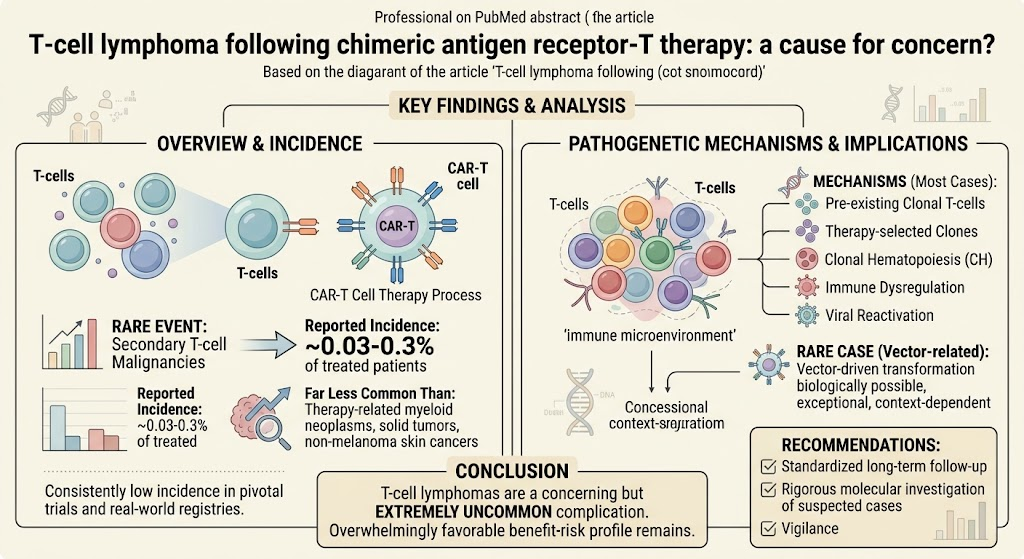
Chimeric antigen receptor (CAR) T-cell therapy has emerged as a revolutionary approach in the management of relapsed or refractory B-cell malignancies and multiple myeloma, significantly improving patient survival. However, as this therapeutic modality is used in a growing number of patients and long-term outcomes become clearer, safety concerns related to secondary malignancies have surfaced. Among these, the development of T-cell lymphomas post-CAR T infusion, although extremely rare, has gained increasing scrutiny from clinicians and regulatory agencies. This article critically examines the epidemiology, molecular underpinnings, pathogenesis, diagnostic complexities, and clinical considerations surrounding T-cell lymphomas arising after CAR T-cell therapy, situating these findings within the broader context of CAR T-cell safety and efficacy.
Background: Clinical Context and Unmet Needs
Sign in free to continue reading
Create or use your MedXY account to unlock the complete article.
This article was created using several editorial tools, including AI, as part of the process. Human editors reviewed this content before publication.