Highlight
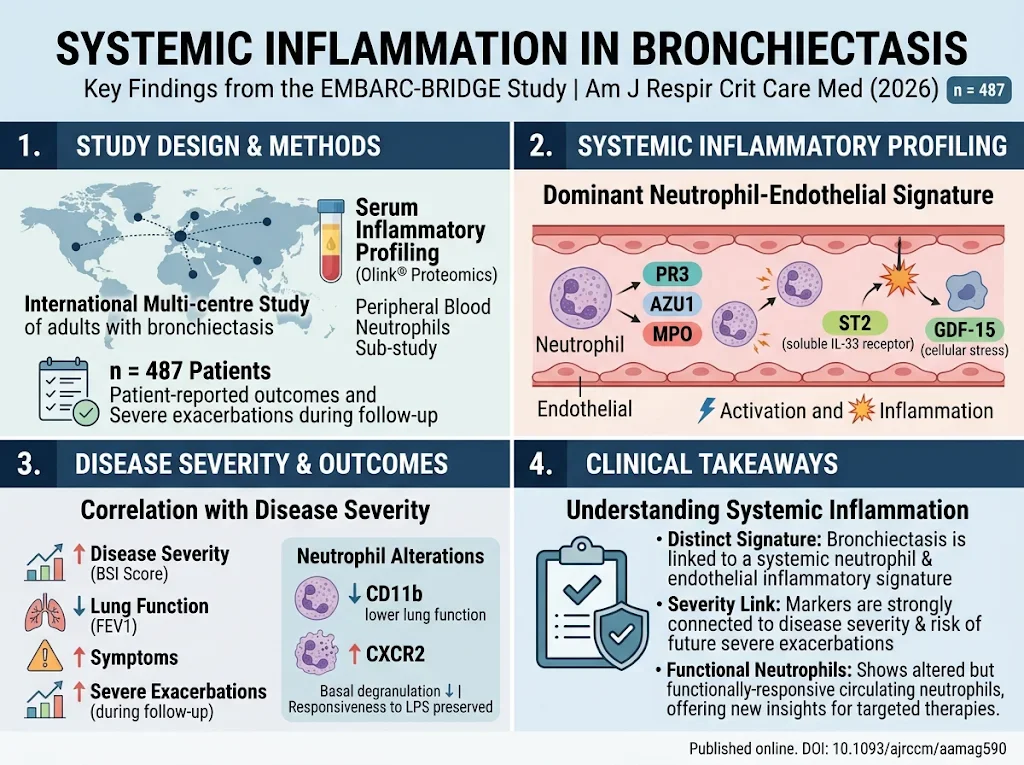
The EMBARC-BRIDGE multi-centre study comprehensively profiled systemic inflammation and neutrophil function in bronchiectasis, revealing a neutrophil-endothelial protein signature that correlates strongly with disease severity and exacerbation risk. Importantly, circulating neutrophils display altered surface markers and degranulation patterns, indicating functional dysregulation yet preserved responsiveness to bacterial stimuli.
Study Background
Bronchiectasis is a chronic respiratory disease characterized by abnormal and permanent bronchial dilatation, leading to persistent airway inflammation and recurrent infections. Neutrophilic inflammation within the airways has been established as a driver of lung damage and exacerbations. However, systemic inflammation and the functional status of circulating neutrophils in bronchiectasis remain less well understood. Understanding these systemic immune alterations is crucial because systemic inflammation could contribute to disease progression and serve as biomarkers for severity or therapeutic targets.
Study Design
The EMBARC-BRIDGE study was an observational international multi-centre investigation involving 487 adult patients with bronchiectasis. Using advanced proteomic analysis via Olink® platforms, investigators conducted serum inflammatory profiling to identify systemic protein patterns. Clinical information, including bronchiectasis severity index scores, lung function measurements, symptom burden, and follow-up data on severe exacerbations, were correlated with proteomics findings.
A nested sub-study compared peripheral blood neutrophils from bronchiectasis patients to healthy controls. This included assessment of surface activation markers such as CD11b and CXCR2, basal and stimulated degranulation responses, and the capacity for neutrophil extracellular trap (NET) formation, providing functional insights into circulating neutrophils in bronchiectasis.
Key Findings
Systemic Inflammatory Signature: Proteomic profiling identified a dominant neutrophil-endothelial protein signature. Elevations in neutrophil granule proteins such as proteinase 3 (PR3), azurocidin-1 (AZU1), and myeloperoxidase (MPO) were significantly associated with increased disease severity measured by the bronchiectasis severity index, worse lung function (as measured by FEV1), and increased symptom burden. Additionally, the soluble IL-33 receptor ST2 and GDF-15, a cellular stress marker, correlated positively with these parameters and were predictive of higher rates of severe exacerbations during longitudinal follow-up.
Neutrophil Phenotype and Function: Circulating neutrophils in bronchiectasis patients exhibited reduced surface expression of CD11b, an integrin important for neutrophil adhesion and migration, correlating with declining lung function. In contrast, CXCR2 expression, a chemokine receptor mediating neutrophil chemotaxis, was increased, suggesting altered migratory behavior. Functional testing revealed that basal neutrophil degranulation was reduced, which may reflect an exhausted or altered activation state, yet the capability to degranulate effectively in response to lipopolysaccharide (LPS) stimulation was preserved. This suggests that neutrophils maintain the ability to respond to bacterial challenges despite quantitative changes in resting activation markers.
Clinical Implications: The linkage of circulating inflammatory proteins and neutrophil functional changes with clinical severity and risk of severe exacerbations supports the concept that systemic inflammation is not merely a marker of lung disease but potentially a contributor to disease progression and exacerbation susceptibility in bronchiectasis. Monitoring these biomarkers could enhance risk stratification and guide personalized management.
Expert Commentary
The EMBARC-BRIDGE study advances our understanding of bronchiectasis as a systemic inflammatory disorder characterized by dysregulated neutrophil activity and endothelial involvement. The identification of a neutrophil-endothelial signature encompassing proteases and soluble immune receptors underscores the complex immune interplay driving disease pathogenesis. Altered neutrophil surface marker expression and degranulation profiles suggest a state of altered readiness or dysfunction, which may impair effective host defense or promote tissue damage.
One limitation is the observational design, which precludes direct causal inference between systemic inflammatory markers and clinical outcomes. Additionally, the study did not fully delineate the mechanisms underpinning neutrophil alterations or endothelial involvement, warranting further mechanistic and interventional research. Nonetheless, these findings align with emerging literature emphasizing systemic immune dysregulation in bronchiectasis.
Conclusion
This comprehensive international study demonstrates that bronchiectasis involves substantial systemic neutrophilic and endothelial inflammation closely linked to clinical severity and exacerbation risk. Furthermore, circulating neutrophils are phenotypically and functionally altered but retain responsiveness to bacterial triggers, highlighting neutrophil plasticity in disease. These insights emphasize the potential value of systemic inflammatory markers for prognostication and as targets for novel therapies aiming to mitigate inflammation and reduce exacerbations in bronchiectasis.
Funding and Registration
The EMBARC-BRIDGE study was supported by European Bronchiectasis Research Network (EMBARC) funding. Detailed study registrations and funding sources can be found in the original publication by Hughes et al., 2026.
References
Hughes C, Long MB, Stobo J, Johnson ED, et al. Systemic Inflammation in Bronchiectasis: Data from the EMBARC-BRIDGE Study. Am J Respir Crit Care Med. 2026 Nov 7; PMID: 42997979.
Chalmers JD, et al. The Role of Neutrophils in the Pathogenesis of Bronchiectasis. Eur Respir J. 2019;54(3):1900500.
Aliberti S, Lonni S, Dore S, et al. Inflammation and Structural Lung Damage in Bronchiectasis. Eur Respir Rev. 2020;29(157):190119.