Swimming Plus Education: Short-Term Benefits for Chronic Low Back Pain Management
Highlight
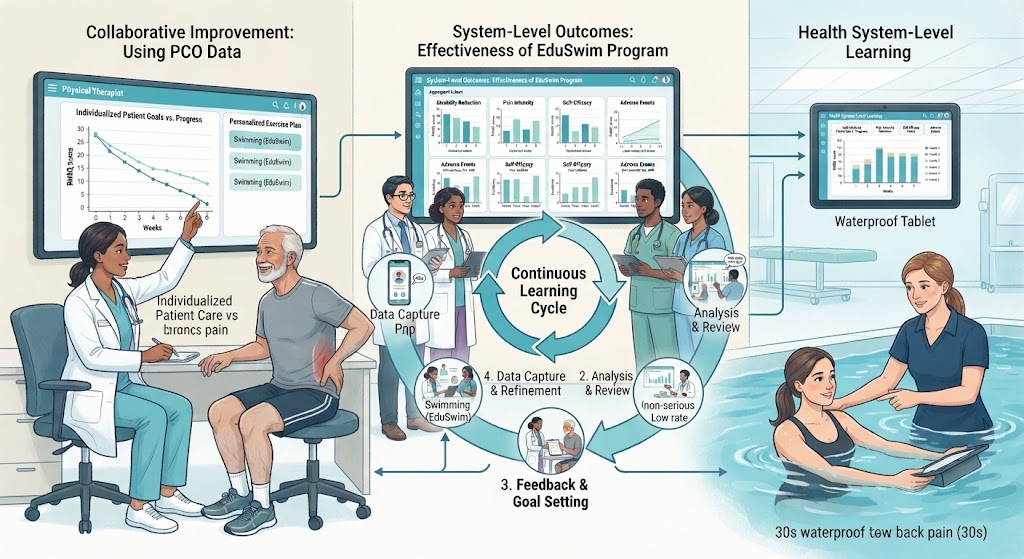
This randomized controlled trial demonstrates that an individualized swimming and education program improves disability outcomes in adults with chronic non-specific low back pain more effectively than education alone at 8 weeks. However, the benefits did not persist at 1-year follow-up. Secondary outcomes, including pain intensity and self-efficacy, showed early improvement trends with swimming intervention. Though the intervention group experienced more adverse events, these were mostly non-serious.
Study Background
Chronic low back pain (CLBP) represents a significant global health burden and is a leading cause of disability worldwide. Despite numerous treatment modalities, effective long-term management remains challenging. Exercise therapy is a core component recommended by clinical guidelines for CLBP management due to its benefits on pain, function, and psychological factors. Swimming is a low-impact aerobic exercise that can improve muscle strength, flexibility, and cardiovascular health without imposing excessive mechanical stress on the spine. However, there is limited high-quality evidence from randomized controlled trials assessing swimming’s effectiveness specifically for CLBP. This study addresses this gap by evaluating an individualized swimming program combined with education compared to education alone, delivered via telehealth, reflecting contemporary rehabilitation approaches accessible during and beyond the COVID-19 pandemic.
Study Design
This was a single-blinded, randomized controlled trial involving 76 adults with chronic (>3 months), non-specific low back pain. Participants were randomized 1:1 into an intervention group receiving a personalized swimming and education program or a control group receiving education alone. The intervention entailed four telehealth physiotherapy sessions over 8 weeks, focusing on individualized swimming exercise guidance combined with education on pain self-management and posture. The control group received up to two telehealth physiotherapy sessions covering the same educational content without swimming instructions.
The primary outcome was disability measured by the Roland Morris Disability Questionnaire (RMDQ) at 8 weeks. Secondary outcomes included pain intensity (numeric rating scale), patient-specific functional limitations, pain self-efficacy, kinesiophobia (fear of movement), patient-perceived global improvement, and adverse events. Linear mixed models were utilized to analyze group differences over time.
Key Findings
The intervention group showed a statistically significant and clinically relevant improvement in disability at 8 weeks compared to education alone, with a mean difference in RMDQ score of -2.5 points (95% confidence interval [CI], -4.5 to -0.5). This difference did not persist at 52 weeks, indicating that the short-term benefits waned over time.
Regarding pain intensity, the swimming and education group achieved a small reduction at 8 weeks (mean difference -0.7; 95% CI, -1.5 to 0.0), which might be below the threshold for clinical significance. Other secondary outcomes showed an early trend favoring the intervention group, including improved pain self-efficacy and reduced fear of movement, although these effects diminished by one year.
Regarding safety, the intervention group reported more adverse events, mostly minor and non-serious, such as muscle soreness or mild discomfort related to swimming. No serious adverse events were reported, indicating that the program is generally safe.
Expert Commentary
This trial adds valuable evidence supporting swimming as a feasible and moderately effective exercise modality for short-term improvement in disability among CLBP patients. The individualized program delivered through telehealth is particularly relevant given the increasing need for remote rehabilitation options. However, the lack of sustained benefit at one year highlights the importance of longer-term strategies to maintain improvements, potentially through ongoing exercise support or integration with multidisciplinary care.
Study limitations include the relatively small sample size and the inability to blind participants to the intervention, which might introduce performance bias. Additionally, the generalizability may be limited to patients willing and able to swim and those with access to suitable facilities.
Current clinical guidelines routinely endorse exercise as a first-line treatment for CLBP but do not specify swimming as a preferred modality. This study supports adding swimming to the repertoire of recommended exercises, especially for patients seeking low-impact options. Future research should explore maintenance programs, different exercise intensities, or combinations with behavioral therapies for enhanced and sustained benefit.
Conclusion
An individualized swimming and education program delivered via telehealth is an effective and safe intervention to reduce disability in adults with chronic low back pain in the short term. Although pain intensity improvements were modest and benefits declined by 52 weeks, this approach offers an attractive aquatic rehabilitation option that complements education and self-management strategies. Clinicians should consider patient preferences and access factors when recommending swimming as part of comprehensive CLBP care.
Funding and Trial Registration
The trial was registered under ACTRN12624000263594. Details regarding funding sources were not specified in the abstract and should be consulted in the full text for potential conflicts of interest and funding disclosures.
References
1. Wareham DM, et al. Effectiveness of an individualised swimming and education programme for chronic low back pain (EduSwim): a randomized controlled trial. Br J Sports Med. 2026 Sep 21;60(17):1298-1305. PMID: 42481208.
2. Hayden JA, et al. Exercise therapy for chronic low back pain. Cochrane Database Syst Rev. 2005;(3):CD000335.
3. Qaseem A, et al. Noninvasive treatments for acute, subacute, and chronic low back pain: A clinical practice guideline. Ann Intern Med. 2017;166(7):514-530.
This article was created using several editorial tools, including AI, as part of the process. Human editors reviewed this content before publication.