We use cookies

Our website uses essential cookies and, with your consent, additional cookies to measure performance and improve our services. Cookie Policy.

You can change your choice at any time.

MMedXYNews
HomeVideos
MedXY AI/MedXY News/Section: Clinical Updates

Social Determinants of Health in Early to Mid-Adulthood and Risk of Early-Onset Stroke: A Comprehensive Review
MedXY Editorial Team•Sep 8, 2026•Clinical Updates
health disparitiesepidemiologyearly-onset stroke

Highlights

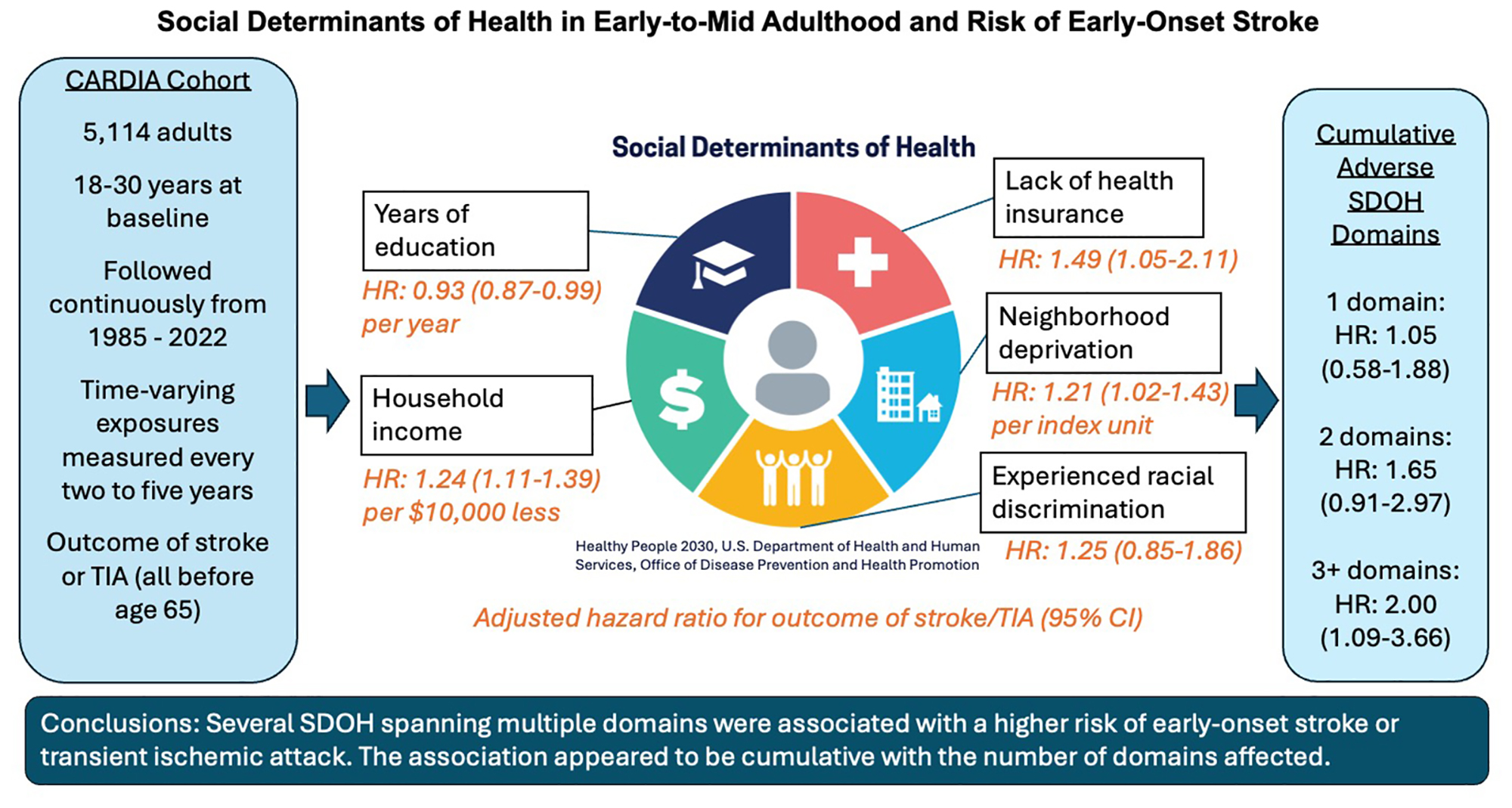
  • Adverse social determinants of health (SDOH) in early to mid-adulthood are independently associated with an increased risk of early-onset stroke.
  • A dose-dependent relationship exists: individuals exposed to multiple adverse SDOH domains have a substantially higher stroke risk.
  • Key SDOH domains linked to stroke include lower household income, lower educational attainment, neighborhood deprivation, and lack of health insurance.
  • Racial and sex disparities modulate the impact of SDOH on stroke risk, with Black individuals and women showing stronger associations.

Background

MedXY registered readers

Sign in free to continue reading

Create or use your MedXY account to unlock the complete article.

This article was created using several editorial tools, including AI, as part of the process. Human editors reviewed this content before publication.

Related articles

Open language-specific specialty feeds and department pages.

Social Inequalities in Gestational Diabetes: Insights from a Nationwide Swedish Cohort StudyThis Swedish cohort study reveals growing gestational diabetes prevalence with marked disparities by social determinants such as education, income, and nativity, underscoring the need for targeted prevention and equitable care.Sep 17, 2026Global Burden of Disorders of Gut-Brain Interaction: Insights from Rome V Versus Rome IV CriteriaThe Rome V global epidemiology survey confirms a high prevalence of disorders of gut-brain interaction (DGBI) worldwide, consistent with prior Rome IV findings, underscoring a significant and persistent global clinical burden.Sep 15, 2026Heart Failure in Portuguese Adults Aged 50 and Above: Insights from the PORTHOS Study on Prevalence and Predominant PhenotypesThe PORTHOS study reveals a 16.5% prevalence of heart failure among Portuguese adults aged 50+, with HFpEF constituting over 90% of cases, mostly undiagnosed, highlighting the need for enhanced screening strategies in aging populations.Sep 15, 2026
Loading comments...
MedXY briefing

Get the free newsletter

Evidence-led clinical news, trends, and analysis—delivered to your inbox.

Ask MedXY AI

Most popular

Intimate Health
Five Benefits for Women Continuing Sexual Activity After Menopause
Intimate Health
Why Some Women Have a Strong Sex Drive—And Why Men Shouldn't Worry About It
Nursing & care
How often should a couple have sex?
Intimate Health
Classic Intimacy Recommendations: How to Help Women Reach Orgasm and Enjoy Mutual Pleasure
Intimate Health
What Makes a Woman "Physiologically Addicted" Is Never Money, But These Two Relationship Qualities
© 2026 MedXY
Contact usAbout usPrivacy PolicyMedXY story
Childhood Mental Health-Related Emergency Department Visits and Pediatric Volume Dynamics in the US (2016-2022): A Comprehensive Review
Pediatric mental health ED visits in the US have surged 2016-2022, exhibiting volume-dependent disparities in patient demographics and diagnoses, highlighting opportunities for tailored interventions to enhance care across diverse emergency
Sep 13, 2026
Evolving Epidemiology and Survival Trends in Myeloproliferative Neoplasms: Insights from SEER 2000-2021Analysis of SEER data from 2000-2021 reveals incidence, survival trends, and demographic disparities in US patients with myeloproliferative neoplasms, highlighting improved outcomes particularly in primary myelofibrosis and areas for furtheSep 13, 2026
Unraveling Adherence Challenges to Bone Conduction Hearing Devices in Pediatric Microtia PatientsThis study identifies unilateral hearing loss, older age, and insurance status as key factors associated with poor adherence to bone conduction hearing devices in children with microtia, emphasizing the critical role of routine monitoring oSep 13, 2026