We use cookies

Our website uses essential cookies and, with your consent, additional cookies to measure performance and improve our services. Cookie Policy.

You can change your choice at any time.

MMedXYNews
HomeVideos
MedXY AI/MedXY News/Section: Diabetes & Endocrinology

Mortality and Morbidity After Below-Knee Amputation in Diabetes: Insights from a 25-Year English Cohort Study
MedXY Editorial Team•Sep 17, 2026•Diabetes & Endocrinology
diabetesbelow-knee amputationreamputationcomorbidityMortality

Highlight

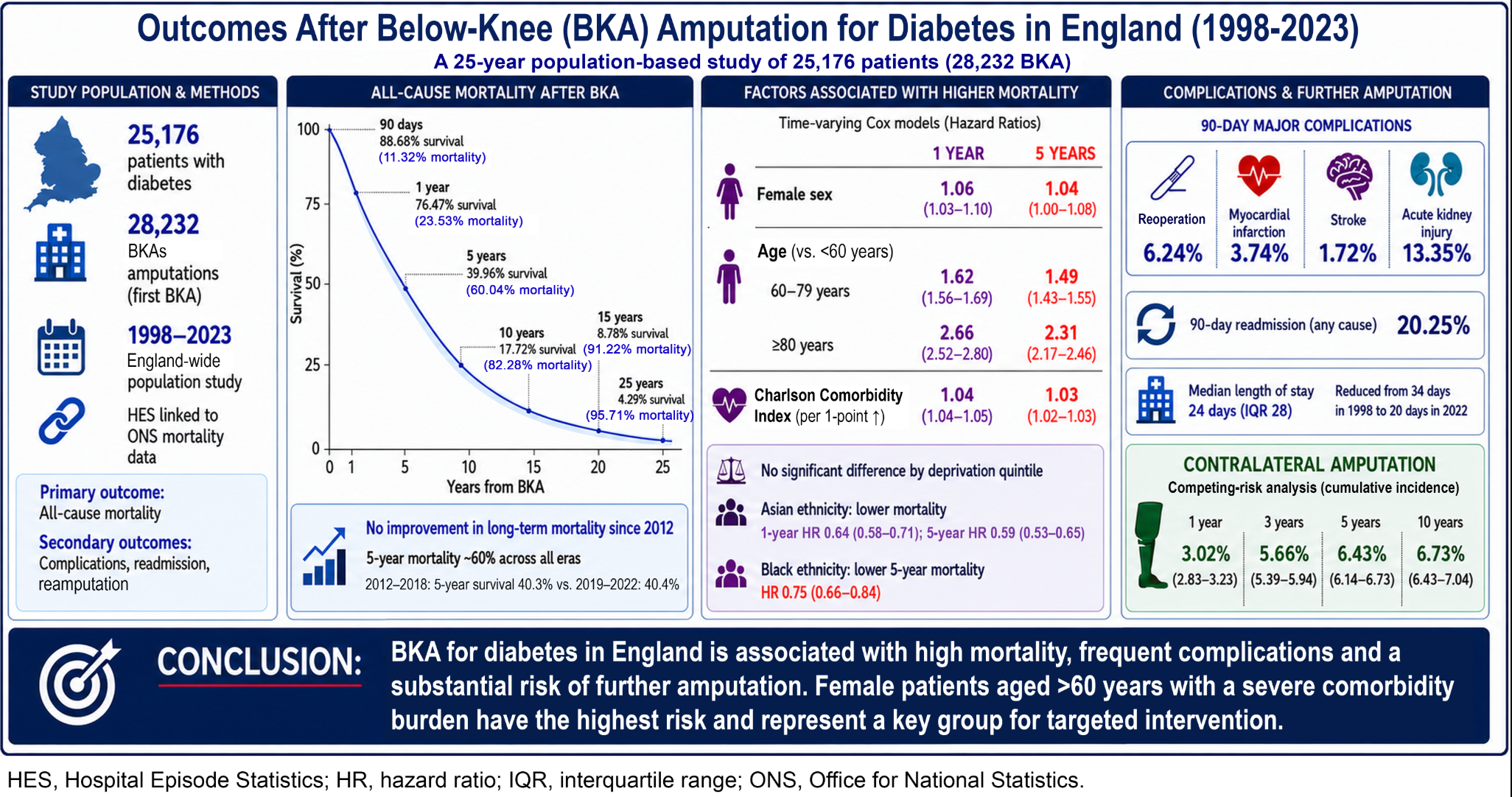
Below-knee amputation (BKA) in people with diabetes is associated with substantial mortality, showing no improvement over the past decade. One-year mortality stands at 23.5% and rises dramatically to over 82% at 10 years. Older age, female sex, and a higher burden of comorbidities independently increase mortality risk post-BKA. Additionally, 90-day postoperative complications remain frequent, underscoring the complex clinical challenges of advanced diabetic foot disease.

Study Background and Disease Burden

MedXY registered readers

Sign in free to continue reading

Create or use your MedXY account to unlock the complete article.

This article was created using several editorial tools, including AI, as part of the process. Human editors reviewed this content before publication.

Related articles

Open language-specific specialty feeds and department pages.

Reducing Mortality in Cardiogenic Shock: The Impact of Hospital Capability and Transfer StrategiesHigher hospital cardiac capability correlates with lower mortality in cardiogenic shock patients, and regionalized hub-and-spoke models mitigate the transfer penalty associated with patient instability.Sep 19, 2026Hemoglobin Levels and Mortality Risk: Insights from a Large UK Cohort StudyA UK prospective cohort study reveals a U-shaped association between hemoglobin concentration and mortality, with both low and high levels linked to increased death risk across age and sex groups.Sep 13, 2026Global Hospital Infrastructure and Its Impact on Mortality After Pancreas Surgery: Insights from the Hospital Resource IndexA global study identifies key hospital-level modifiable resources that reduce 90-day mortality after pancreas surgery and introduces a composite Hospital Resource Index to guide improvements beyond surgical volume centralization.Sep 12, 2026
Loading comments...
MedXY briefing

Get the free newsletter

Evidence-led clinical news, trends, and analysis—delivered to your inbox.

Ask MedXY AI

Most popular

Intimate Health
Five Benefits for Women Continuing Sexual Activity After Menopause
Intimate Health
Why Some Women Have a Strong Sex Drive—And Why Men Shouldn't Worry About It
Nursing & care
How often should a couple have sex?
Intimate Health
Classic Intimacy Recommendations: How to Help Women Reach Orgasm and Enjoy Mutual Pleasure
Intimate Health
What Makes a Woman "Physiologically Addicted" Is Never Money, But These Two Relationship Qualities
© 2026 MedXY
Contact usAbout usPrivacy PolicyMedXY story
Global Trends in the Burden of Ischemic Stroke Attributable to Diabetes Versus Atrial Fibrillation
This study analyzes global trends comparing ischemic stroke burdens linked to diabetes and atrial fibrillation, revealing a rising impact of diabetes-related stroke and highlighting the need for targeted interventions.
Sep 12, 2026
Charcot Neuro-Osteoarthropathy in Diabetes: High Risk of Hospitalization, Amputation, and Mortality Revealed by Regional Cohort StudyCharcot neuro-osteoarthropathy (CNO) in people with diabetes is linked to frequent emergency hospitalizations, substantial risk of limb amputation, and reduced survival, highlighting urgent need for intensified multidisciplinary care.Sep 5, 2026
Impact of Geographic Access on Mortality in Cardiogenic Shock: Insights from a Nationwide Korean CohortLonger hospital arrival times significantly increase both in-hospital and long-term mortality in cardiogenic shock, highlighting the urgent need for regional care coordination and early triage.Sep 5, 2026