Highlight
The study followed 181 children with Zika-related microcephaly over five years, revealing high rates of severe neurological impairment and systemic complications including dysphagia, ophthalmological abnormalities, and frequent hospitalizations primarily due to respiratory issues and seizures.
Severe microcephaly and neurological abnormalities were common, with over 70% showing abnormal neurological findings and cortical atrophy evident in nearly two-thirds of cases by brain imaging.
Late-onset manifestations such as hearing deficits and the need for gastrostomy feeding were documented, underscoring the necessity for long-term multidisciplinary care.
Study Background
Zika virus infection during pregnancy has been established as a cause of congenital Zika syndrome, a condition marked most notably by microcephaly and severe neurodevelopmental impairment. This syndrome has profound public health implications, particularly in endemic regions. Although the clinical features at birth are documented, less is known about the longitudinal course and emerging complications in early childhood. Understanding the ongoing clinical needs and outcomes of affected children is essential for planning healthcare resources and interventions.
Study Design
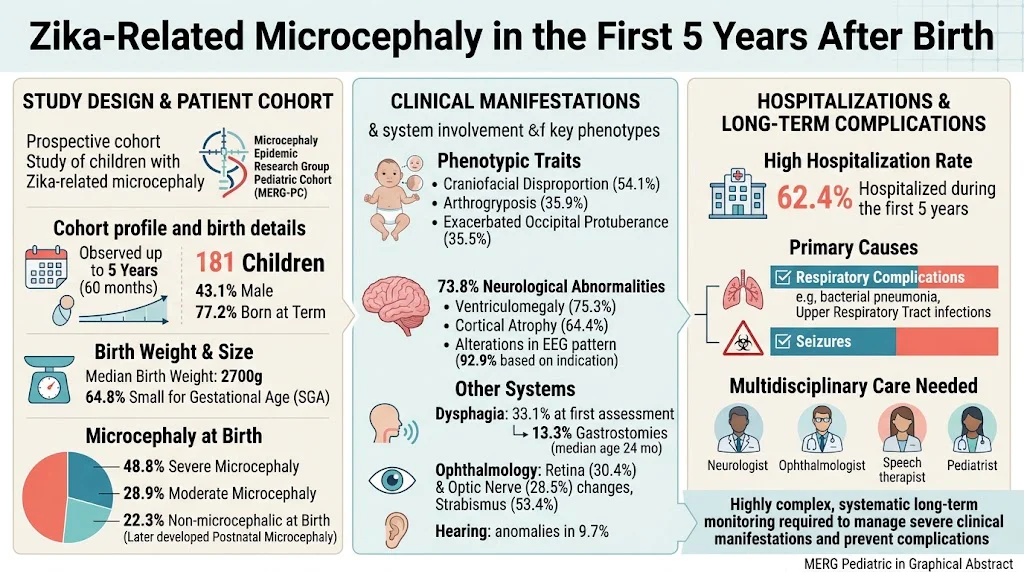
This investigation utilized a longitudinal cohort design as part of the Microcephaly Epidemic Research Group Pediatric Cohort. A total of 181 children diagnosed with Zika-related microcephaly were prospectively followed up to 60 months of age. Clinical, neurological, ophthalmological, audiological, and imaging data were collected systematically. The assessments included physical examinations, cranial imaging, electroencephalography (EEG), and evaluations for feeding difficulties, hearing, and vision anomalies.
Key Findings
Demographics and Birth Characteristics: The cohort comprised 43.1% male children; the majority (77.2%) were born at term, but a substantial proportion (64.8%) were classified as small for gestational age. Of the infants studied, 48.8% had severe microcephaly, while 22.3% were diagnosed with microcephaly postnatally.
Phenotypic Features: Craniofacial disproportion was observed in 54.1%, arthrogryposis in 35.9%, and prominent occipital protuberance in 35.5% of children, highlighting diverse morphological manifestations.
Neurological and Developmental Outcomes: Neurological assessment at a median age of 15.9 months identified abnormalities in 73.8% of children. Imaging detected ventriculomegaly in 75.3% and cortical atrophy in 64.4%. EEG performed in 84 children revealed altered patterns in 92.9%, indicating a high burden of electrical brain dysfunction, frequently correlating with epilepsy.
Feeding and Respiratory Complications: Dysphagia affected about one-third of evaluated children, with 13.3% requiring gastrostomy feeding, reflecting severe swallowing difficulties. Hospitalizations were common (62.4%), predominantly due to respiratory issues and seizures, underscoring the vulnerability of this population to acute medical events.
Ophthalmologic and Audiological Findings: Retinal changes were detected in 30.4% and optic nerve abnormalities in 28.5% of patients. Strabismus was noted in over half (53.4%). Hearing anomalies were present in 9.7% of those assessed.
Expert Commentary
The comprehensive multidisciplinary follow-up of children with confirmed Zika-related microcephaly demonstrates that this congenital infection leads to a complex, multisystem disorder with severe neurological sequelae persisting beyond infancy. The high rates of cortical atrophy and altered EEG pattern indicate extensive central nervous system involvement contributing to epilepsy and developmental delays. Phenotypic features such as arthrogryposis and craniofacial disproportion reflect early disruptions in neurodevelopment and musculoskeletal growth.
The study emphasizes the importance of early and ongoing intervention with neurologists, rehabilitation therapists, ophthalmologists, nutritionists, and audiologists to address evolving complications. Long-term surveillance is critical, as late-onset manifestations including hearing loss and swallowing difficulties may emerge or worsen with age. The frequent hospitalizations for respiratory and seizure-related events highlight a fragile health state requiring proactive management strategies.
A limitation lies in the regional specificity related to the Brazilian cohort, which may affect generalizability to different populations with varying healthcare infrastructures. Nonetheless, the methodological rigor and longitudinal design provide a valuable framework for clinical care and future research.
Conclusion
Zika-related microcephaly leads to severe, persistent neurological impairment accompanied by multisystem complications over the first five years of life. This disease imposes substantial medical and caregiving challenges with high morbidity. Continuous systematic monitoring and multidisciplinary care are essential to optimize outcomes, timely identify late complications, and reduce mortality risks.
Future research should explore long-term neurodevelopmental trajectories, optimize management protocols, and investigate potential interventions to mitigate the profound disability associated with congenital Zika syndrome.
Funding and Clinical Trials
The study was conducted by the Microcephaly Epidemic Research Group, supported by institutional and governmental research funding specific to emerging infectious diseases in Brazil. No specific clinical trial registration is associated with this observational cohort.
References
1. Ramos RCF, de Barros Miranda-Filho D, Martelli CMT, et al. Zika-Related Microcephaly in the First 5 Years After Birth. Pediatrics. 2026 Oct 28; [PMID: 42946001]
2. Moore CA, Staples JE, Dobyns WB, et al. Characterizing the Pattern of Anomalies in Congenital Zika Syndrome for Pediatric Clinicians. JAMA Pediatr. 2017;171(3):288-295.
3. Oliveira LMV, Carmo EH, Henriques CMP, et al. Clinical and Neurodevelopmental Outcomes in Zika Virus-Exposed Infants: A Systematic Review. Neurology. 2022;98(18):e1896-e1908.