Laparoscopic Radiofrequency Ablation versus Myomectomy: Comparative Effects on Uterine Leiomyoma Symptoms and Quality of Life
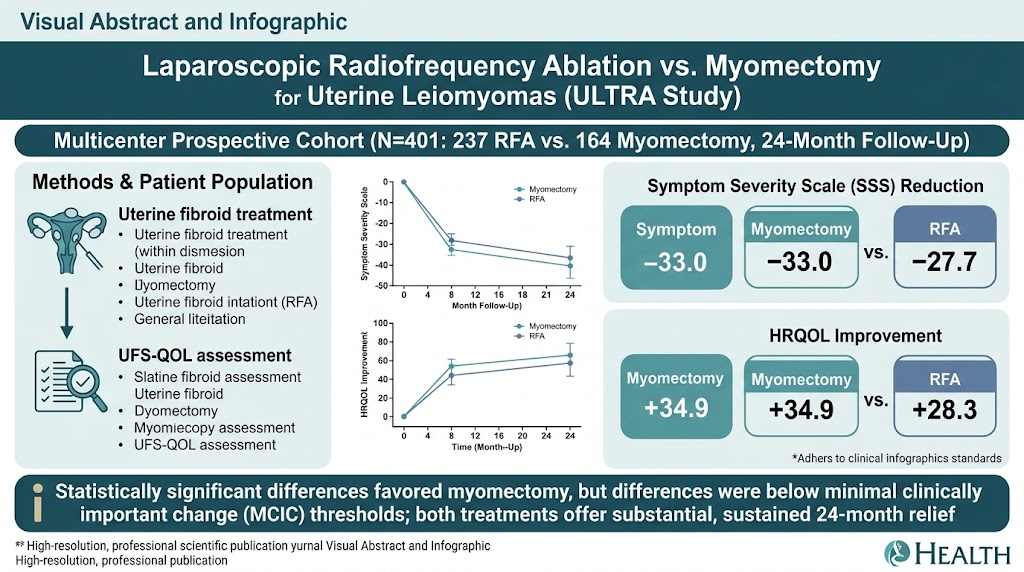
Highlight
This prospective multicenter cohort study compared the effectiveness of laparoscopic radiofrequency ablation (RFA) versus myomectomy in improving symptoms and health-related quality of life (HRQOL) among women with symptomatic uterine leiomyomas over a two-year follow-up period. Both treatments yielded significant and sustained symptom relief and HRQOL enhancement. While myomectomy offered somewhat greater improvements in symptom severity and certain functional domains at intermediate follow-up points, these differences were small and did not reach clinically meaningful thresholds by 24 months.
Study Background
Uterine leiomyomas, commonly known as fibroids, affect a substantial proportion of reproductive-aged women worldwide and are a leading cause of symptoms such as pelvic pain, abnormal uterine bleeding, and bulk-related discomfort. These benign smooth muscle tumors can considerably impair quality of life and overall well-being. Surgical treatments typically include myomectomy—removal of fibroids via open or minimally invasive approaches—aiming to alleviate symptoms and preserve the uterus.
Recently, laparoscopic radiofrequency ablation (RFA) has emerged as a minimally invasive alternative leveraging targeted thermal energy to induce fibroid necrosis while preserving uterine integrity, potentially reducing operative morbidity and recovery time. However, data comparing long-term symptomatic and quality of life outcomes between laparoscopic RFA and the more established myomectomy procedure have been limited, prompting the need for robust comparative evidence.
Study Design
The ULTRA (Uterine Leiomyoma Treatment With Radiofrequency Ablation) study was a prospective multicenter cohort study involving 401 premenopausal women who presented with symptomatic uterine leiomyomas. Participants underwent either laparoscopic RFA (n=237) or myomectomy (n=164). Key inclusion criteria encompassed documented fibroid-related symptoms and intent for minimally invasive surgical intervention.
Baseline patient-reported outcomes were measured using the validated Uterine Fibroid Symptom and Health-Related Quality of Life (UFS-QOL) questionnaire, including the Symptom Severity Scale (SSS) and HRQOL scores. Follow-up assessments were conducted at six-month intervals up to 24 months post-treatment. The analytic approach employed propensity-weighted repeated-measures models to adjust for potential treatment selection bias and within-subject correlations over time, enhancing comparative validity.
Key Findings
The study cohort had a mean age of 39.2 years and included 53% Black women, reflecting populations disproportionately affected by uterine fibroids. Participants had a median of two fibroids, with baseline symptom severity and HRQOL scores indicating significant symptomatic burden and quality of life impairment.
Both laparoscopic RFA and myomectomy groups demonstrated statistically significant and sustained reductions in symptom severity and improvements in HRQOL from baseline through 24 months. Specifically, the myomectomy arm showed a slightly greater mean reduction in SSS (-33.0) compared to RFA (-27.7), with the between-group difference of -5.27 being statistically significant (P=0.028). Similarly, HRQOL increases favored myomectomy (34.92 vs. 28.29; difference -6.62, P=0.011).
Despite statistical significance, these effect size differences were below established minimal clinically important difference (MCID) thresholds—10 points for SSS and 20 points for HRQOL—indicating limited clinical relevance. Additionally, early follow-up points (at 6 months) showed myomectomy yielding modestly greater improvements in HRQOL functional domains such as activities, control, and self-consciousness; these differences diminished over time and were not present at 24 months.
Overall, both procedures effectively ameliorated leiomyoma-related symptoms and enhanced quality of life with durable benefits at two years, supporting the therapeutic value of either approach.
Expert Commentary
These findings provide important real-world comparative effectiveness data informing clinical decision-making for women with symptomatic fibroids considering uterus-sparing surgical options. The slight but statistically significant advantages in symptom and quality of life measures with myomectomy may reflect more comprehensive removal of fibroid tissue compared with ablation. Nonetheless, the differences did not translate into clinically meaningful changes over long-term follow-up.
Laparoscopic RFA’s minimally invasive nature, potential for reduced operative morbidity, and shorter recovery may favor its selection for suitable patients prioritizing less invasive treatment. Given the demographic diversity and symptom burden of the study population, these results have broad applicability.
Study limitations include potential residual confounding despite propensity adjustment and loss to follow-up in a minority of participants. Additionally, some outcomes such as uterine preservation rates, fertility impact, and recurrence were not reported and warrant further investigation.
Conclusion
In the management of symptomatic uterine leiomyomas, both laparoscopic radiofrequency ablation and myomectomy confer significant, sustained improvements in symptom severity and health-related quality of life over two years. Although myomectomy demonstrated small, statistically significant benefits in some domains, the overall clinical differences at 24 months are minimal. Treatment choice should be individualized, balancing patient preferences, surgical risk profiles, and resource availability.
Future research should explore longer-term outcomes, fertility implications, and cost-effectiveness to optimize clinical pathways for uterine leiomyoma treatment.
Funding and Clinical Trial Registration
The ULTRA study was registered at ClinicalTrials.gov under identifier NCT0210094. Specific funding sources were not detailed in the abstract.
References
1. Allen A, Schembri M, Parvataneni R, et al. Effectiveness of Laparoscopic Radiofrequency Ablation of Uterine Leiomyomas Compared With Myomectomy on Symptoms and Health-Related Quality of Life. Obstet Gynecol. 2026 Sep 22. PMID: 42771818.
2. Stewart EA. Uterine fibroids. Lancet. 2001;357(9252):293-298.
3. Baird DD, Dunson DB, Hill MC, Cousins D, Schectman JM. High cumulative incidence of uterine leiomyoma in black and white women: ultrasound evidence. Am J Obstet Gynecol. 2003;188(1):100-107.
4. Munro MG, Critchley HO, Broder MS, Fraser IS. The FIGO classification system (PALM-COEIN) for causes of abnormal uterine bleeding in non-gravid women of reproductive age. Int J Gynecol Obstet. 2011;113(1):3-13.
5. Parker WH. Uterine Myomas: Management. Fertil Steril. 2007;88(2):255-271.
This article was created using several editorial tools, including AI, as part of the process. Human editors reviewed this content before publication.