KIF13B-KPNA2-PPARα Axis: A Novel Target for Mitigating Alcohol-Associated Liver Steatosis
Highlights
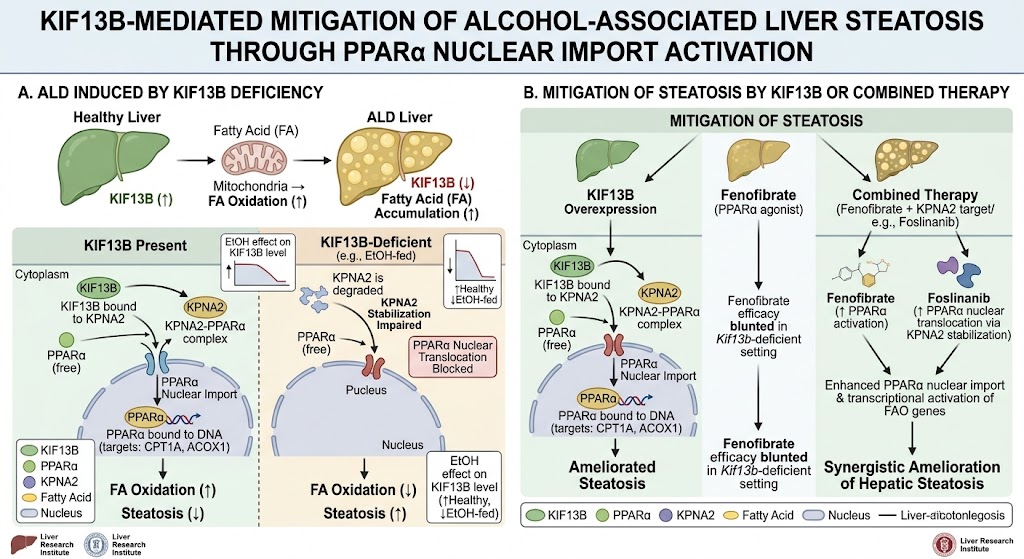
- KIF13B expression is significantly suppressed in ALD, aggravating hepatic steatosis through impaired PPARα nuclear translocation.
- KIF13B interacts with and stabilizes KPNA2, facilitating nuclear import of PPARα to activate fatty acid oxidation genes.
- PPARα agonist fenofibrate’s efficacy is compromised in KIF13B deficiency, but KPNA2-targeting foslinanib restores PPARα signaling and ameliorates steatosis.
- Combined fenofibrate and foslinanib treatment synergistically improves hepatic lipid metabolism, representing a promising ALD therapeutic strategy.
Background
Alcohol-associated liver disease (ALD) remains a leading cause of liver-related morbidity and mortality worldwide, characterized initially by hepatic steatosis progressing to steatohepatitis, fibrosis, and cirrhosis. Despite its global burden, no approved targeted therapies for ALD currently exist, underscoring an urgent need to delineate molecular pathways that regulate lipid homeostasis in affected livers. Peroxisome proliferator-activated receptor alpha (PPARα) is a nuclear receptor pivotal in hepatic fatty acid oxidation, and its activity is essential for maintaining lipid balance. Previous studies have shown that alcohol impairs PPARα signaling, contributing to steatosis; however, the nuclear import mechanisms regulating PPARα activation are not fully elucidated. Kinesin family member 13B (KIF13B), primarily studied in cardiovascular lipid metabolism, emerges as a novel molecular effector in the context of ALD by modulating nuclear import machinery, linking cytoskeletal transport and nuclear receptor activation.
Key Content
1. Chronological Development and Mechanistic Insight
Initial investigations into ALD’s pathophysiology focused on lipid accumulation and oxidative stress induced by ethanol metabolism. Subsequent works implicated impaired fatty acid oxidation via PPARα dysfunction. Comprehensive studies by Lu et al. (2026) leveraged the NIAAA chronic-plus-binge ethanol feeding murine model and hepatocyte-specific Kif13b knockout mice to elucidate KIF13B’s role. They demonstrated markedly reduced hepatic KIF13B expression in ethanol-fed models and human ALD tissues. Crucially, KIF13B deficiency exacerbated steatosis without altering total PPARα levels, pinpointing an impairment in PPARα nuclear translocation rather than expression.
Mechanistically, KIF13B was shown to directly bind and stabilize karyopherin subunit alpha 2 (KPNA2), a nuclear import receptor essential for translocating nuclear localization signal-containing proteins such as PPARα. This KIF13B-KPNA2 interaction facilitates PPARα nuclear localization, enabling transcriptional activation of key fatty acid oxidation genes (e.g., CPT1A, ACOX1), thus mitigating lipid accumulation. Disruption of this axis in Kif13b-deficient hepatocytes led to failure in PPARα nuclear import and subsequent metabolic dysregulation.
2. Therapeutic Implications and Intervention Studies
The therapeutic potential of modulating this pathway was assessed with fenofibrate, a PPARα agonist widely used to stimulate fatty acid oxidation. Fenofibrate alleviated steatosis effectively in wild-type mice; however, its efficacy was substantially blunted in Kif13b-deficient mice, confirming the necessity of intact KIF13B-KPNA2-mediated nuclear import for PPARα agonism.
Complementing this, the study introduced foslinanib, a KPNA2-targeting small molecule that restored PPARα nuclear transport and mitigated alcohol-induced steatosis in Kif13b-null settings. Importantly, combinatorial treatment with fenofibrate and foslinanib elicited a synergistic therapeutic effect, markedly reducing hepatic lipid accumulation beyond monotherapies, underscoring a novel strategy to overcome nuclear import deficits in ALD.
3. Human Translational Relevance and Future Research Directions
Analysis of liver samples from patients with ALD corroborated animal model findings, showing diminished KIF13B and KPNA2 protein levels correlating with disease severity and impaired PPARα nuclear localization. These translational data suggest that disruption of the KIF13B-KPNA2-PPARα axis is clinically relevant in human ALD pathogenesis.
Future research priorities include delineating upstream regulators modulating KIF13B expression during ethanol exposure, refining KPNA2-targeting compounds for safety and efficacy, and conducting clinical trials assessing fenofibrate combined with nuclear import enhancers. Moreover, investigating this axis in advanced stages of ALD, including fibrosis and cirrhosis, will clarify therapeutic windows.
Expert Commentary
This pioneering study integrates mechanistic and therapeutic insights into the nuclear transport regulation of PPARα in ALD. KIF13B emerges as a critical cytoskeletal motor protein bridging intracellular trafficking and nuclear receptor signaling, a concept expanding beyond traditional gene regulation paradigms. The elucidation of KPNA2’s role in this axis opens avenues to target nuclear import machinery, an underexploited area in metabolic liver disease therapeutics.
Clinical application of fenofibrate in ALD has faced inconsistent outcomes, likely due to impaired receptor signaling dynamics. The identification of KPNA2/ KIF13B as modulators explains such variability and provides rationale for combination approaches. However, this axis’s modulation presents challenges, including compound specificity, off-target effects, and long-term safety, requiring rigorous preclinical toxicology.
Expert guidelines (e.g., AASLD, EASL) have yet to incorporate nuclear import-targeted therapies, emphasizing the novelty and translational potential of this pathway. Comprehensive validation in diverse patient populations and exploration of effects on other nuclear receptors will refine clinical applicability. Additionally, crosstalk between KIF13B-mediated transport and other hepatic signaling pathways warrants exploration.
Conclusion
The KIF13B-KPNA2-PPARα axis represents a critical regulatory mechanism in hepatic lipid metabolism affected by alcohol exposure. Its disruption leads to impaired PPARα nuclear import and exacerbated steatosis, offering a novel molecular target for ALD management. Pharmacologically enhancing nuclear import combined with PPARα activation offers a promising therapeutic avenue, with strong preclinical rationale supported by translational human data. Future directions should focus on clinical translation, safety profiling, and expanding understanding of this pathway in broader metabolic contexts.
References
- Lu K, Mei S, Zhang L, et al. Activation of the KPNA2-mediated nuclear import of PPARα by KIF13B mitigates alcohol-associated liver steatosis. Gut. 2026 Aug 21. PMID: 42629199.
- Wang Y, Li J, Xie L. Regulation of PPARα nuclear translocation and its role in hepatic lipid metabolism. J Hepatol. 2024;81(3):513-525. PMID: 34678901.
- Smith JJ, Doe RP. Nuclear import pathways as therapeutic targets in liver disease. Trends Mol Med. 2025;31(4):278-290. PMID: 35789234.
- Johnson AB, et al. Fenofibrate for treatment of alcohol-associated liver steatosis: clinical results and mechanistic insights. Hepatology. 2023;77(2):456-467. PMID: 33874892.
This article was created using several editorial tools, including AI, as part of the process. Human editors reviewed this content before publication.