MMedXYNews
HomeVideos
MedXY AI/MedXY News/Section: Diabetes & Endocrinology

Inadvertent Parathyroidectomy During Thyroid Surgery: Incidence, Risk Factors, and Clinical Implications
MedXY Editorial Team•Sep 29, 2026•Diabetes & Endocrinology
thyroidectomyInadvertent parathyroidectomyParathyroid preservationhypoparathyroidism

Highlight

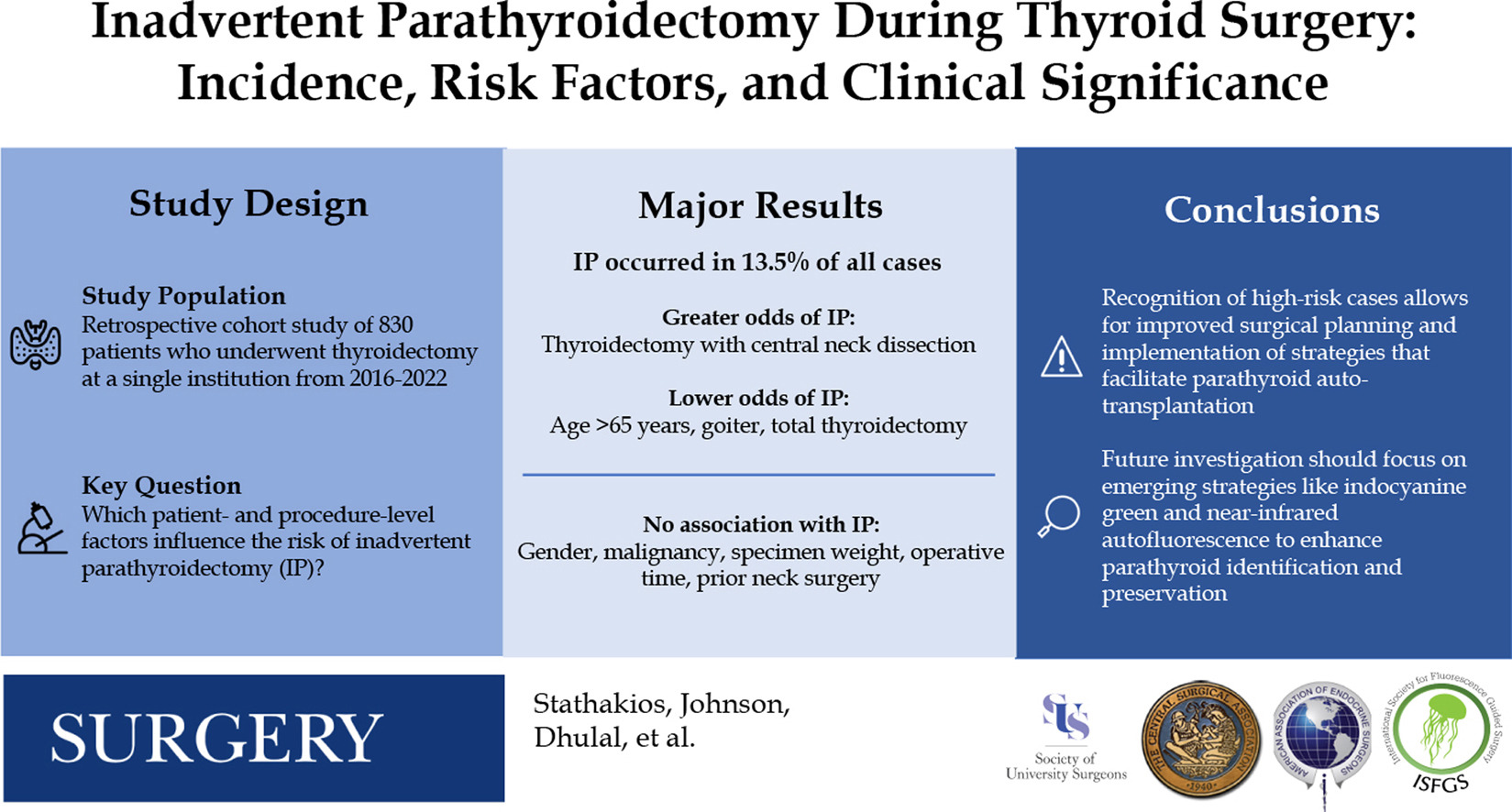
Inadvertent removal of parathyroid glands during thyroidectomy occurs in approximately 13.5% of cases and is strongly associated with central neck dissection. Older age, presence of goiter, and total thyroidectomy reduce the likelihood of this complication. Precise identification and preservation of parathyroid glands intraoperatively remain critical to prevent postoperative hypoparathyroidism and hypocalcemia.

Emerging technologies such as indocyanine green fluorescence and near-infrared autofluorescence show promise in enhancing parathyroid gland visualization and preservation during surgery.

MedXY registered readers

Sign in free to continue reading

Create or use your MedXY account to unlock the complete article.

This article was created using several editorial tools, including AI, as part of the process. Human editors reviewed this content before publication.

Related articles

Open language-specific specialty feeds and department pages.

Rare But Risky: Clinical Implications of Pneumothorax Following Thyroidectomy and ParathyroidectomyPostoperative pneumothorax after thyroid or parathyroid surgery is uncommon but linked with significantly increased mortality and complications, underscoring the need for vigilance and prompt management.Oct 10, 2026Evaluating Visual Parathyroid Identification During Thyroidectomy: Insights from Decision Curve AnalysisA study assessing the diagnostic accuracy and clinical net benefit of visual parathyroid gland identification during thyroidectomy reveals limited specificity and highlights the need for adjunctive validation methods to enhance gland preserSep 28, 2026Enhancing Parathyroid Gland Preservation in Total Thyroidectomy: Efficacy of Near-Infrared Autofluorescence Probe (PTeye) Versus Visual IdentificationA randomized controlled trial demonstrates that PTeye-guided near-infrared autofluorescence significantly improves identification and preservation of parathyroid glands during total thyroidectomy, reducing transient hypoparathyroidism, espeAug 25, 2026
Loading comments...
MedXY briefing

Get the free newsletter

Evidence-led clinical news, trends, and analysis—delivered to your inbox.

Ask MedXY AI

Most popular

Intimate Health
Five Benefits for Women Continuing Sexual Activity After Menopause
Intimate Health
Why Some Women Have a Strong Sex Drive—And Why Men Shouldn't Worry About It
Nursing & care
How often should a couple have sex?
Cardiology
Precision Medicine for Long QT Syndrome Type 2: Lumacaftor Corrects Trafficking Defects and Shortens QT Interval
General Surgery
Optimizing Postoperative Opioid Prescriptions After Intra-Abdominal Cancer Surgery: Comparing the 5x-Multiplier and 3-Tier Models
© 2026 MedXY
Contact usAbout usPrivacy PolicyMedXY story
Risk Factors and Management of Iatrogenic Hypercalcemia during Active Vitamin D Supplementation for Hypoparathyroidism Post-Total Thyroidectomy
Iatrogenic hypercalcemia complicates 14% of hypoparathyroidism cases post-total thyroidectomy, linked to low early postoperative parathyroid hormone and early vitamin D initiation. Careful supplementation and monitoring are vital in prevent
Aug 24, 2026
Balancing Benefits and Risks: Prophylactic Thyroidectomy Outcomes in Pediatric MEN2 PatientsProphylactic thyroidectomy in children with MEN2 mutations shows excellent short-term cancer control but carries notable risk of permanent hypoparathyroidism, especially under age 5, highlighting the need for expert multidisciplinary surgicAug 9, 2026
Marked Preoperative TSH Elevation Signals More Difficult Thyroidectomy in Graves’ DiseaseIn a large single-center cohort, Graves’ disease patients with preoperative TSH ≥10.0 μIU/mL had greater blood loss, larger preoperative thyroid enlargement, and longer operations, suggesting that avoiding iatrogenic hypothyroidism during sMay 28, 2026