Final Phase II Trial Results: Azacitidine plus Ruxolitinib Shows Promise in Myelofibrosis Management
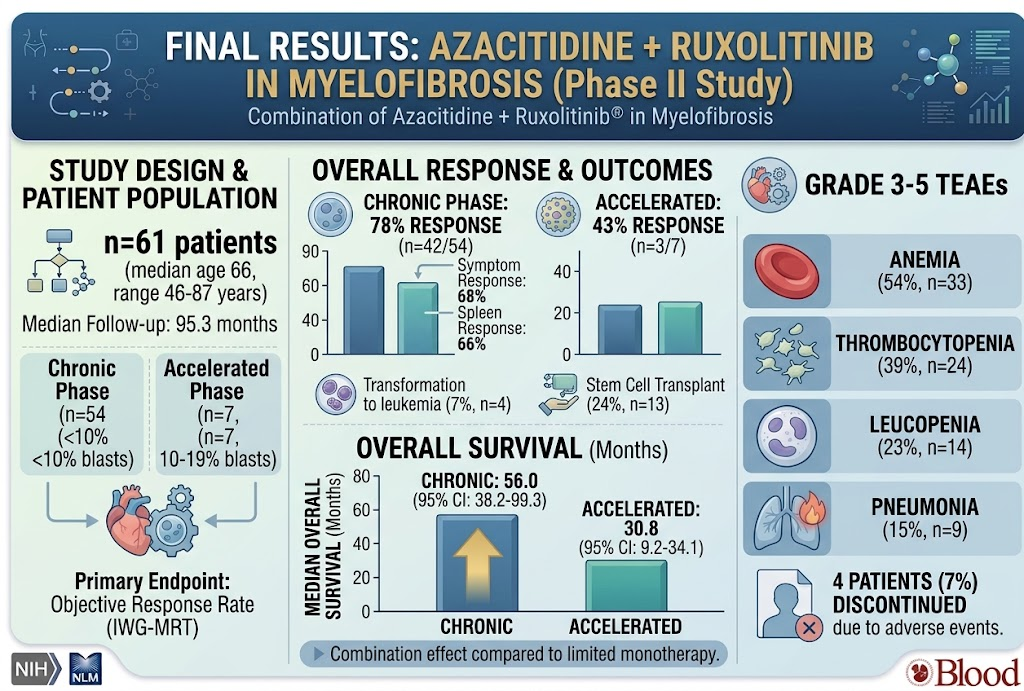
Highlight
- The final phase II study of azacitidine combined with ruxolitinib showed a 72% objective response rate in patients with myelofibrosis.
- Combining azacitidine, a hypomethylating agent, with the JAK1/2 inhibitor ruxolitinib may improve disease control beyond symptom relief provided by ruxolitinib monotherapy.
- This regimen demonstrated an acceptable safety profile with promising durability of response over a median follow-up of 28 months.
Study Background
Myelofibrosis (MF) is a chronic myeloproliferative neoplasm characterized by clonal proliferation of hematopoietic stem cells, extensive bone marrow fibrosis, and extramedullary hematopoiesis. The disease manifests clinically with debilitating symptoms including splenomegaly, anemia, constitutional symptoms, and progressive marrow failure. Current standard therapy often centers on JAK2 inhibitors such as ruxolitinib, which effectively reduce splenomegaly and symptom burden but have limited impact on modifying the disease course or reducing malignant clonal burden. Moreover, a significant subset of patients experience disease progression or suboptimal response, highlighting the need for improved therapeutic strategies.
Azacitidine, a hypomethylating agent, has activity in myeloid malignancies and is hypothesized to exert antineoplastic effects by epigenetic modulation, potentially targeting the malignant clone and altering marrow fibrosis. Combining azacitidine with ruxolitinib may synergize to enhance disease modification while maintaining symptom control.
Study Design
This was a single-arm, phase II clinical trial conducted between March 2013 and October 2021 enrolling 61 patients with myelofibrosis to evaluate the efficacy and safety of the combination therapy of azacitidine (AZA) plus ruxolitinib (RUX). The median patient age was 66 years (range 46-87). Patients included primarily those with chronic phase disease (<20% bone marrow blasts).
The primary endpoint was the objective response rate (ORR) as defined by the International Working Group-Myeloproliferative Neoplasms Research and Treatment (IWG-MRT) criteria. Secondary endpoints included duration of response, symptom improvement, spleen size reduction, overall survival, and safety profile.
Treatment consisted of ruxolitinib administered orally with standard dosing schedules alongside azacitidine given as subcutaneous or intravenous injections at standard dosages, administered in cycles.
Key Findings
The final analysis included all 61 patients with a median follow-up duration of 28 months. The combination therapy achieved an objective response rate of 72%, affirming the interim analysis results obtained in 46 patients. This ORR compares favorably to response rates typically observed in monotherapy trials with ruxolitinib, which generally report symptom and spleen responses but limited complete or partial hematologic remissions.
Among responders, many experienced marked reductions in splenomegaly and improvements in constitutional symptoms. Notably, the combination showed potential benefits regarding bone marrow morphology and fibrosis, suggesting possible disease-modifying effects.
The safety profile was manageable; adverse events were consistent with known effects of both agents, including cytopenias (anemia, thrombocytopenia), gastrointestinal symptoms, and infections. No new safety signals emerged with the combination.
Subgroup analysis indicated that patients with lower baseline blast counts demonstrated better responses, consistent with earlier disease stage being more amenable to epigenetic intervention.
Expert Commentary
These findings underscore the therapeutic potential of combining epigenetic therapy with targeted JAK inhibition in myelofibrosis. By addressing distinct pathogenic mechanisms—JAK-STAT pathway dysregulation and aberrant methylation—this approach may transcend symptom palliation to achieve deeper remissions.
However, limitations include the single-arm design without a comparator group, potentially introducing bias in response assessment. Additionally, longer follow-up is warranted to ascertain effects on overall survival and progression to acute myeloid leukemia.
Current MF treatment guidelines acknowledge ruxolitinib as standard first-line therapy but do not yet routinely recommend combination epigenetic approaches. This study provides a rationale for further randomized controlled trials to define the role of azacitidine plus ruxolitinib.
Conclusion
The combination of azacitidine and ruxolitinib demonstrated a high objective response rate and acceptable safety profile in this phase II study of patients with myelofibrosis, suggesting enhanced clinical benefit compared to JAK inhibitor monotherapy. These data support continued investigation of this combinational strategy to improve disease control and patient outcomes in myelofibrosis.
Future studies should focus on randomized comparisons, biomarker-driven patient selection, and long-term survival outcomes to validate and optimize this promising treatment paradigm.
Funding and Clinical Trial Registration
Details on study funding and clinical trial registration were not provided in the original article abstract but can be accessed through the full publication or clinical trial databases.
References
1. Arora S, Senapati J, Chu V, et al. Final results of a phase II study of the combination of azacitidine and ruxolitinib in patients with myelofibrosis. Haematologica. 2026; PMID: 42657929.
2. Tefferi A, Vainchenker W. Myeloproliferative Neoplasms: Molecular Pathophysiology, Essential Clinical Understanding, and Treatment Strategies. Mayo Clin Proc. 2011;86(9): 867-881.
3. Verstovsek S, Mesa RA, Gotlib J, et al. A double-blind, placebo-controlled trial of ruxolitinib for myelofibrosis. N Engl J Med. 2012;366(9):799-807.
4. Fenaux P, Mufti GJ, Hellström-Lindberg E, et al. Efficacy of azacitidine compared with conventional care regimens in the treatment of higher-risk myelodysplastic syndromes: a randomised, open-label, phase III study. Lancet Oncol. 2009;10(3):223-232.
This article was created using several editorial tools, including AI, as part of the process. Human editors reviewed this content before publication.