Highlight
Implementation of the HALT-C quality improvement bundle significantly increased direct-acting antiviral (DAA) treatment initiation by 6 months postpartum, from 48.4% to 77.1%.
Completion of hepatitis C treatment improved more than twofold postimplementation, with antenatal treatment associated with twice the completion rate compared to postpartum initiation.
Most patients preferred initiating hepatitis C treatment during pregnancy rather than deferring to the postpartum period.
No perinatal hepatitis C transmissions occurred among infants whose mothers received antenatal DAA therapy, highlighting pregnancy as a window for effective treatment and prevention.
Study Background
Hepatitis C virus (HCV) infection during pregnancy presents an ongoing public health challenge with potential adverse maternal and neonatal outcomes, including perinatal transmission leading to chronic infection in infants. Despite the availability of highly effective and well-tolerated direct-acting antivirals (DAAs), treatment rates in pregnant and postpartum populations remain suboptimal due to fragmented care coordination, limited proactive identification, and unclear timing for initiating therapy. Addressing these gaps is critical to improving maternal cure rates, preventing vertical transmission, and reducing the long-term burden of chronic HCV.
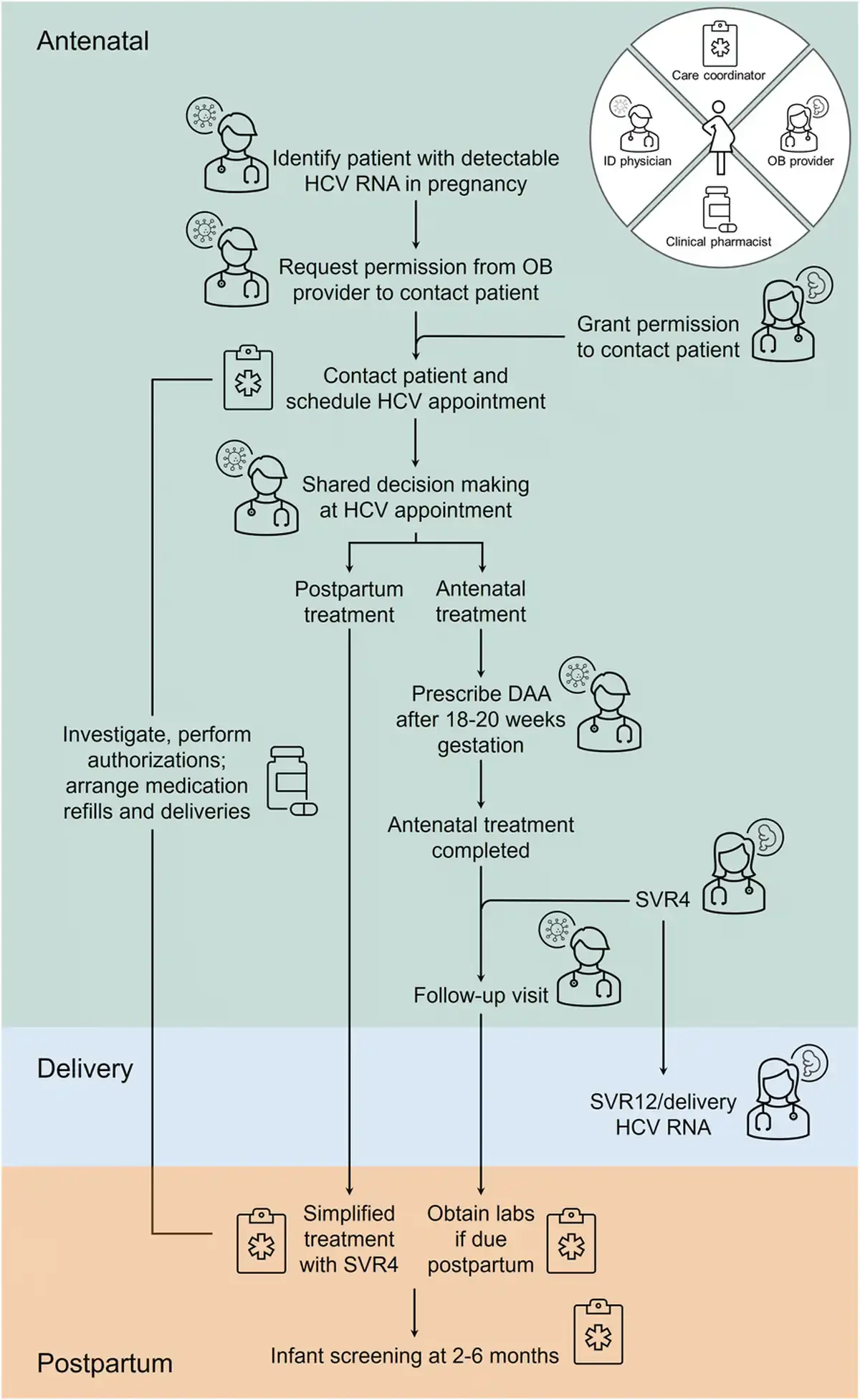
The HALT-C (hepatitis C antenatal linkage-to-care) bundle was developed as a comprehensive quality-improvement strategy aiming to integrate systematic patient identification, care coordination, and shared decision-making regarding treatment timing within a large regional health system. This approach leverages antenatal care encounters to enhance linkage to specialist services and optimize antiviral therapy initiation either during pregnancy or postpartum.
Study Design
This before-after quality improvement study was conducted within a large Midwestern health system, comparing outcomes between a preimplementation cohort (December 1, 2021 to May 31, 2023) and a postimplementation cohort (March 1, 2024 to August 31, 2025) of pregnant individuals diagnosed with HCV.
Eligible participants were adults aged 18 years or older with detectable HCV RNA and at least one health system encounter before 35 weeks gestation. The intervention comprised the HALT-C bundle—a multifaceted package incorporating proactive antenatal HCV case finding, facilitated referrals for hepatology or infectious disease consultation, patient education, and shared decision-making tools regarding treatment timing.
The primary endpoint was the proportion of patients prescribed DAAs within six months postpartum. Secondary outcomes included linkage to HCV care, treatment timing preferences (antenatal versus postpartum), treatment completion rates, sustained virologic response (SVR), infant HCV screening rates, and perinatal transmission incidence. Subgroup analyses evaluated differences between patients delivering at the main hospital versus regional sites.
Key Findings
Among 97 bundle-eligible pregnancies identified, 62 occurred before and 35 after implementation of the HALT-C bundle. The postimplementation period demonstrated significant improvements:
DAA prescription by six months postpartum rose markedly from 48.4% preimplementation to 77.1% postimplementation (P = .009), reflecting enhanced linkage and treatment access.
Treatment completion rates more than doubled, increasing from 21.0% to 54.3% (P = .001), evidencing improved patient retention and adherence facilitated by the bundle.
The greatest gains were observed for patients delivering at regional hospitals, where prescriptions increased from 14.3% to 72.7% (P < .001), signifying effective extension of specialized care beyond central facilities.
Of the 35 individuals identified postimplementation, 30 (85.7%) were successfully linked to HCV care, demonstrating robust coordination mechanisms embedded in the bundle.
Among patients attending linkage clinics, 75% expressed preference for antenatal therapy initiation over postpartum deferral, underscoring receptivity to pregnancy-time intervention.
Patients treated during pregnancy showed twice the treatment completion rate compared to postpartum-treated patients (92.3% vs. 45.5%; P = .02), reinforcing the critical window antenatal care represents for therapeutic success.
No perinatal HCV transmissions were documented in infants born to mothers treated antenatally, although overall infant screening and transmission rates did not significantly change between periods.
Expert Commentary
The HALT-C bundle exemplifies a pragmatic health system approach that addresses known barriers to HCV care among pregnant populations. By embedding systematic case identification and linkage within routine antenatal workflows, this intervention harnesses pregnancy as a unique, time-sensitive opportunity to initiate curative therapy. The high preference for antenatal treatment and enhanced completion rates corroborate recent shifts in guidelines advocating for safer DAA use during pregnancy to prevent vertical transmission and improve maternal health.
While encouraging, these findings highlight ongoing challenges including the need for wider infant HCV screening to monitor transmission outcomes comprehensively. Moreover, the relatively smaller postimplementation cohort and single-system setting may limit generalizability. Future multicenter studies and cost-effectiveness analyses could further support widespread adoption.
Biologically, achieving SVR during pregnancy could potentially eliminate maternal viral reservoirs, thereby breaking the chain of perinatal transmission. This aligns with emerging mechanistic insights on the safety and pharmacokinetics of DAA agents in pregnancy, which continue to evolve.
Conclusion
The implementation of the HALT-C antenatal linkage-to-care bundle significantly improved hepatitis C treatment prescription and completion rates within a regional health system. High patient acceptance of antenatal therapy and superior treatment adherence during pregnancy underscore the pivotal role of this period in managing HCV infection. These data advocate for integrating structured linkage-to-care mechanisms into prenatal services to optimize the prevention and treatment of maternal HCV, with potential to reduce perinatal transmission and subsequent pediatric disease burden. Continued efforts to scale such integrated care models, coupled with expanded infant monitoring, are warranted to enhance clinical outcomes and public health impact.
Funding and Clinical Trials
The study was conducted within a large Midwestern health system; the article does not specify external funding sources or clinical trial registration.
References
1. American Association for the Study of Liver Diseases (AASLD) and Infectious Diseases Society of America (IDSA). HCV Guidance: Recommendations for Testing, Managing, and Treating Hepatitis C. 2023.
2. Chappell CA, Kwalick A, Boulet SL, et al. Evaluation of Hepatitis C Virus Testing and Treatment Practices Among Pregnant Women—United States, 2020–2021. MMWR Morb Mortal Wkly Rep. 2022;71(13):461-467.
3. McCrary LM, Marks LR, Kelly JC, et al. Hepatitis C Treatment Access With Implementation of an Antenatal Linkage-to-Care Bundle. Obstet Gynecol. 2026 Nov 4; [Epub ahead of print]. PMID: 42976312.
4. Benova L, Mohamoud YA, Calvert C, Abu-Raddad LJ. Vertical transmission of hepatitis C virus: Systematic review and meta-analysis. Clin Infect Dis. 2014;59(6):765-773.
5. Rich NE, Levander XA, Gish RG, et al. Direct-acting antiviral use during pregnancy for treatment of hepatitis C: Key findings and future directions. Clin Liver Dis (Hoboken). 2022 Feb;19(1):12-16.