We use cookies

Our website uses essential cookies and, with your consent, additional cookies to measure performance and improve our services. Cookie Policy.

You can change your choice at any time.

MMedXYNews
HomeVideos
MedXY AI/MedXY News/Section: Diabetes & Endocrinology

Dynamic Patterns of Body Composition Remodeling Around Type 2 Diabetes Diagnosis: Insights from Three European and US Cohorts
MedXY Editorial Team•Oct 5, 2026•Diabetes & Endocrinology
BMI trajectorybody compositionmuscle strengthtype 2 diabetesvisceral fat

Highlight

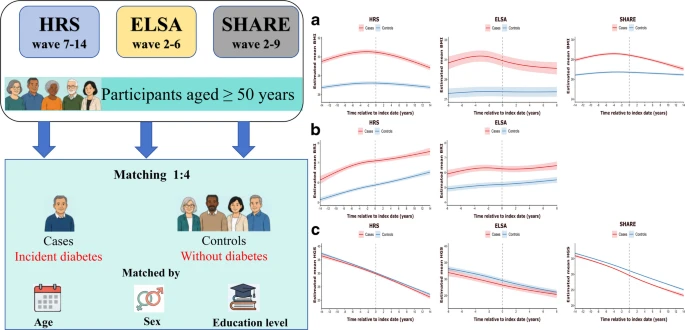
This investigation of over 70,000 adults aged 50 and above, drawn from three large longitudinal European and US studies (HRS, ELSA, SHARE), elucidates complex temporal changes in body composition around the diagnosis of type 2 diabetes (T2D). Key insights include the inverted U-shaped trajectory of BMI peaking 2-4 years before diagnosis, ongoing accumulation of visceral fat with attenuated growth during weight loss phases, and accelerated muscle strength decline among cases versus controls in the SHARE cohort.

Study Background

MedXY registered readers

Sign in free to continue reading

Create or use your MedXY account to unlock the complete article.

This article was created using several editorial tools, including AI, as part of the process. Human editors reviewed this content before publication.

Related articles

Open language-specific specialty feeds and department pages.

Functional Hypothalamic Amenorrhea Phenotype and Cardiovascular Disease RiskFunctional hypothalamic amenorrhea (FHA) in mid-adulthood is linked to increased coronary heart disease risk and type 2 diabetes, independent of traditional factors, highlighting menstrual irregularities as early cardiometabolic risk indicaOct 5, 2026Enhanced Glycaemic Control in Type 2 Diabetes: Digital Therapeutic Glucura Combined with CGM Shows Superior 6-Month OutcomesA randomized trial demonstrates that adding the digital therapeutic glucura to intermittent CGM and standard care significantly improves HbA1c, weight loss, and mental health in non-insulin-treated type 2 diabetes patients over six months.Oct 5, 2026Head-to-Head Comparison of Empagliflozin and Dapagliflozin on Liver Outcomes in Type 2 Diabetes with MASLDA large Korean cohort study found similar hepatic benefits between empagliflozin and dapagliflozin in patients with type 2 diabetes and metabolic dysfunction-associated steatotic liver disease, with no difference in risk of severe liver comOct 3, 2026
Loading comments...
MedXY briefing

Get the free newsletter

Evidence-led clinical news, trends, and analysis—delivered to your inbox.

Ask MedXY AI

Most popular

Intimate Health
Five Benefits for Women Continuing Sexual Activity After Menopause
Intimate Health
Why Some Women Have a Strong Sex Drive—And Why Men Shouldn't Worry About It
Nursing & care
How often should a couple have sex?
Cardiology
Precision Medicine for Long QT Syndrome Type 2: Lumacaftor Corrects Trafficking Defects and Shortens QT Interval
General Surgery
Optimizing Postoperative Opioid Prescriptions After Intra-Abdominal Cancer Surgery: Comparing the 5x-Multiplier and 3-Tier Models
© 2026 MedXY
Contact usAbout usPrivacy PolicyMedXY story
Enhanced Glycaemic Control in Type 2 Diabetes: Digital Therapeutics Combined with CGM Show Superior Outcomes
A 6-month RCT in non-insulin-treated type 2 diabetes demonstrates that combining the digital therapeutic glucura with CGM significantly improves HbA1c, weight, and patient well-being beyond CGM and standard care alone.
Oct 3, 2026
Unveiling Cardiovascular Benefits of Tirzepatide: Insights from SURPASS-CVOT Using Imputed Placebo Analysis of REWINDAn indirect comparison shows tirzepatide significantly reduces major adverse cardiovascular events and mortality in type 2 diabetes patients, highlighting its potential for improving cardiovascular outcomes.Oct 3, 2026
Evaluating the Safety of GLP-1 Receptor Agonists and New-Generation Glucose-Lowering Agents in Pregnant Women with Type 2 Diabetes: Insights from a French Nationwide StudyA French nationwide cohort study finds first-trimester exposure to second-line glucose-lowering agents, including GLP-1 receptor agonists, is generally safe for pregnancies with type 2 diabetes, though a slight increase in cardiac malformatOct 3, 2026