Delineating the Roles of Federal and Industry Sponsorship in US Cancer Clinical Trials
Introduction
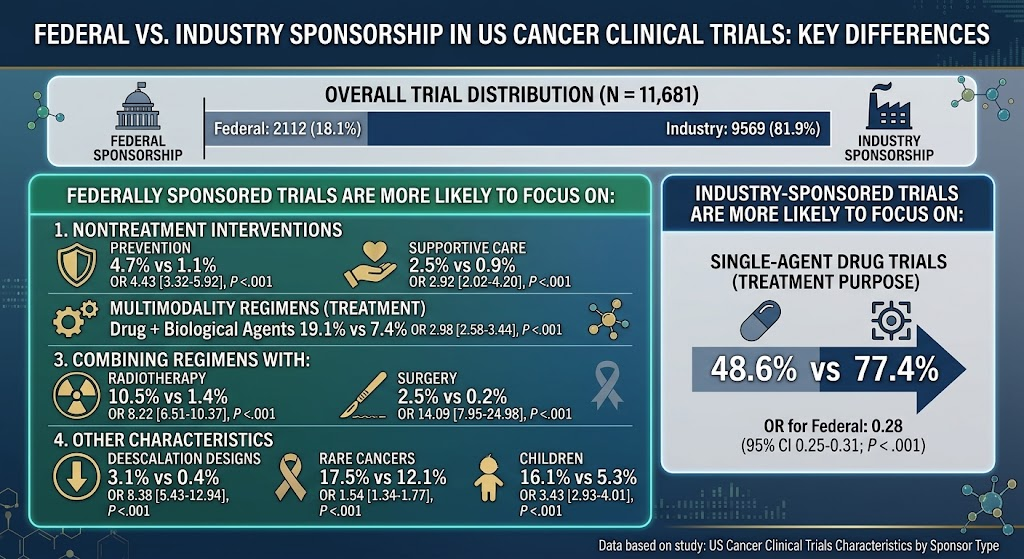
Cancer remains a leading cause of morbidity and mortality worldwide, with continuous research efforts dedicated to improving prevention, diagnosis, and treatment. In the United States, clinical trials form the cornerstone of evidence-based oncology care, facilitating development of novel therapies and refinement of treatment strategies. Two predominant types of sponsors support these trials: federal agencies—such as the National Cancer Institute (NCI)—and industry stakeholders, primarily pharmaceutical and biotechnology companies. While industry-sponsored trials traditionally focus on therapeutic innovations aimed at regulatory approval, federally sponsored trials have been perceived as addressing broader clinical questions including prevention, supportive care, and rare or pediatric cancers. However, systematic quantification of the distinctions between these sponsorship portfolios has been lacking. The recent comparative analysis by Unger et al. provides an empirical basis to understand the complementary roles federal and industry sponsors play in the US cancer clinical trial landscape.
Study Background
Sign in free to continue reading
Create or use your MedXY account to unlock the complete article.
This article was created using several editorial tools, including AI, as part of the process. Human editors reviewed this content before publication.