Decoding Large B Cell Lymphoma Heterogeneity: A Single-Cell Atlas Identifies Malignant Archetypes Linked to Patient Outcomes
Highlight
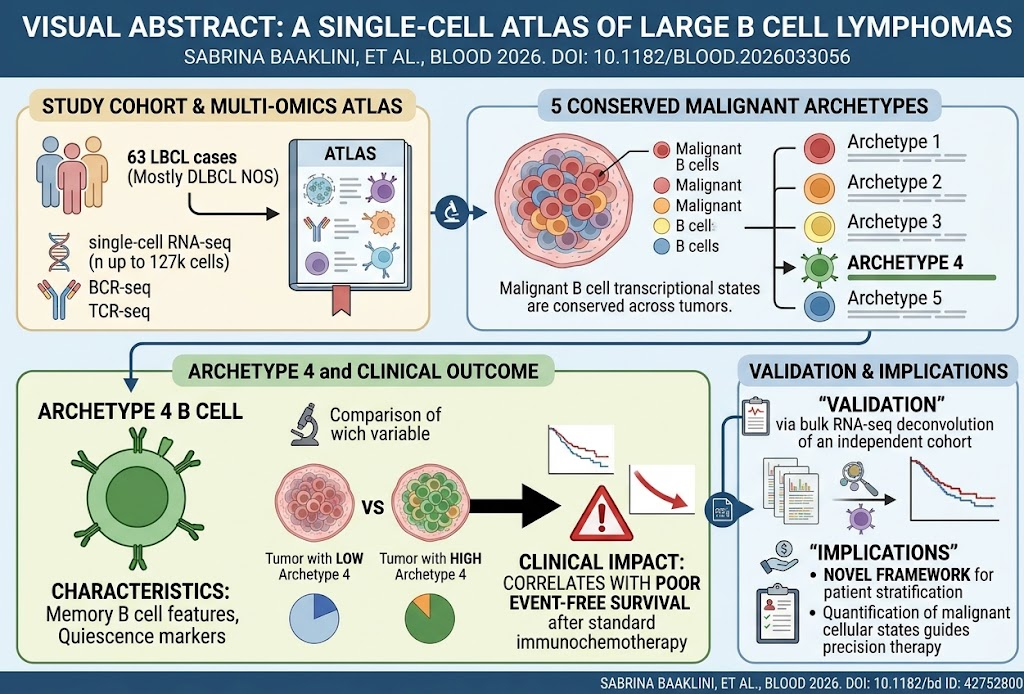
- Single-cell RNA-seq analysis of 63 large B cell lymphoma (LBCL) cases identifies five distinct malignant B cell transcriptional archetypes coexisting within tumors.
- Archetype 4, characterized by memory B cell features and cellular quiescence markers, is enriched in tumors with poor event-free survival following standard immunochemotherapy.
- Validation using bulk RNA-seq data from independent cohorts confirms that malignant cellular state quantification offers robust prognostic value in LBCL.
- This study proposes a novel framework for precision patient stratification and targeted therapeutic development in LBCL informed by cellular heterogeneity.
Study Background
Large B cell lymphomas (LBCLs), predominantly represented by diffuse large B cell lymphoma not otherwise specified (DLBCL NOS), are aggressive malignancies with substantial clinical heterogeneity. Despite advances in frontline immunochemotherapy regimens such as R-CHOP, up to 40% of patients experience refractory disease or relapse within two years, underscoring an unmet need for improved prognostic biomarkers and therapeutic targets. The molecular and cellular underpinnings governing this heterogeneity remain incompletely defined. While bulk gene expression profiling has provided some insights—such as cell-of-origin classification into germinal center B cell (GCB) and activated B cell (ABC) subtypes—these methods obscure intratumoral diversity crucial for understanding treatment response variability.
Study Design
This investigation performed an integrative single-cell transcriptomic and immune receptor sequencing study encompassing 63 LBCL tumor biopsies, primarily DLBCL NOS cases. Single-cell RNA sequencing (scRNA-seq), coupled with B cell receptor (BCR-seq) and T cell receptor (TCR-seq) analyses, was conducted to resolve the cellular landscape at unprecedented resolution. This approach permitted the classification of malignant B cells into conserved transcriptional archetypes within individual tumors while simultaneously assessing the diversity of infiltrating immune cells. Bioinformatic deconvolution of bulk RNA-seq datasets from independent patient cohorts was then used to validate the prognostic relevance of these malignant archetypes. Clinical endpoints focused on event-free survival following standard immunochemotherapy protocols.
Key Findings
The multimodal single-cell analysis revealed five recurrent malignant B cell transcriptional archetypes shared across LBCL cases. These archetypes were characterized by distinct gene expression signatures reflective of various B cell differentiation stages and functional states. Notably, Archetype 4 displayed gene features consistent with memory B cells and expressed quiescence-associated markers, suggesting a dormant cellular phenotype.
Importantly, the abundance of Archetype 4 cells within tumors strongly correlated with inferior event-free survival post immunochemotherapy. This association was robustly confirmed by analysis in external cohorts using bulk RNA transcriptome deconvolution methods, reinforcing the clinical relevance of malignant cellular states in predicting treatment outcome.
Besides prognostic implications, the coexistence of multiple malignant archetypes within single tumors underscores the complexity of LBCL biology and challenges the conventional model of uniform tumor populations. These results advocate for considering intratumoral heterogeneity not only in diagnostics but also in therapeutic strategy development.
Expert Commentary
This seminal study advances our understanding of LBCL heterogeneity by leveraging single-cell technologies to disentangle malignant cell subpopulations with distinct transcriptional programs. The identification of prognostically significant quiescent memory-like malignant B cells (Archetype 4) is particularly striking. Quiescent tumor cells have been historically linked to therapy resistance and relapse due to their reduced proliferative activity and evasion from cytotoxic agents targeting dividing cells.
One limitation is the study’s focus on transcriptional states at a single time point, which may not capture dynamic cellular plasticity during treatment. Future longitudinal single-cell profiling could further elucidate how malignant archetypes evolve under therapeutic pressure. Additionally, extending this framework to integrate epigenomic and proteomic data might refine the characterization of these archetypes.
Clinically, these findings invite incorporation of single-cell informed biomarkers into risk stratification algorithms and the development of treatments targeting quiescent lymphoma cells. Examples include agents modulating cellular dormancy pathways or immunotherapeutic strategies designed to activate immune surveillance against these elusive malignant subpopulations.
Conclusion
This comprehensive single-cell atlas of LBCL reveals a nuanced malignant B cell landscape that transcends traditional bulk classifications, identifying five distinct cellular archetypes with critical prognostic implications. The strong association between the memory-like, quiescent malignant Archetype 4 and poor clinical outcomes provides a compelling target for precision medicine. Integrating single-cell profiling into routine clinical workflows holds promise to enhance patient stratification, guide novel therapeutic development, and ultimately improve survival outcomes for LBCL patients.
Funding and Clinical Trials
The original study was supported by multiple academic and clinical research grants as detailed in Baaklini et al., Blood 2026. Clinical trial identifiers and funding specifics were referenced in the primary publication but are not detailed here.
References
1. Baaklini S, et al. A single-cell atlas of large B cell lymphomas reveals distinct malignant archetypes predictive of clinical outcomes. Blood. 2026 Sep 17; PMID: 42752800.
2. Chapuy B, et al. Molecular subtypes of diffuse large B cell lymphoma and their clinical significance. Nat Med. 2018;24(5):618-629.
3. Schmitz R, et al. Genetics and pathogenesis of diffuse large B cell lymphoma. N Engl J Med. 2018;378(15):1396-1407.
4. Shaffer AL, et al. B cell lymphoma: single-cell transcriptomics and precision oncology. Curr Opin Hematol. 2022;29(4):254-262.
This article was created using several editorial tools, including AI, as part of the process. Human editors reviewed this content before publication.