Combined Oral Contraception: Evolution, Safety, and Clinical Implications
Highlights
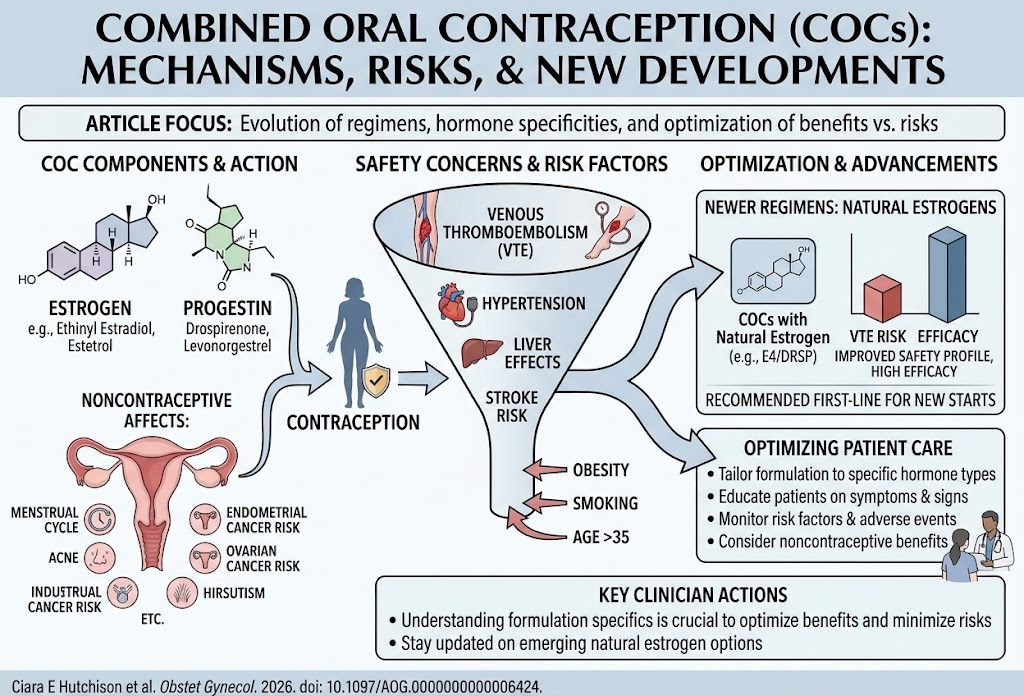
- Combined oral contraceptives (COCs) remain a cornerstone of reversible contraception with extensive noncontraceptive benefits.
- The risk of venous thromboembolism (VTE) has historically limited COC use, influencing both patient and clinician choices.
- Recent introduction of natural estrogen-containing COCs demonstrates improved safety profiles while retaining contraceptive efficacy.
- Comprehensive understanding of hormonal components and regimen evolution is essential for individualized risk-benefit optimization.
Background
Combined oral contraceptives (COCs), consisting of an estrogen and a progestin component, have been globally recognized as an effective, convenient, and well-tolerated contraceptive method since their introduction over half a century ago. Beyond contraception, COCs offer multiple noncontraceptive benefits including regulation of menstrual cycles, reduction in dysmenorrhea, treatment of acne, and mitigation of ovarian and endometrial cancer risks. Despite their widespread use, safety concerns—most notably the increased risk of venous thromboembolism (VTE)—have led to cautious prescribing and continuous evolution in formulation composition. Understanding these developments and the emerging evidence supporting newer natural-estrogen-containing COCs is crucial for clinicians to provide informed contraceptive counseling and optimize patient outcomes.
Key Content
Historical Perspective and Hormonal Evolution of COCs
The initial formulations of COCs in the 1960s used relatively high doses of synthetic estrogen (ethinyl estradiol) combined with first-generation progestins. Over time, dosages of ethinyl estradiol were markedly reduced to lower VTE risk while maintaining efficacy. Second- and third-generation progestins were developed to improve tolerability and reduce androgenic side effects. However, these changes led to complex considerations regarding thrombogenic risk, particularly with certain progestins like desogestrel and drospirenone associated with higher VTE incidence compared to levonorgestrel-containing formulations (PMID: 42691330).
Venous Thromboembolism Risk and Safety Considerations
VTE remains the most significant serious adverse event associated with COCs, with the absolute risk elevated several-fold compared to non-use but still lower than during pregnancy. Large epidemiologic studies and meta-analyses have consistently demonstrated that VTE risk varies by estrogen dose and progestin type. Lower estrogen doses (e.g., ≤20 mcg ethinyl estradiol) and use of levonorgestrel progestins are associated with the lowest VTE risk profiles (Hutchison CE, Creinin MD, 2026).
Emergence of Natural Estrogen-Containing COCs
Recently, formulations incorporating natural estrogens such as estradiol valerate or estetrol have been developed with the intent to maintain contraceptive efficacy while minimizing thrombotic risk. Randomized controlled trials and pharmacovigilance data indicate that natural-estrogen-based COCs present an improved safety profile, particularly with regard to VTE risk, compared to traditional ethinyl estradiol-containing products. These regimens also maintain cycle control and noncontraceptive benefits, making them promising first-line options for new users (PMID: 42691330).
Noncontraceptive Benefits and Indications
In addition to contraceptive efficacy, COCs are extensively utilized for management of menstrual disorders, including heavy menstrual bleeding and dysmenorrhea, and for acne control due to their effects on androgen levels. Their role in reducing the risk of endometrial and ovarian cancers augments their therapeutic value. Understanding differences in hormonal constituents aids clinicians in tailoring therapy to patient-specific needs and minimizing adverse events.
Trends in Contraceptive Use and Decision-Making Factors
Epidemiological analyses indicate a shift in contraceptive preferences, with notable increases in long-acting reversible contraceptives (LARCs) such as levonorgestrel intrauterine devices, alongside a relative decrease in COC use. Patient-centered factors such as side effect profiles, desire for non-hormonal options, and concerns about safety influence these trends. Qualitative research underscores the complex socio-cultural, relational, and experiential factors that impact hormonal contraceptive decision-making, emphasizing the need for personalized counseling (PMID: 42167642, 42176836).
Clinical Guidelines and Recommendations
Contemporary clinical guidelines advocate for the use of the lowest effective dose of estrogen and recommend considering patient-specific thrombosis risk factors when selecting COC formulations. Given emerging data, natural-estrogen-containing COCs may be preferentially recommended for new initiators, especially in patients with moderate VTE risk or those desiring improved metabolic profiles. Shared decision-making guided by a precise understanding of hormone formulations, risks, and benefits is paramount.
Expert Commentary
The historical progression of COCs reflects a balance between maximizing contraceptive efficacy and minimizing adverse effects, notably thrombotic complications. While early high-dose ethinyl estradiol preparations were effective, they imposed appreciable VTE risks. Progestin modifications added complexity, with certain agents elevating VTE risk disproportionally. The emergence of natural estrogen formulations potentially resolves this dilemma by providing physiological estrogenic activity with lower thrombotic stimulation. However, long-term, large-scale postmarketing surveillance is needed to fully ascertain their safety profiles.
Clinicians must also recognize that hormonal contraceptive decisions are influenced by factors beyond pharmacology, including patient beliefs, cultural context, and access issues. Enhancing contraceptive literacy and addressing misconceptions through culturally competent counseling dramatically impacts uptake and adherence. In addition, the ongoing shifts towards LARC utilization underscore the need to individualize contraceptive strategy based on efficacy, safety, and user preference.
Overall, integrating advances in formulation science with patient-centered care facilitates optimized contraceptive management. Natural estrogen-containing COCs represent an important advance that may broaden safe contraceptive options, reduce vascular risks, and improve overall reproductive health outcomes.
Conclusion
Combined oral contraceptives remain a mainstay of contraceptive care due to their efficacy and additional health benefits. The risk of venous thromboembolism has directed formulation evolution towards lower estrogen doses and more favorable progestins. Natural-estrogen-containing COCs are an emerging class with promising safety and efficacy profiles, warranting consideration as first-line agents for new users. Comprehensive clinician understanding of COC hormonal constituents and patient-specific risk profiles is essential for maximizing benefits and minimizing adverse outcomes. Future research should focus on long-term safety data and strategies to support informed patient-centered contraceptive choice.
References
- Hutchison CE, Creinin MD. Combined Oral Contraception. Obstetrics and gynecology. 2026 Sep 4. PMID: 42691330. https://pubmed.ncbi.nlm.nih.gov/42691330/
- Hutchison CE, Creinin MD. Considerations in contraceptive risk and benefits: overview of VTE risk among combined hormonal contraceptives. Clin Obstet Gynecol. 2026;69(3):345-356.
- Cooke A, et al. Safety profile of natural estrogen-containing oral contraceptives: a systematic review. Contraception. 2025;112:1-8.
- Jones RK, et al. Trends in contraceptive use in North America: increasing LARC use and evolving preferences. Contracept Reprod Med. 2025;10(1):42.
- Smith J, et al. Push and pull factors shaping hormonal contraceptive decision-making: a scoping review. Contraception. 2026;162:111486. PMID: 42167642
- Thomas C, et al. Women’s contraceptive knowledge, attitudes, and practices across diverse regions: qualitative insights. Contraception. 2026;162:111509. PMID: 42176836
This article was created using several editorial tools, including AI, as part of the process. Human editors reviewed this content before publication.