Clinical Utility of a 30% Reduction in VCTE-Derived Liver Stiffness Measurement for Identifying Histologic Improvement in Metabolic Dysfunction-Associated Steatohepatitis
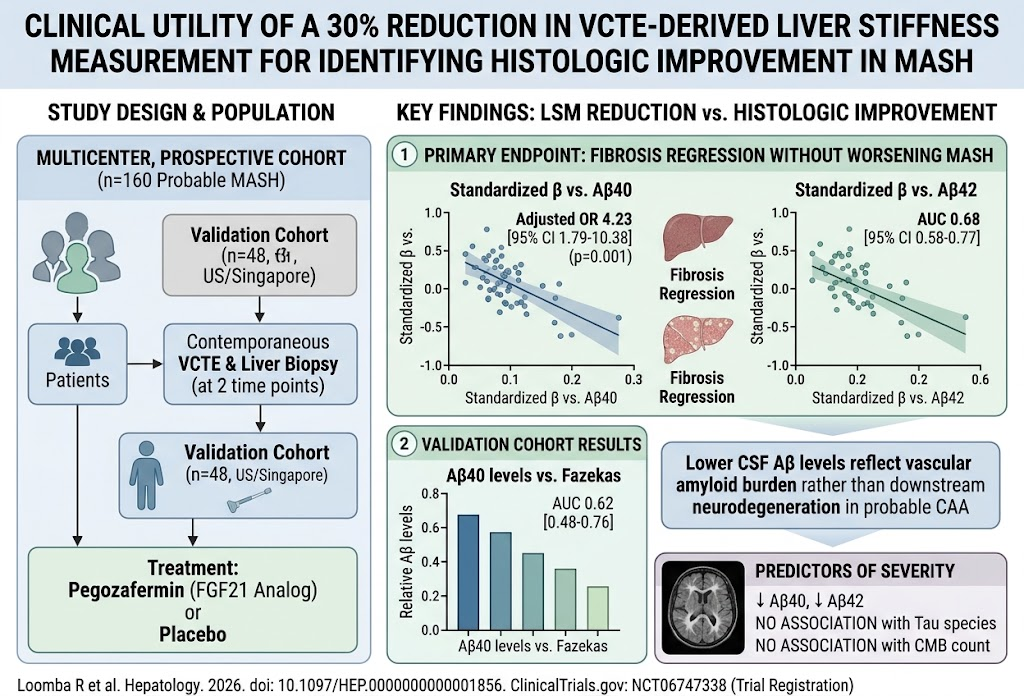
Highlights
- A ≥30% relative decline in VCTE-derived liver stiffness measurement (LSM) is modestly predictive of histologic fibrosis regression in MASH patients.
- This non-invasive marker aligns with regulatory recommendations but shows only moderate diagnostic accuracy (AUC ~0.65), underscoring the need for complementary biomarkers.
- Multivariable-adjusted analyses confirm the independent association between ≥30% LSM reduction and fibrosis improvement without worsening steatohepatitis.
- Validation across diverse cohorts reveals consistent but limited performance, indicating population heterogeneity and measurement variability.
Background
MedXY registered readers
Sign in free to continue reading
Create or use your MedXY account to unlock the complete article.
This article was created using several editorial tools, including AI, as part of the process. Human editors reviewed this content before publication.