Unveiling the TL1A-LTα1β2/IL-22 Axis: A New Therapeutic Target in Crohn’s Disease with Perianal Fistulising Disease
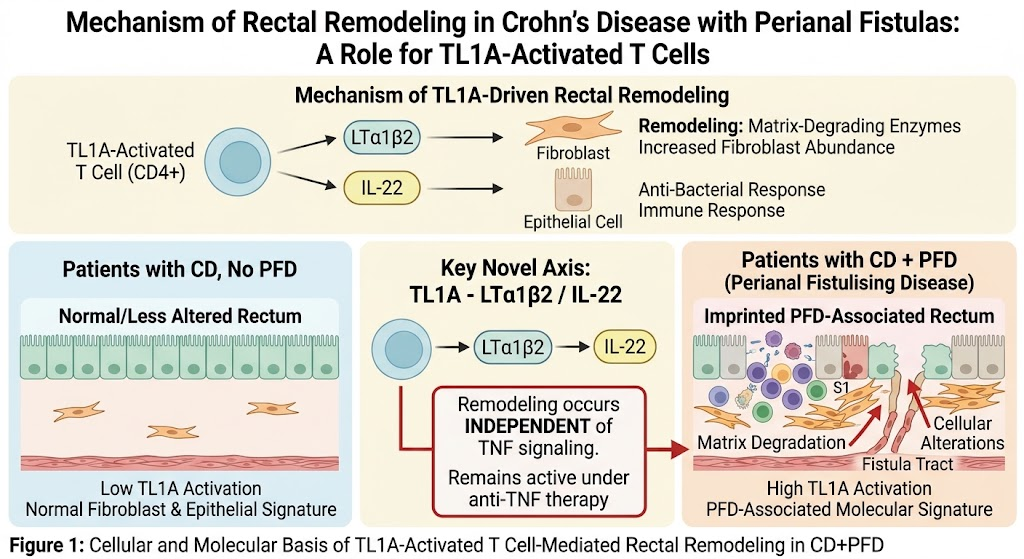
Highlight
- Identification of a unique cellular and transcriptomic signature in the rectal mucosa of Crohn’s disease patients with perianal fistulising disease (PFD).
- TL1A-activated CD4+ T cells induce a novel inflammatory axis involving lymphotoxin beta (LTB/LTα1β2) and interleukin-22 (IL-22), remodeling rectal fibroblasts and epithelial cells.
- This TL1A-LTα1β2/IL-22 pathway operates independently of TNF signaling, remaining active despite anti-TNF therapy, suggesting alternative therapeutic targets.
- The findings substantiate TL1A inhibition as a promising strategy in managing PFD, a severe complication of Crohn’s disease.
Study Background
MedXY registered readers
Sign in free to continue reading
Create or use your MedXY account to unlock the complete article.
This article was created using several editorial tools, including AI, as part of the process. Human editors reviewed this content before publication.