We use cookies

Our website uses essential cookies and, with your consent, additional cookies to measure performance and improve our services. Cookie Policy.

You can change your choice at any time.

MMedXYNews
HomeVideos
MedXY AI/MedXY News/Tag: Fenofibrate
MedXY News
EnglishTag

Fenofibrate

Ask MedXY AI
type 2 diabetesclinical trialheart failureimmunotherapyobesitycardiovascular riskatrial fibrillationbiomarkerscritical careclinical trialsHypertensionartificial intelligenceCardiologyoncologypublic healthtype 1 diabetesdiabetesMortalityAlzheimer's diseasecardiovascular diseasebreast cancerepidemiology

Latest news

Tag

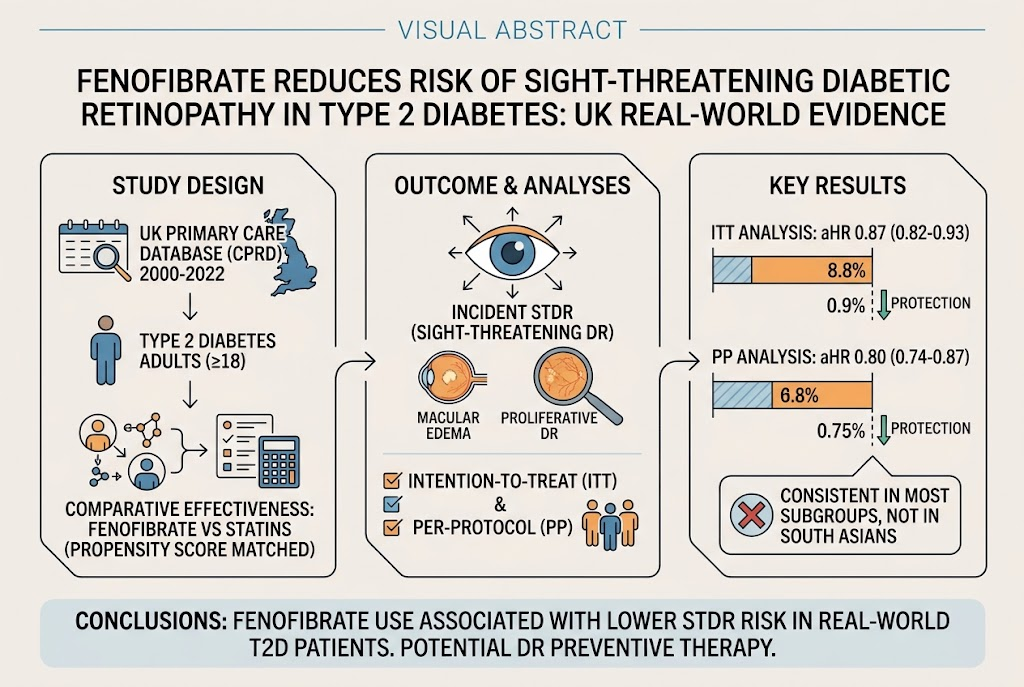
Fenofibrate Use and Reduced Risk of Sight-Threatening Diabetic Retinopathy in Type 2 Diabetes: Insights from UK Real-World Data
Diabetes & Endocrinologyretinopathy đái tháo đườngtype 2 diabetes

Fenofibrate Use and Reduced Risk of Sight-Threatening Diabetic Retinopathy in Type 2 Diabetes: Insights from UK Real-World Data

By MedXY|Sep 18, 2026

Fenofibrate use in type 2 diabetes patients is associated with a significant reduction in the risk of sight-threatening diabetic retinopathy compared to statins, based on UK primary care data over 12 years.

Haptoglobin Levels and Phenotype as Determinants of Cardiovascular Risk in Type 2 Diabetes: Insights from the FIELD Sub-study
Cardiologycardiovascular riskFenofibrate

Haptoglobin Levels and Phenotype as Determinants of Cardiovascular Risk in Type 2 Diabetes: Insights from the FIELD Sub-study

By MedXY|Feb 4, 2026

This FIELD sub-study reveals that while Haptoglobin 1-1 phenotype combined with low HP levels indicates the lowest CVD risk in Type 2 Diabetes, higher HP levels significantly increase risk, particularly within the HP 1-1 group. Fenofibrate

Haptoglobin 1-1 and Low Protein Levels: Identifying the Lowest Cardiovascular Risk in Type 2 Diabetes
Cardiologycardiovascular diseaseFenofibrate

Haptoglobin 1-1 and Low Protein Levels: Identifying the Lowest Cardiovascular Risk in Type 2 Diabetes

By MedXY|Feb 3, 2026

A FIELD sub-study reveals that while higher haptoglobin levels increase cardiovascular risk—particularly in those with the HP 1-1 phenotype—fenofibrate’s protective effects remain consistent regardless of haptoglobin status, challengi

Ask MedXY AI

Most popular

Intimate Health
Five Benefits for Women Continuing Sexual Activity After Menopause
Intimate Health
Why Some Women Have a Strong Sex Drive—And Why Men Shouldn't Worry About It
Nursing & care
How often should a couple have sex?
Intimate Health
Classic Intimacy Recommendations: How to Help Women Reach Orgasm and Enjoy Mutual Pleasure
Intimate Health
What Makes a Woman "Physiologically Addicted" Is Never Money, But These Two Relationship Qualities
© 2026 MedXY
Contact usAbout usPrivacy PolicyMedXY story