We use cookies

Our website uses essential cookies and, with your consent, additional cookies to measure performance and improve our services. Cookie Policy.

You can change your choice at any time.

MMedXYNews
HomeVideos
MedXY AI/MedXY News/Section: Anesthesiology

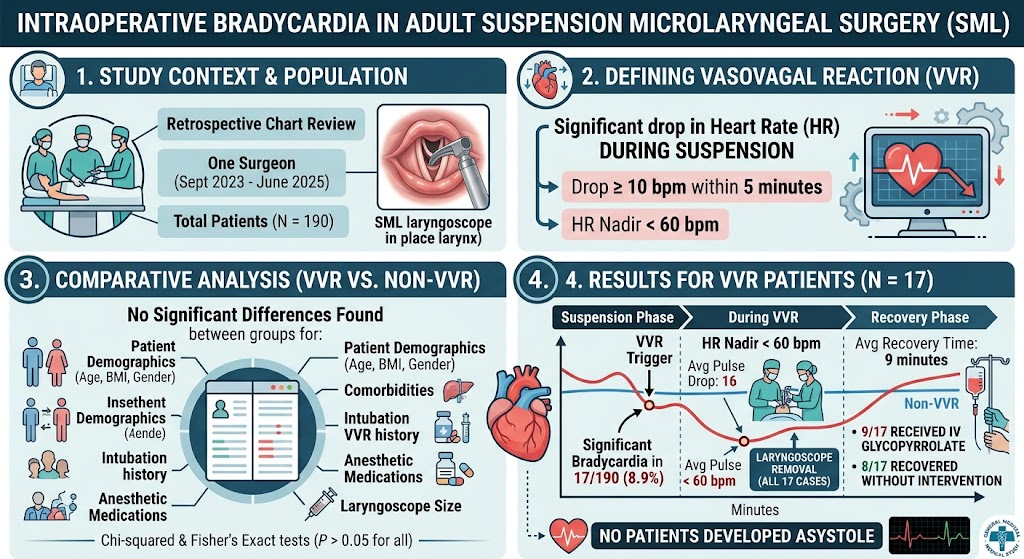
Intraoperative Bradycardia During Suspension Microlaryngeal Surgery: Incidence, Risk Factors, and Management of Vasovagal Events
MedXY Editorial Team•Aug 23, 2026•Anesthesiology
BradycardiaVasovagal ResponseSuspension Microlaryngoscopy

Study Background and Clinical Context

Suspension microlaryngoscopy (SML) is a commonly performed procedure in otolaryngology used to visualize and intervene in the larynx under general anesthesia. Despite its frequent use, intraoperative complications related to autonomic nervous system responses are not well characterized. Bradycardia during SML can be induced by vasovagal reflexes, potentially leading to significant morbidity if not promptly identified and managed. Understanding the incidence, risk factors, and effective treatment for vasovagal events (VVR) during SML is essential for improving patient safety and perioperative outcomes.

Study Design

MedXY registered readers

Sign in free to continue reading

Create or use your MedXY account to unlock the complete article.

This article was created using several editorial tools, including AI, as part of the process. Human editors reviewed this content before publication.

Related articles

Open language-specific specialty feeds and department pages.

Beyond Vagal Tone: Genetic Predisposition and Physical Fitness Drive Profound Bradycardia in Elite AthletesA comprehensive study of elite endurance athletes reveals that resting bradycardia (≤40 bpm) is common and driven by both fitness and a lower polygenic risk score for heart rate. These findings suggest that genetics may predispose individuaDec 24, 2025
Loading comments...
MedXY briefing

Get the free newsletter

Evidence-led clinical news, trends, and analysis—delivered to your inbox.

Ask MedXY AI

Most popular

Intimate Health
Five Benefits for Women Continuing Sexual Activity After Menopause
Intimate Health
Why Some Women Have a Strong Sex Drive—And Why Men Shouldn't Worry About It
Nursing & care
How often should a couple have sex?
Intimate Health
Classic Intimacy Recommendations: How to Help Women Reach Orgasm and Enjoy Mutual Pleasure
Intimate Health
What Makes a Woman "Physiologically Addicted" Is Never Money, But These Two Relationship Qualities
© 2026 MedXY
Contact usAbout usPrivacy PolicyMedXY story