Introduction
Sickle cell disease (SCD) is a genetic blood disorder characterized by abnormally shaped red blood cells that can obstruct blood flow, causing episodes of intense pain known as vaso-occlusive episodes (VOEs). These painful crises severely impact patients’ quality of life and often require multifaceted management approaches. Behavioral interventions are increasingly explored as complementary methods to traditional pharmacologic treatments for VOEs to improve pain control and reduce opioid use.
Virtual reality (VR) is an emerging non-pharmacologic tool that uses immersive digital environments to distract patients from pain and discomfort. This pilot study investigated the feasibility and acceptability of VR for pain relief during VOEs among adults with SCD.
Study Objective
The primary aim was to evaluate whether using a VR application during vaso-occlusive episodes is practical and acceptable to adult patients with sickle cell disease in real-time clinical or home settings. A secondary objective was to assess VR’s effect on the intensity of pain associated with VOEs, as well as user-reported distraction and potential side effects like simulation sickness.
Methods
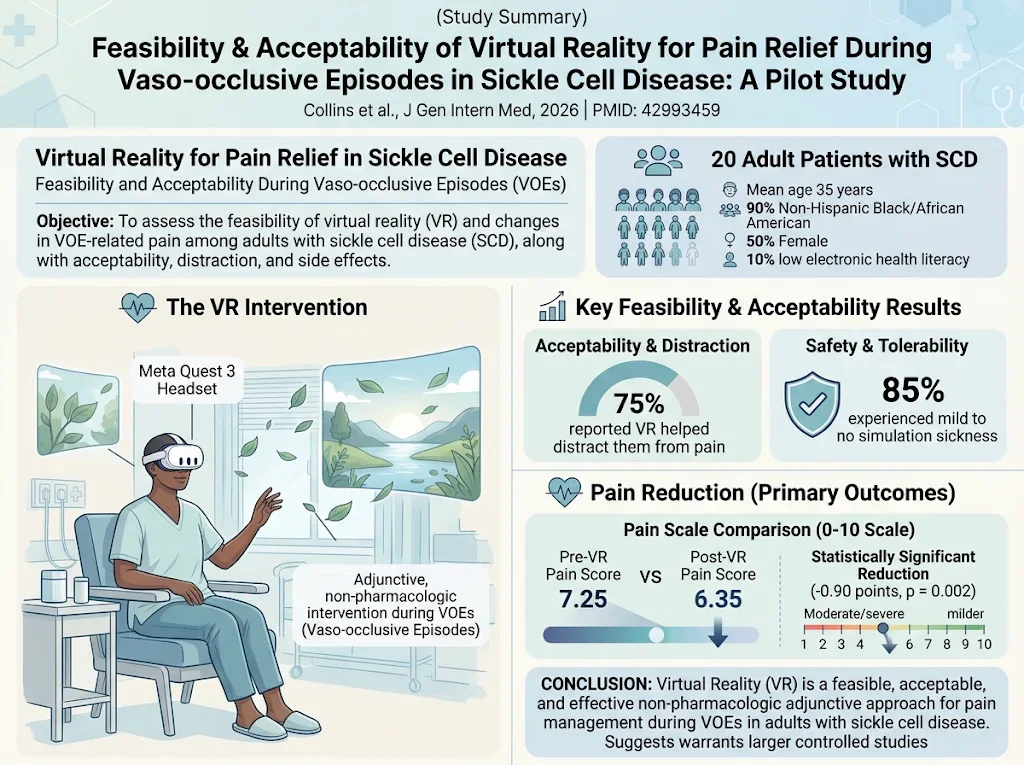
This prospective pilot study employed a pre-post design involving 20 adults with SCD (mean age 35 years) who were experiencing VOEs. The cohort was predominantly non-Hispanic Black/African American (90%) and gender-balanced, with half identifying as female. Ten percent demonstrated low electronic health literacy, highlighting the importance of ease of use.
Participants used a Meta Quest 3 VR headset to access a specially designed application providing immersive sensory experiences aimed at diverting attention away from pain. The intervention was adjunctive, not replacing pharmacologic therapies.
Measures collected included self-reported pain levels on a 0-10 numeric rating scale immediately before and after VR sessions, perceived distraction from pain, and symptoms of simulation sickness to evaluate tolerability.
Key Findings
Results showed that most participants (75%) felt the VR experience helped distract them from their pain to some extent. A large majority (85%) reported experiencing little to no discomfort or simulation sickness while wearing the VR headset.
Statistically significant reductions in pain scores were observed following VR use, with mean pain dropping from 7.25 pre-intervention to 6.35 post-intervention (p = 0.002). This suggests a meaningful pain relief effect associated with the VR sessions.
Discussion
The findings support the feasibility of implementing VR as a practical adjunctive pain management strategy during VOEs in adults with sickle cell disease. Participants were able to engage with the technology despite varied electronic health literacy.
The reduction in pain scores, while modest, is clinically relevant given VOE pain’s challenging nature and the limitations of pharmacologic treatments alone. VR offers a complementary approach that may decrease reliance on opioids and improve overall pain coping strategies.
Side effect profiles were favorable, indicating high tolerability and acceptability among users, which is crucial for adoption in routine care.
Clinical Implications and Future Directions
This pilot study lays the groundwork for larger controlled trials to rigorously evaluate VR’s efficacy in pain relief during VOEs. If validated, VR could be integrated into comprehensive sickle cell management plans as a non-invasive, patient-centered adjunct to conventional therapy.
Future research should explore optimization of VR content tailored to sickle cell patients’ needs, longer session impacts, and integration with telemedicine platforms to enhance accessibility. Assessing cost-effectiveness and long-term benefits will also be important.
Conclusion
Virtual reality represents a feasible, acceptable, and promising non-pharmacologic adjunct for pain alleviation in adults experiencing vaso-occlusive episodes from sickle cell disease. These preliminary results encourage further investigation into VR’s role as part of multimodal pain management strategies, potentially improving patient outcomes and quality of life in this vulnerable population.
References
Collins M, Vidyasagar N, Caravelli N, Abou Baker N, Bundy A, Jackson-Sagredo A, Press VG. Feasibility and Acceptability of Virtual Reality for Pain Relief During Vaso-occlusive Episodes in Sickle Cell Disease: A Pilot Study. Journal of General Internal Medicine. 2026-11-06. PMID: 42993459. Available at: https://pubmed.ncbi.nlm.nih.gov/42993459/