Dual Antiplatelet Therapy Precautions
Please turn the key precautions for dual antiplatelet therapy after coronary stenting into a short patient instruction note.
# Patient Instruction Note: Dual Antiplatelet Therapy (DAPT) After Coronary Stenting
## What Is Dual Antiplatelet Therapy?
After a coronary stent is placed, you will be prescribed **two blood-thinning medications** (usually aspirin plus a second medicine like clopidogrel, ticagrelor, or prasugrel). This combination is called **dual antiplatelet therapy (DAPT)**. Its job is to prevent blood clots from forming inside your stent — a complication called **stent thrombosis**, which can cause a heart attack or be fatal[4][8].
---
## How Long Must You Take DAPT?
| Your Situation | Minimum Duration |
|----------------|-----------------|
| **Bare metal stent** | At least **4 weeks**[2] |
| **Drug-eluting stent** | At least **12 months**[2] |
| **After a heart attack (ACS)** | At least **12 months**; possibly longer if high-risk[3] |
**Do not stop either medication early** unless your cardiologist tells you to. Stopping DAPT prematurely — especially within the first month — is the single strongest risk factor for stent thrombosis[8][10].
---
## Key Precautions
### 1. Never Stop Both Medications at Once
- If both antiplatelet drugs are stopped, stent thrombosis can occur in as little as **7 days** (median time)[4].
- If one drug is continued, the risk window extends to about **122 days**[4].
- **Always keep taking aspirin** unless your doctor specifically tells you to stop.
### 2. Before Surgery or Dental Procedures
- **Inform every doctor, dentist, or surgeon** that you are on blood thinners.
- **Do not stop DAPT on your own** before any procedure.
- For planned surgeries:
- If possible, delay elective surgery until after your DAPT course is complete (at least **1 month** after bare metal stent, **6–12 months** after drug-eluting stent)[5][6][11].
- If surgery cannot wait, your cardiologist will coordinate: you will likely **continue aspirin** and stop the second drug **3–7 days before surgery** (depending on which drug you take)[5].
- After surgery, restart the second drug **as soon as possible**[6].
### 3. Watch for Bleeding — But Do Not Stop DAPT
DAPT increases bleeding risk. Contact your doctor if you notice:
- Unusual bruising or bleeding that does not stop
- Black or bloody stools
- Vomiting blood or coffee-ground-like material
- Blood in urine
**However, do not stop DAPT on your own** — the risk of stent thrombosis (heart attack) is higher than the risk of bleeding in most cases[4][10].
### 4. Protect Your Stomach
- DAPT increases the risk of stomach bleeding.
- Your doctor may prescribe a **proton pump inhibitor (PPI)** (e.g., omeprazole, pantoprazole) to protect your stomach lining[7].
- Take it as directed.
### 5. Take Your Medications Exactly as Prescribed
- Take both medications at the same time each day.
- Use a **pill organizer** or set a daily alarm.
- If you miss a dose: take it as soon as you remember, unless it is almost time for your next dose — then skip the missed dose. **Never double up.**
---
## When to Seek Emergency Care
**Call 911 or go to the nearest emergency room immediately if you experience:**
- Chest pain, pressure, or discomfort
- Shortness of breath
- Pain spreading to your arm, jaw, or back
- Sudden weakness or numbness on one side of your body
- Slurred speech
These could be signs of stent thrombosis or a heart attack.
---
## Quick Summary
| ✅ **DO** | ❌ **DON'T** |
|-----------|-------------|
| Take both medications daily as prescribed | Stop either medication without your cardiologist's approval |
| Tell all healthcare providers you are on DAPT | Stop both drugs at the same time for any reason |
| Contact your cardiologist before any planned surgery | Ignore signs of bleeding or chest pain |
| Use a pill organizer to avoid missed doses | Double up on missed doses |
---
**The following flowchart illustrates the recommended DAPT duration strategy after PCI based on your clinical presentation:**
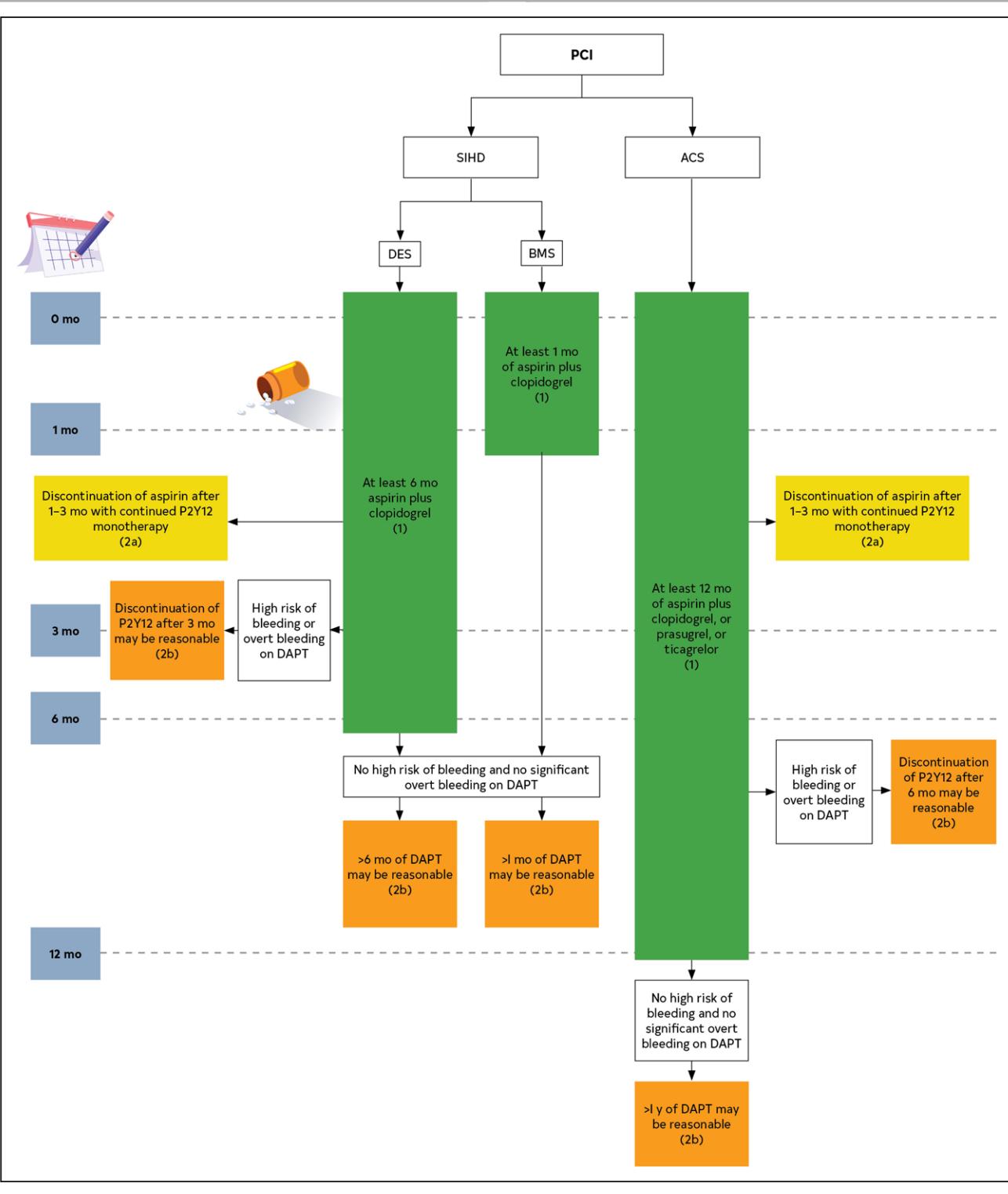
*Figure: Clinical algorithm for determining DAPT duration after PCI based on stable ischemic heart disease (SIHD) vs. acute coronary syndrome (ACS) presentation and stent type*
---
**The diagram below shows how doctors balance your bleeding risk and ischemic risk to choose the right DAPT strategy after a heart attack:**
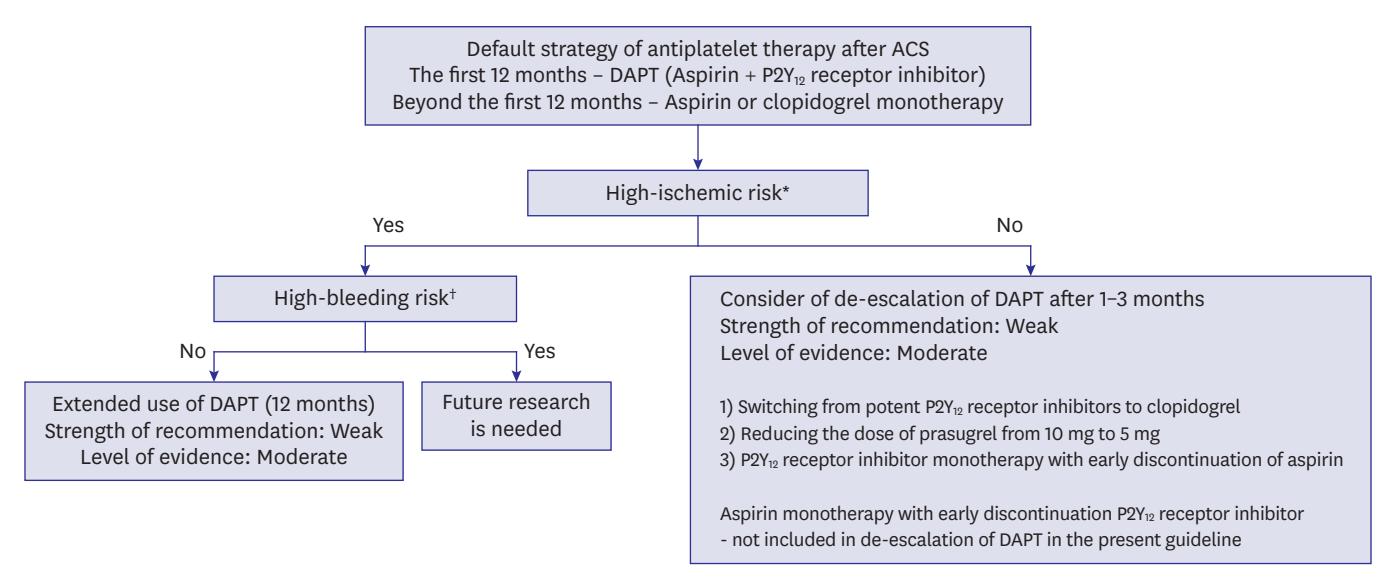
*Figure: Clinical algorithm for antiplatelet therapy after ACS, balancing ischemic and bleeding risk to determine DAPT duration and intensity*
---
*This information is based on current clinical guidelines and is for educational purposes. Always follow your cardiologist's specific instructions for your individual situation.*