Abnormal Weight Gain 2024
A 31-year-old female experienced abnormal weight gain in 2024 and was found to have fatty liver and elevated cholesterol levels; how should lipid-lowering therapy be managed?
**Conclusion**: For this 31-year-old female with fatty liver and elevated cholesterol, the primary management strategy should be lifestyle modification as first-line therapy, with statin therapy considered if LDL-C remains elevated after 3–6 months of lifestyle intervention, given the favorable hepatic safety profile of statins in NAFLD.
---
## Clinical Evidence & Efficacy
### First-Line Strategy: Lifestyle Modification
According to the AHA Scientific Statement on menopause transition and CVD risk, **nonpharmacological therapies incorporating lifestyle modification (exercise, weight loss, smoking cessation, and heart-healthy diet) are recommended as the first-line strategy for improving lipid profiles** in women [5]. This is particularly relevant for a 31-year-old female with newly identified fatty liver and dyslipidemia, where weight reduction can simultaneously improve hepatic steatosis and lipid parameters.
### Statin Safety in NAFLD
A systematic review and meta-analysis of statin liver safety in NAFLD provides reassuring evidence [3]:
| Study | Statin Type/Dose | NAFLD Diagnosis | Key Finding |
|-------|-----------------|-----------------|-------------|
| Kiyici (2003) | Atorvastatin 10 mg | Liver biopsy | Safe in NAFLD with ALT elevation |
| Hatzitolios (2004) | Atorvastatin 20 mg | Biopsy/ultrasound/CT | Safe in mixed dyslipidemia |
| Antonopoulos (2006) | Rosuvastatin 10 mg | Liver ultrasound | Safe in hyperlipidemic patients |
| Athyros (2006) | Atorvastatin 20 mg | Liver ultrasound | Safe in non-diabetic patients |
| GREACE (2010) | Atorvastatin 10–80 mg | ALT/AST elevation | Safe in secondary prevention |
| Bril (2017) | Simvastatin/Rosuvastatin/Atorvastatin | Liver biopsy | Safe in prediabetes/diabetes |
Multiple observational studies across different statin types (atorvastatin, rosuvastatin, simvastatin, pitavastatin) and doses have demonstrated safety in patients with NAFLD diagnosed by liver biopsy, ultrasound, or elevated liver enzymes [3].
### Combination Therapy Considerations
The AASLD Practice Guidance states that **combination therapies of statins with other hypolipemic agents (ezetimibe, PCSK-9 inhibitors, inclisiran, bempedoic acid, fibrates, omega-3 fatty acids, or icosapent ethyl) should be considered when monotherapy with a statin does not achieve therapeutic goals** [2].
---
## Treatment Algorithm
The following clinical algorithm illustrates the stepwise approach to lipid-lowering therapy escalation:
**The following flowchart outlines the stepwise clinical algorithm for lipid-lowering therapy in patients with elevated LDL-C:**
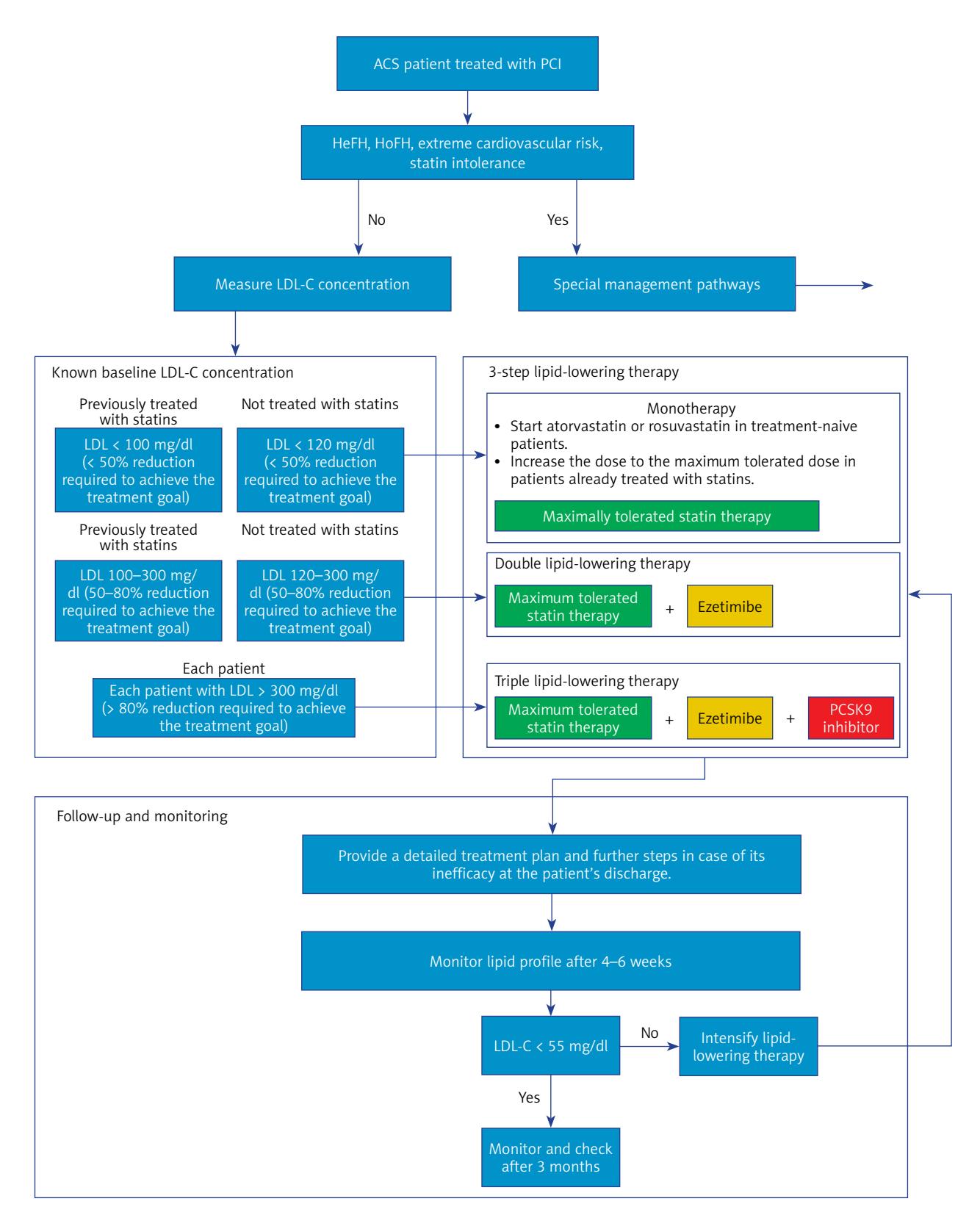
*Figure: A stepwise clinical algorithm for lipid-lowering therapy, escalating from statin monotherapy to triple therapy based on baseline LDL-C levels to achieve a target of <55 mg/dl*
**The following flowchart details the escalation strategy for patients with LDL-C > 120 mg/dl despite high-intensity statin and ezetimibe:**
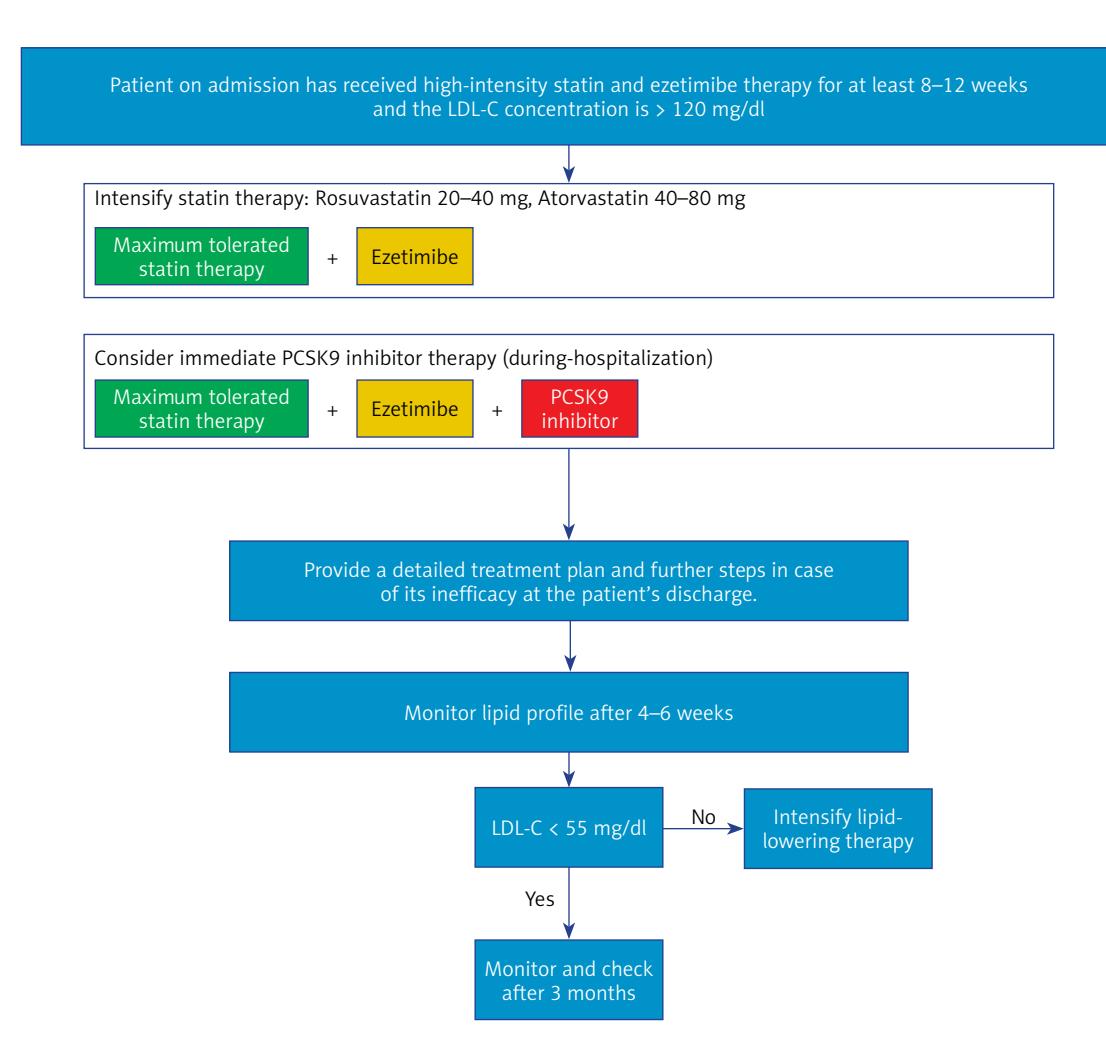
*Figure: A clinical flowchart detailing the escalation of lipid-lowering therapy for patients with LDL-C > 120 mg/dl despite high-intensity statin and ezetimibe treatment*
**The following flowchart outlines management for patients with complete statin intolerance:**

*Figure: This flowchart outlines a management strategy for lipid-lowering therapy in patients with complete statin intolerance, targeting an LDL-C of < 55 mg/dl using ezetimibe and PCSK9 inhibitors*
**The following flowchart details escalation from double to triple therapy for aggressive LDL-C targets:**
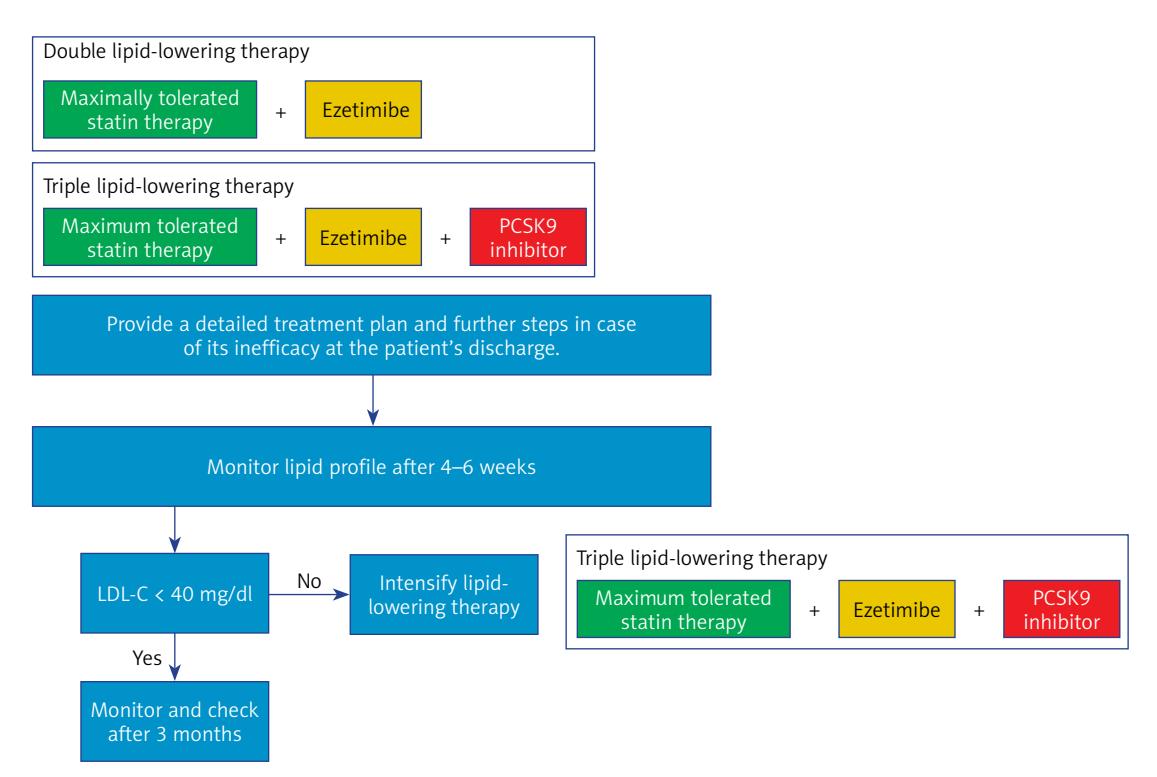
*Figure: A clinical flowchart detailing the escalation from double to triple lipid-lowering therapy to achieve an LDL-C target of less than 40 mg/dl*
---
## Special Considerations for This Patient
### Age and Sex Factors
The retrieved literature highlights that **younger people are more likely to benefit from lipid-lowering therapy than older people**, based on studies of early atherosclerosis development including the PDAY study [1]. Mendelian randomization studies suggest that elimination of lifelong exposure to elevated LDL-C could lower ASCVD event rates by approximately 50%, about twice the rate observed in current lipid-lowering clinical trials [1].
However, the literature also notes that **for the >70% of the population not eligible for existing clinical trials, including disproportionately higher numbers of young people and women, no data on the primary prevention of heart disease exist** [1]. This represents a significant evidence gap for this patient demographic.
### Pregnancy Considerations
For a 31-year-old female of reproductive potential, pregnancy planning is critical. The literature explicitly identifies the question: **"How do we manage dyslipidemia during pregnancy?"** as a knowledge gap [1]. Statins are generally contraindicated during pregnancy. Therefore:
- **Pre-conception counseling** is essential
- **Contraception** should be discussed if statin therapy is initiated
- **Statin therapy should be discontinued** if pregnancy is planned or confirmed
---
## Proposed Management Plan
### Phase 1: Lifestyle Intervention (Months 0–6)
- **Dietary modification**: Heart-healthy diet, caloric restriction for weight loss
- **Exercise**: At least 150 minutes/week of moderate-intensity aerobic activity
- **Weight loss goal**: 5–10% of body weight to improve hepatic steatosis and lipid profile
- **Reassess lipid panel and liver enzymes** at 3 and 6 months
### Phase 2: Pharmacotherapy (If LDL-C remains elevated after lifestyle intervention)
- **First-line**: Moderate-intensity statin (e.g., atorvastatin 10–20 mg or rosuvastatin 5–10 mg daily)
- **Baseline LFTs**: Obtain before initiation
- **Monitor LFTs**: At 4–12 weeks after initiation, then periodically
- **Target LDL-C**: Based on individual risk assessment (consider using a 10-year ASCVD risk calculator)
### Phase 3: Combination Therapy (If target not achieved)
- Add ezetimibe 10 mg daily if statin monotherapy insufficient [2]
- Consider PCSK9 inhibitor or other agents per AASLD guidance if needed [2]
---
## Safety Profile
### Hepatic Safety
- Statins are **safe in NAFLD** based on multiple studies [3]
- No evidence of hepatotoxicity signal in NAFLD patients across various statin types and doses
- Routine monitoring of LFTs is still recommended per standard practice
### Contraindications
- **Pregnancy**: Statins are contraindicated; discontinue if pregnancy is planned or occurs
- **Active liver disease**: Decompensated cirrhosis or acute liver failure (not NAFLD alone)
---
## Critical Gaps
The current evidence base lacks specific data on primary prevention lipid-lowering therapy in young women (age <40) with NAFLD. The literature explicitly identifies that **young people, women, and those of non-White race/ethnicity have been underrepresented in clinical trials** [1]. Additionally, the optimal management of dyslipidemia during pregnancy remains an unresolved knowledge gap [1].
---
## Further Diagnostic Suggestions (Reference Only)
To enable a more accurate assessment, if available, please consider providing:
- **LDL-C level**: Specific value to determine treatment threshold and target
- **10-year ASCVD risk score**: To guide intensity of therapy
- **ALT/AST levels**: Baseline liver enzymes before considering pharmacotherapy
- **Pregnancy status and family planning intentions**: Critical for medication selection
- **BMI and waist circumference**: To quantify obesity-related metabolic risk
---
*This analysis is based on retrieved evidence and is intended for clinical reference. Please verify all recommendations against current official guidelines and individual patient factors before implementation.*