Late-Night Health Effects
Which organs in the body are damaged by frequent late-night hours, and are there any ways to mitigate the associated health risks?
# Health Impact of Frequent Late-Night Hours and Mitigation Strategies
## Organ Systems Affected by Circadian Disruption
Frequent late-night hours—particularly shift work or chronic sleep-wake misalignment—disrupts the central circadian clock in the suprachiasmatic nucleus (SCN) of the hypothalamus, leading to desynchrony between central and peripheral oscillators [5][7]. This disruption affects multiple organ systems:
### Cardiovascular System
- **Elevated blood pressure**: Circadian misalignment raises blood pressure, and nocturnal hypertension (nondipper pattern) is associated with increased risk of target organ damage including the heart, kidneys, blood vessels, and brain [2][5]
- **Increased cardiovascular events**: Shift work increases the risk of cardiovascular events, particularly coronary events, by approximately 17%, with cumulative risk increasing from the fifth year of shift work [6]
- **Coronary heart disease risk**: Shift workers face approximately 20–35% increased risk of coronary heart disease [5]
### Metabolic and Endocrine Systems
- **Insulin resistance and diabetes**: Sleep restriction to 4 hours per night increases evening cortisol and insulin levels; circadian misalignment reduces insulin sensitivity, in some studies to the prediabetic range [5][7]
- **Obesity**: Reduced sleep duration is associated with increased body mass and obesity, partly through elevation of ghrelin (pro-appetitive hormone) and decreased leptin levels [7]
- **Dyslipidemia**: Elevated postprandial lipid and glucose concentrations occur with circadian disruption [5]
### Central Nervous System
- **Neuroinflammation and neurodegeneration**: Circadian rhythm dysfunction directly affects microglia, astrocytes, endothelial cells, and neurons, exacerbating neurodegeneration progression [8]
- **Cognitive impairment**: Decreased performance in psychomotor vigilance tests occurs even with modest sleep restriction to 6 hours per night [7]
- **Mood disorders**: Increased risk of depression (20–35% higher in shift workers) [5]
### Oncologic System
- **Cancer risk**: Shift workers have approximately 20–35% increased risk of breast, prostate, and colorectal cancers, potentially mediated by the "light-at-night" hypothesis (melatonin suppression affecting oncogenesis) [5]
### Gastrointestinal System
- **Metabolic syndrome**: Night shift work is associated with metabolic syndrome and gastrointestinal disturbances [3][5]
### Immune System
- **Pro-inflammatory state**: Pro-inflammatory cytokine levels increase with sleep deprivation [7]
**The following forest plot illustrates the association between sleep variability and cardiometabolic risk:**
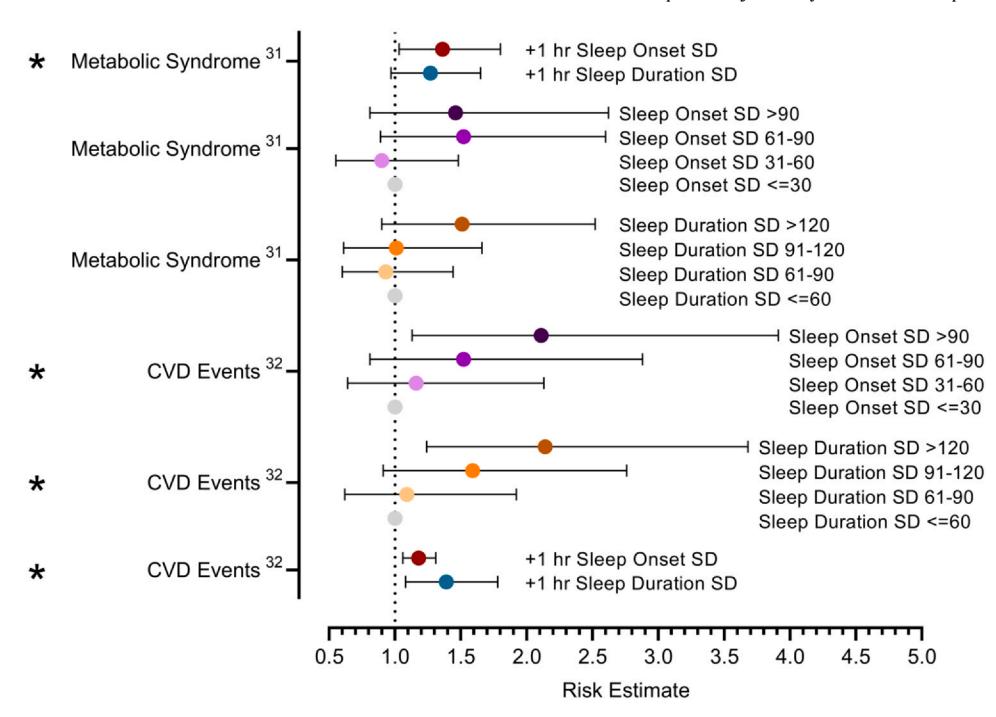
*Figure: Increased variability in sleep onset and duration is significantly associated with a higher risk of metabolic syndrome and cardiovascular disease (CVD) events*
**The following diagram illustrates how circadian disruption leads to cardiometabolic disease and potential mitigation strategies:**
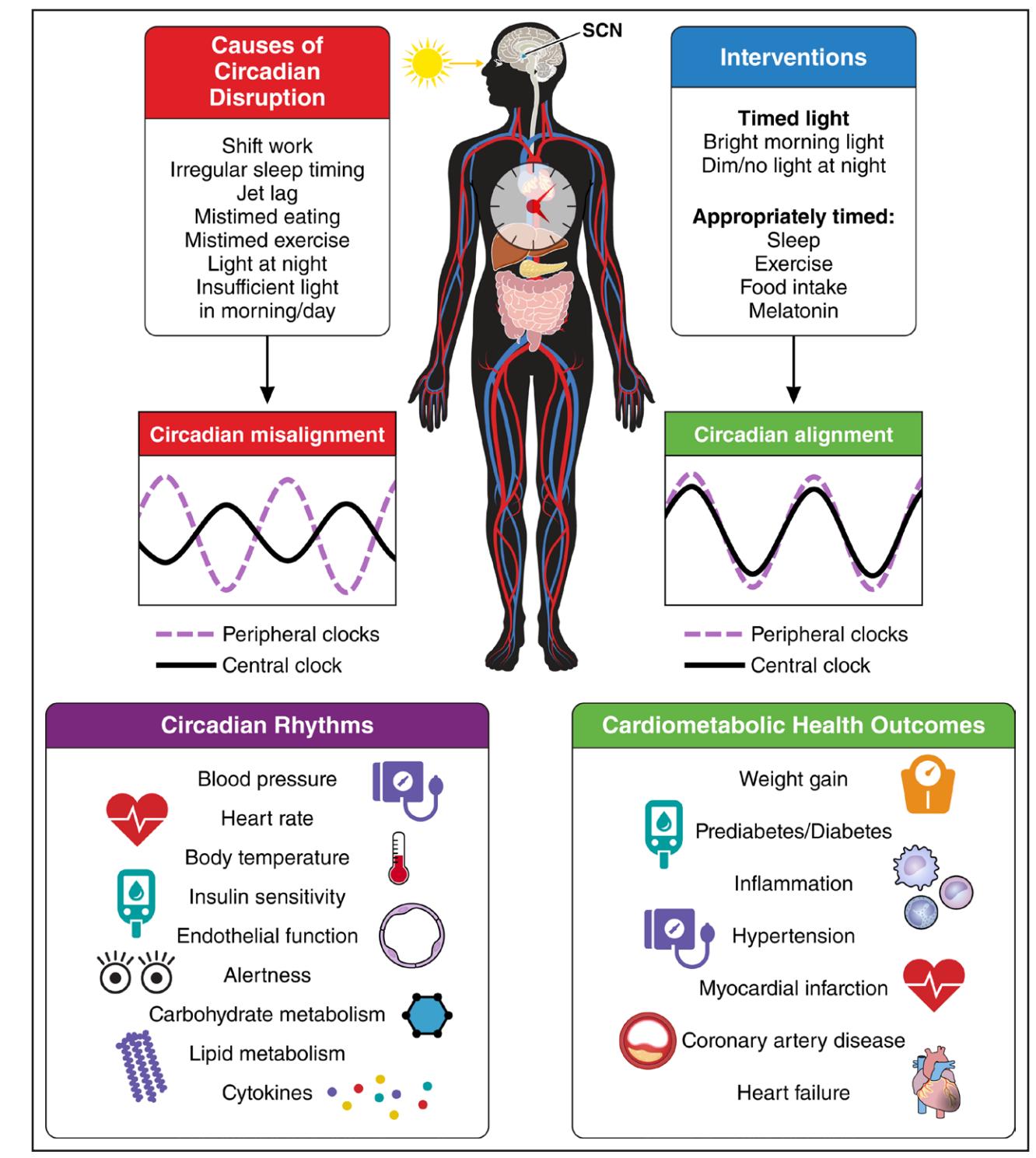
*Figure: Circadian disruption causes misalignment between central and peripheral biological clocks, leading to impaired physiological rhythms and increased risk for cardiometabolic diseases, which can be mitigated through timed interventions*
## Mitigation Strategies
### Sleep Hygiene and Timing
- **Maintain sleep regularity**: Consistent sleep-wake timing (even on free days) is critical—increased sleep timing variability is associated with adverse health outcomes including mortality, inflammation, and metabolic indicators [4]
- **Optimize sleep duration**: Aim for 7–9 hours per night; even modest restriction to 6 hours produces measurable physiological effects [7]
- **Strategic napping**: Short naps before night shifts may reduce sleep debt
### Light Exposure Management
- **Morning light exposure**: Morning bright light advances circadian phase; this is particularly important for individuals with delayed sleep phase
- **Minimize evening/night-time light**: Reduce blue light exposure 1–2 hours before intended sleep; use dim lighting during night shifts
- **Light-at-night mitigation**: For shift workers, minimizing light exposure during biological night may reduce melatonin suppression and associated cancer risk [5]
### Meal Timing and Nutrition
- **Time-restricted feeding**: Align meal timing with the biological day rather than eating during the biological night, as mistimed meals exacerbate metabolic derangement [1][5]
- **Avoid heavy meals during night shifts**: Postprandial lipid and glucose elevations are more pronounced when eating at an inappropriate circadian phase [5]
- **Balanced diet**: Counteract the tendency toward unhealthy dietary patterns associated with shift work [6]
### Physical Activity
- **Timed exercise**: Exercise at consistent times may help entrain circadian rhythms; morning exercise is particularly beneficial for phase advancement
- **Avoid vigorous exercise close to bedtime**
### Pharmacological and Supplement Considerations
- **Melatonin supplementation**: Low-dose melatonin (0.5–3 mg) timed appropriately may help phase-shift circadian rhythms, particularly for shift workers or jet lag
- **Caffeine timing**: Limit caffeine to the early part of the shift; avoid within 6 hours of planned sleep
### Work Schedule Optimization
- **Clockwise shift rotation**: Forward-rotating schedules (morning→evening→night) are better tolerated than counterclockwise rotation [6]
- **Limit consecutive night shifts**: Adverse effects are particularly pronounced in those working ≥4 night shifts per month and those with ≥20 years of night shift work [3]
- **Adequate recovery periods**: Prolonged rest periods between night shifts improve quality of life and may reduce cardiovascular risk [6]
### Monitoring and Screening
- **Ambulatory blood pressure monitoring (ABPM)**: Consider for shift workers to detect nocturnal hypertension or nondipper patterns [2]
- **Metabolic screening**: Regular assessment of fasting glucose, lipids, and blood pressure
- **Sleep diaries/actigraphy**: At least 7 days of prospective monitoring can identify circadian rhythm sleep-wake disorders [5]
---
*This information is synthesized from retrieved evidence for clinical reference. Individual patient management should consider specific occupational exposures, comorbidities, and personal chronotype. Patients should discuss new research findings with their healthcare providers before implementing significant lifestyle changes.*